



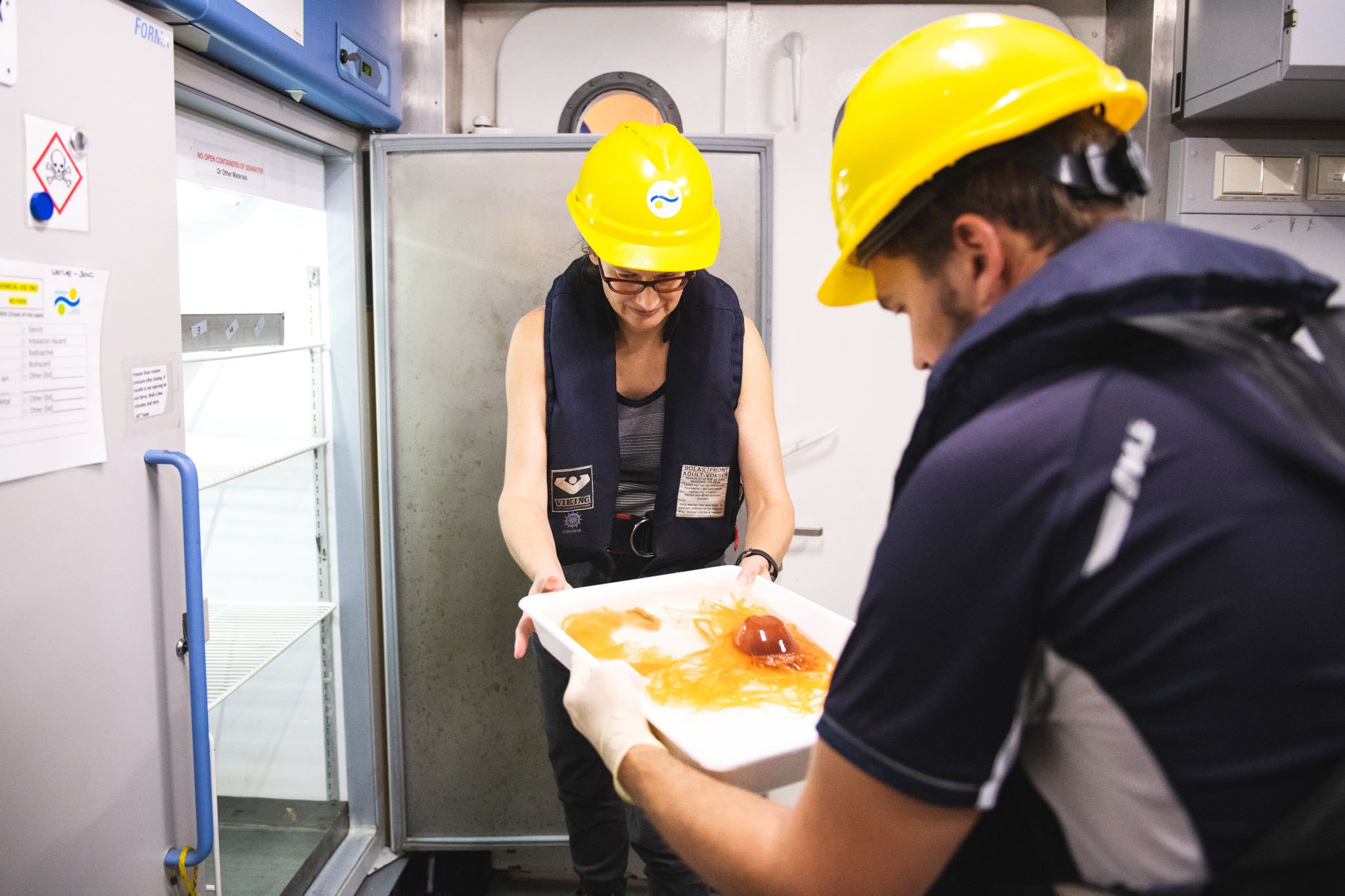

The opportunity to be part of the biological sampling team has opened my eyes to the differing documentation methods used for differing deep-sea taxa. From the various ways to handle the specimens once brought back to the deck by the ROV or fish traps, to the differing approaches, we use to preserve samples and the different methods used for archival record documentation.
When the sampled specimens are brought up to the aft deck of the R/V Falkor, much care must be taken to ensure the sample comes to our wet processing lab in the best possible state. One of the most critical steps is the initial handling. The samples must be treated with care and are placed in water relative to the temperature in which they were captured: in most cases around 1-4 degrees Celsius. This ensures the sample is in the best possible condition to be examined and photographed.
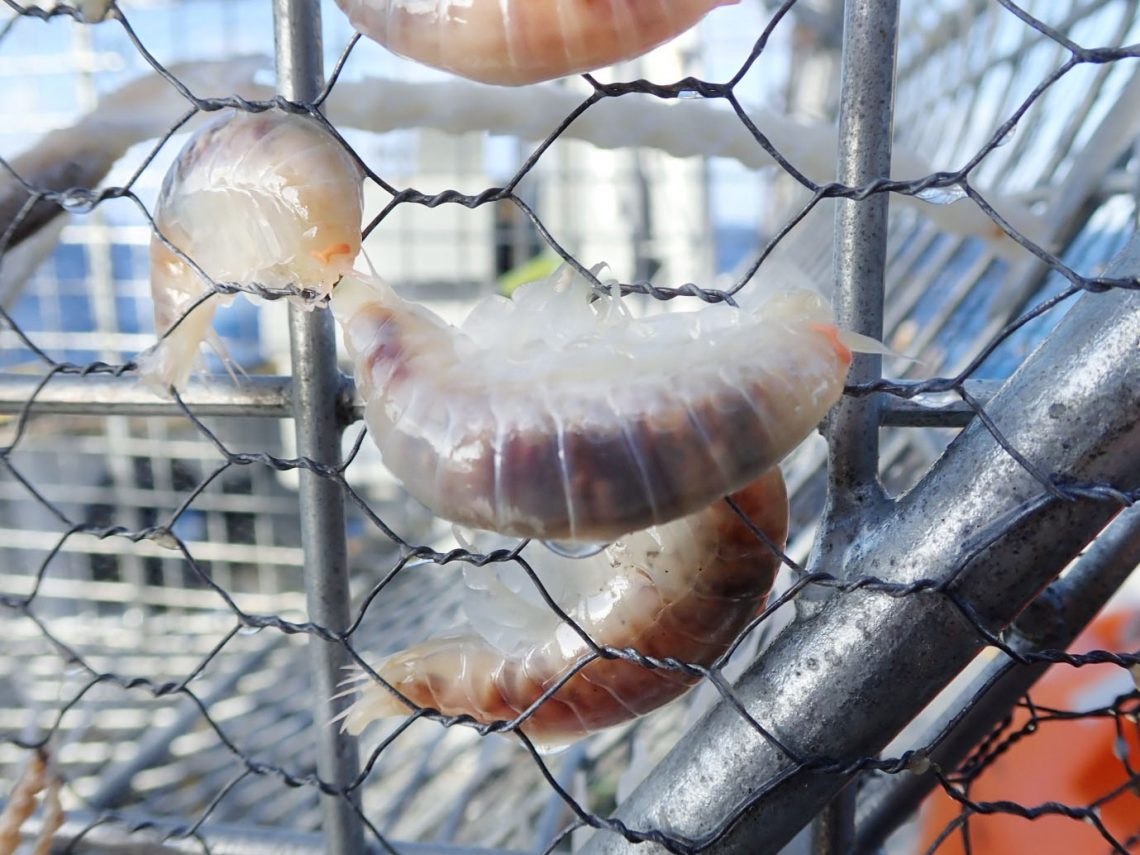
Some specimens are caught in specially designed traps and not easily removed, such as the Eurythenes (Deep sea Crustaceans) below. These must be gently handled to ensure all the appendages are still intact for future taxonomic work and documentation.
Once the ROV is on the deck of the R/V Falkor, time is precious. The organisms collected by ROV Subastian and within the biological sampling boxes must be collected quickly, swiftly, and efficiently. This is important so that the samples can be documented in the best possible condition; we must be ready to move quickly.
It has been a great learning curve for me to work with the team from the Western Australian Museum, to mould into their systems and be a helping hand wherever possible.
Once these precious samples are in the wet lab (sample processing lab), it has been crucial to learn how to handle them so that they can be documented. From imagery to the allocation of specific Museum Numbers, these are all vital steps. Some of these specimens could be holotypes (the first specimen chosen to represent the species) or additional specimens that help describe the new species. These samples are so valuable to future taxonomic work and irreplaceable.
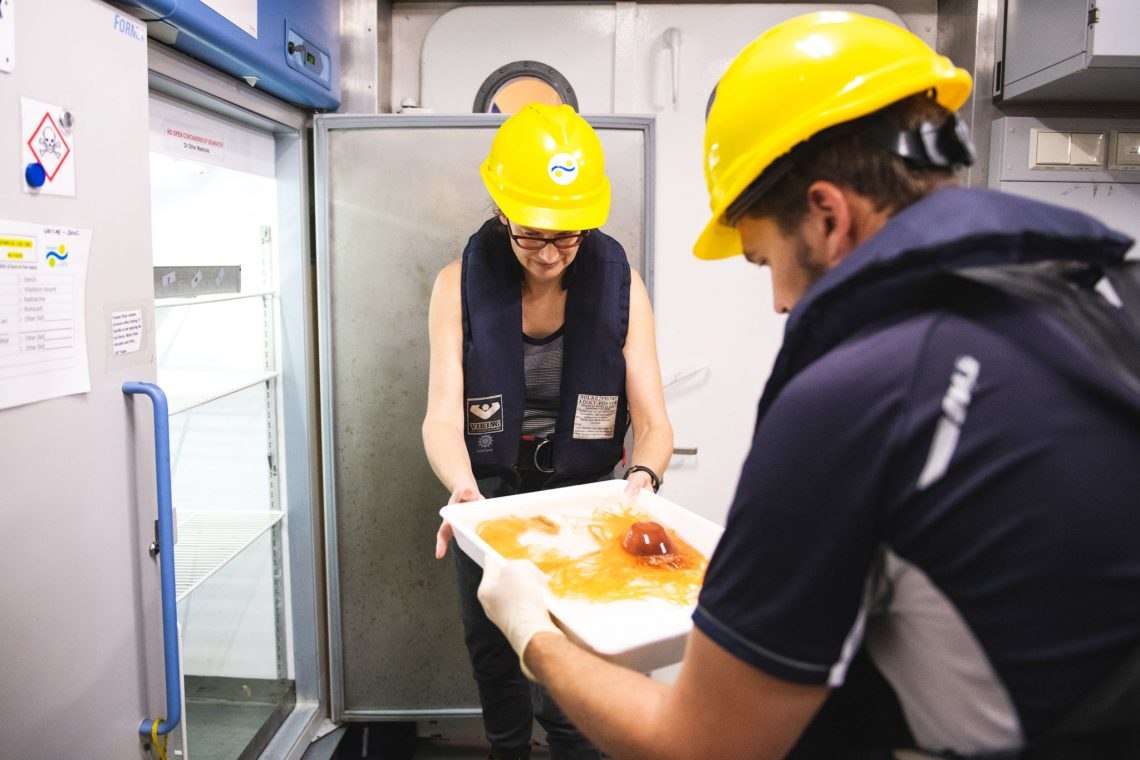
Hence, it has been crucial that I apply myself to all the differing collection procedures and methods—something I have enjoyed learning and implementing.
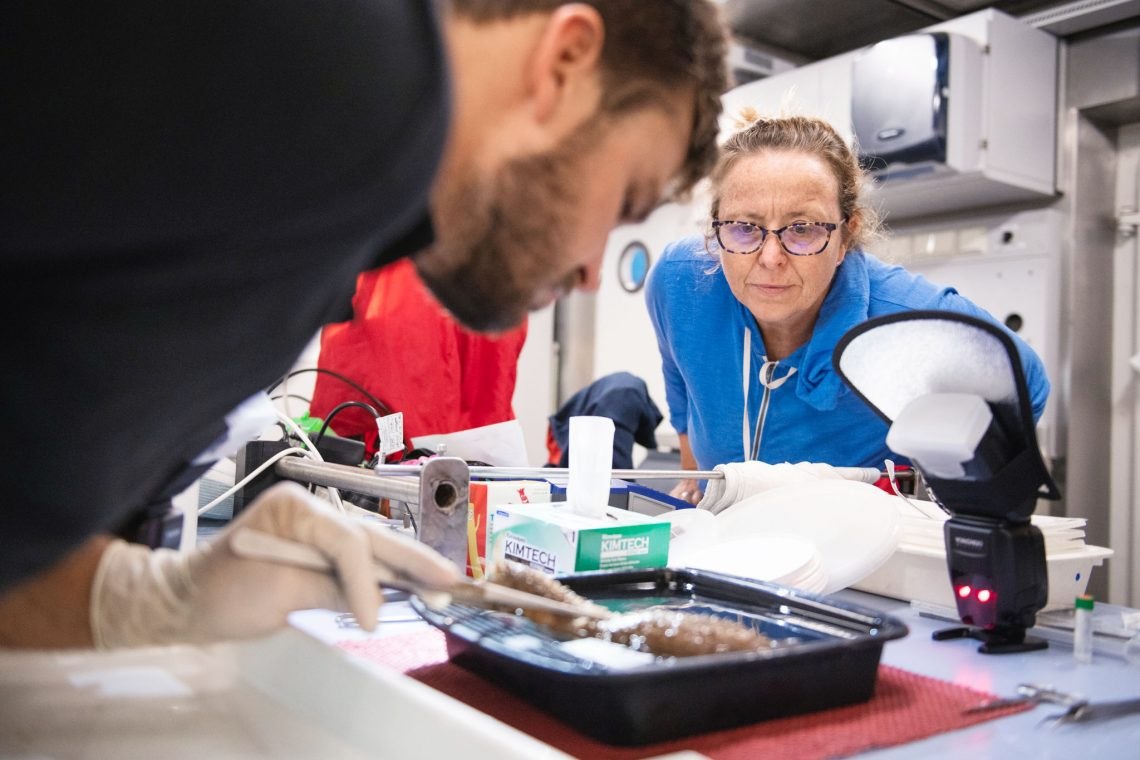
Once the samples have been set up in the wet lab the documentation begins, just as our great media correspondent Alex Ingle has been documenting all the scientific work on board the R/V Falkor.
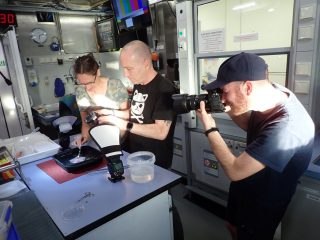
Differing taxa require different preservation techniques such as the gelatinous organisms preserved primarily in formalin and the harder bodied specimens in different concentrations of ethanol. This is vital so the organisms keep their shape and can be examined by taxa specialised taxonomists.
With all these steps, carried out smoothly and efficiently, the final crucial step is to subsample a piece of the specimens tissue in 100% ethanol. This tissue is then used in molecular work: the most data-rich element of taxonomy. This is not an easy task, and ensuring no contamination occurs involves a steady hand and knowledge of which parts to sample.
With two weeks passing, I have already learnt so many new skills. Every day on board the R/V Falkor, being amongst the WA Museum team has taught me something new. With everyone working so well together it has been great to find a groove and a place that I can be most efficient and help in this important role in documenting, preserving, and recording the beautiful deep sea life off Ningaloo, Western Australia.