


- Type in the search bar to begin searching the site.

Our History
2009
An epic journey begins
Co-founders Eric and Wendy Schmidt established Schmidt Ocean Institute as a 501(c)(3) private nonprofit operating foundation to advance ocean exploration and discovery.
In the news
2009
R/V Falkor refit for exploration
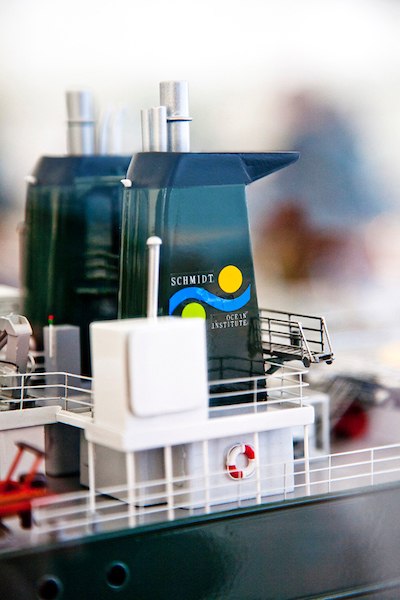
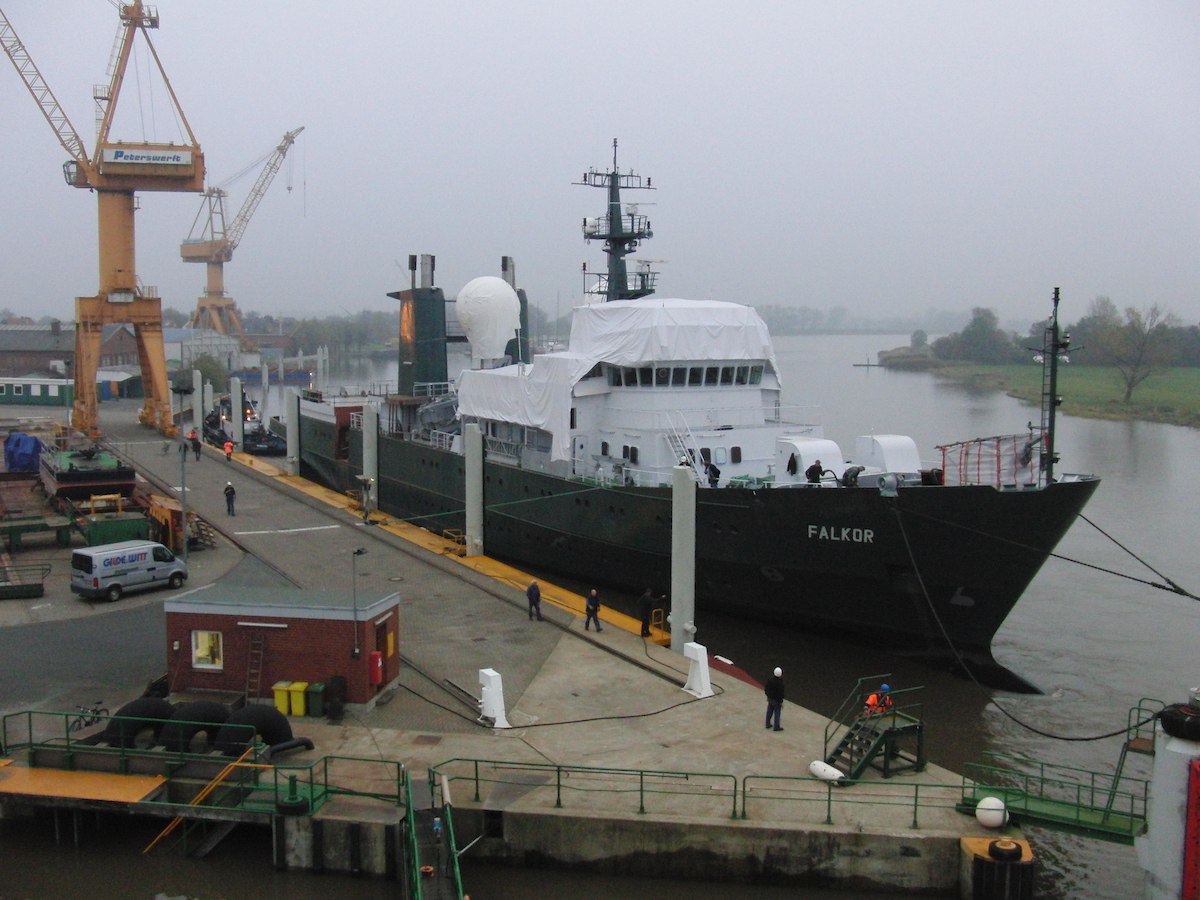

SOI purchases a German fisheries protection vessel and converts the ship into a state-of-the-art oceanographic research vessel, known as Falkor, from 2009 to 2012.
In the news
2010
The Lone Ranger sets sail
From 2010 to 2012, Schmidt Ocean Institute operated the ocean-going vessel Lone Ranger to facilitate oceanographic research in the Atlantic Ocean, Bermuda, and the Bahamas.
2011
Lone Ranger’s first expedition
MBARI scientists study a unique habitat where mats of seaweed drift in the Sargasso Sea and shelter a community of open-ocean animals.
2012
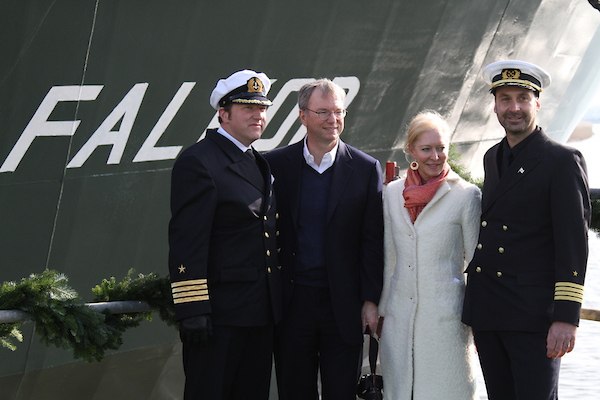
R/V Falkor
Schmidt Ocean Institute's recently acquired Research Vessel Falkor is named at the Peters Schiffbau Shipyard in Wewelsfleth, Germany. Extensive sea trials and science verification concluded in December 2012.
2012
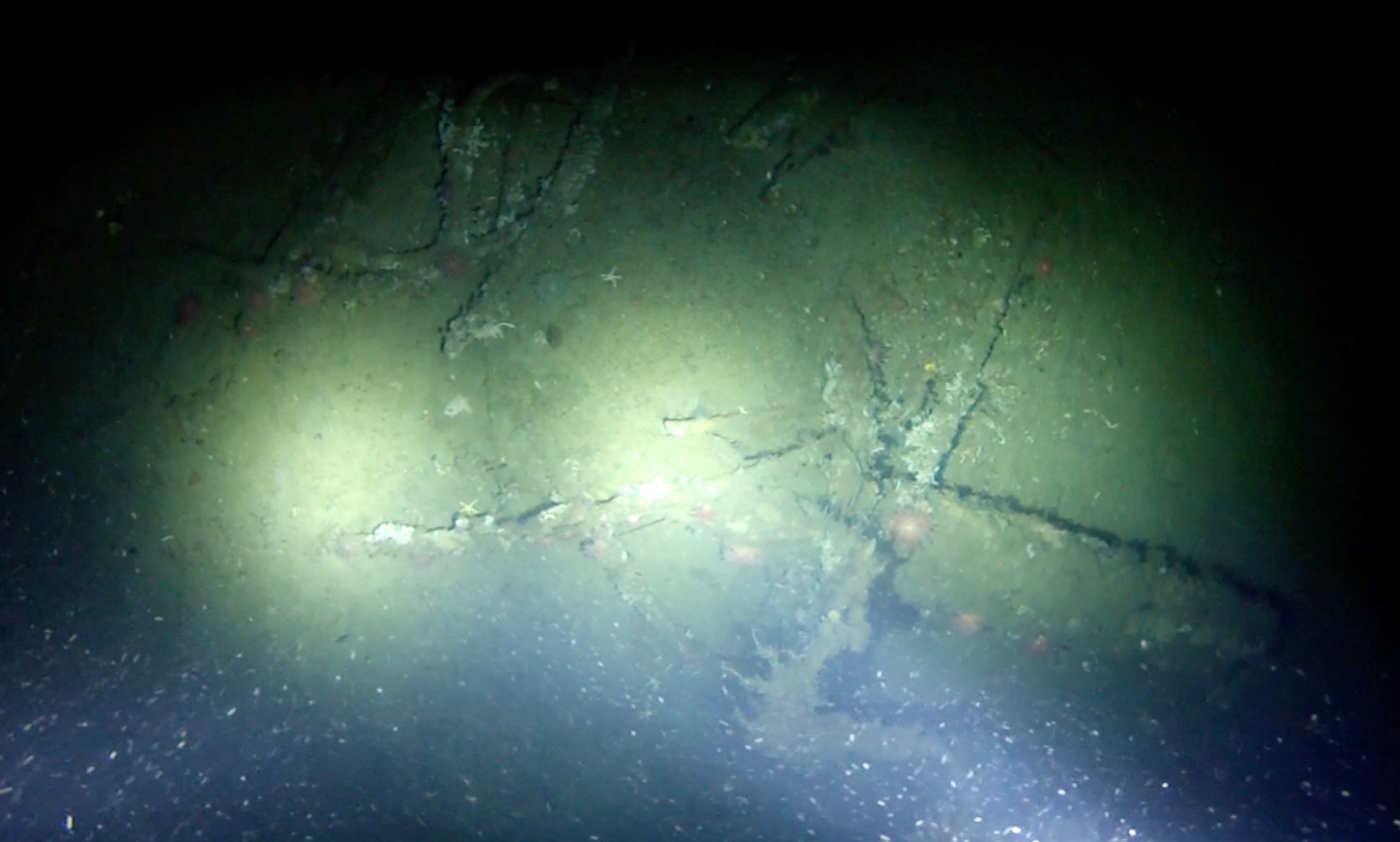
Discovering a shipwreck
The crew on R/V Falkor discovers the S.S. Terra Nova, an acclaimed polar exploration vessel that struck ice and sank off the southern coast of Greenland in September 1943.
2013
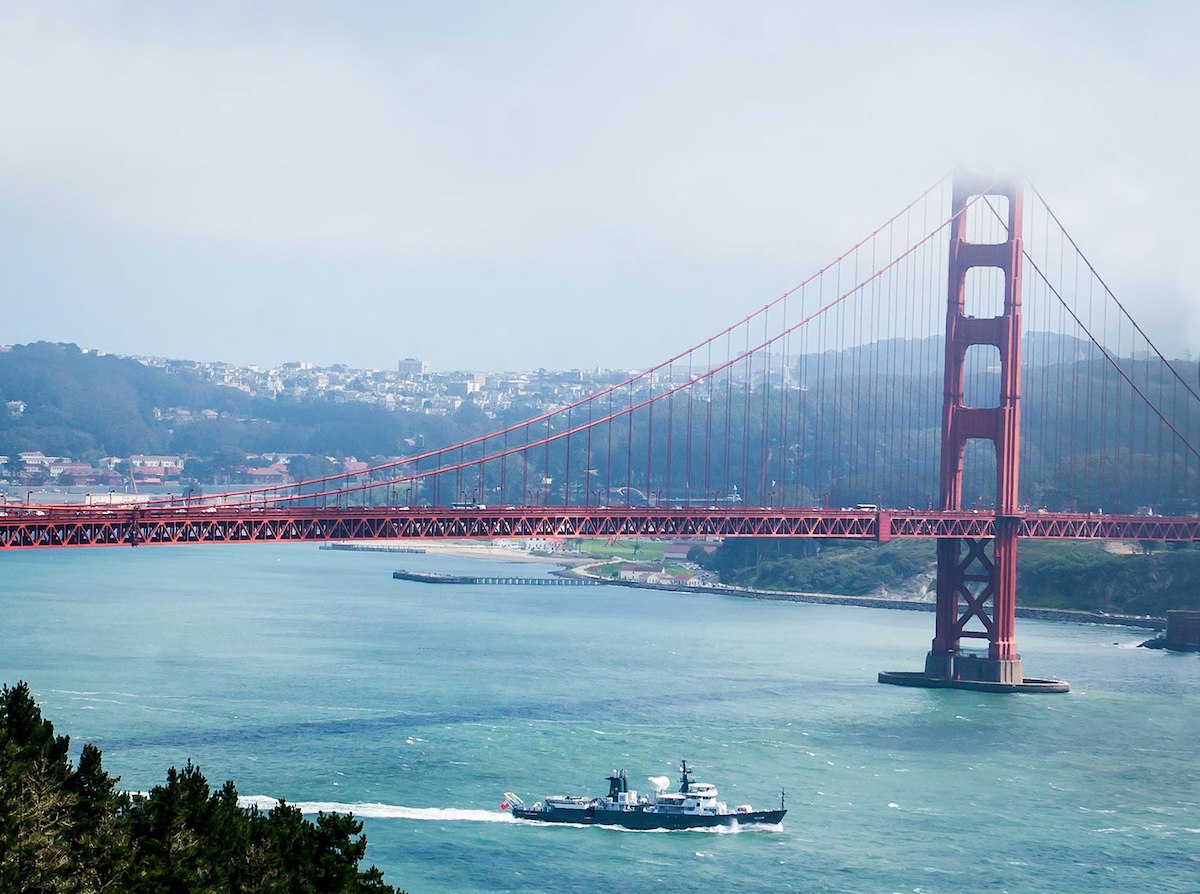
R/V Falkor visits San Francisco, California
In July, R/V Falkor makes its way beneath the Golden Gate Bridge for the first time, docking outside San Francisco’s famed Exploratorium for a celebration.
2013
Our first research symposium
“Accelerating the Pace of Ocean Science Through Technological Advancement and Open Sharing of Information” takes place in Honolulu, Hawaii.
2014
Discovery of world's deepest fish
Scientists on R/V Falkor discover the world’s deepest known fish, among several other new species in the Mariana Trench, using Schmidt Ocean Institute's full Ocean depth free-falling landers.
In the news
2015
Live from R/V Falkor
On March 2, 2015, the first ROV dive is broadcast live on YouTube, transporting a global audience to the deep and inspiring a meaningful connection with our planet’s life support system.
2015
Robotic tool advances exploration
The Australian Centre for Field Robotics develops a new visualization tool on board R/V Falkor for a citizen science project that allows anyone to view robotic deployments in real time from a smartphone. Over 22,569 tagged reef images collected by robots are tagged by the public.
2015
Schmidt Ocean Institute ranked as a top innovator
Schmidt Ocean Institute is selected as the Editor’s Choice top Five Stand-Outs in the Marine Technology Reporter’s annual Top 100 Innovators in the Maritime Industry.
2015
Waving-making residency
Artist-at-Sea Leslie Reed is the first artist to join a science expedition on board R/V Falkor, creating photographs altered by the pH of the seawater at the time of exposure.
2016
ROV SuBastian
Remotely Operated Vehicle (ROV) SuBastian completes a month of rigorous tests in the open ocean off the island of Guam in the western Pacific and is ready for robotic exploration.
2017
Top innovator
Schmidt Ocean Institute is featured in the 2017 MTR 100, an annual showcase of innovators in the maritime industry; the publication highlights five years of cutting-edge research and technology innovation.
2017
Celebrating five years
Our celebration of five years of science at sea includes public ship tours on both NOAA Okeanos and R/V Falkor at the Port of Honolulu. Hundreds of visitors get a behind-the-scenes look at ship operations.
2018
Top innovator & ocean influencer
Schmidt Ocean Institute is featured in the 2018 Marine Technology Reporter 100, an annual showcase of innovators in the maritime industry, and is also named one of the top 10 Ocean influencers.
2019
U. S. House of Representatives
Dr. Carlie Wiener (formerly Communications Director) is one of four witnesses to testify on ocean exploration before the U.S. House of Representatives Committee on Science, Space and Technology, Environment Subcommittee.
2019
U. N. Ocean Decade
Schmidt Ocean Institute is proud to contribute to the UN Decade of Ocean Science at the first planning meeting, where approximately 200 thought leaders and key stakeholders gather to coordinate decade activities.
In the news
2019
One million square kilometers of seafloor mapped & we join monumental mapping initiative
SOI and The Nippon Foundation-GEBCO Seabed 2030 Project partner to share mapping data and fully map the seafloor by 2030.
2020
A new executive director
Schmidt Ocean Institute appoints Dr. Jyotika Virmani as its first executive director to lead work that advances oceanographic science through innovative research and technology.
2020
Remote expedition in Australia
Scientists work remotely with Schmidt Ocean Institute on one of the only at-sea science expeditions to continue operating during the global pandemic, exploring never-before-seen deep waters of the Coral Sea.
2020
10-member advisory board selected
An advisory board of experts in science, maritime operations, and communications will serve three-year terms, providing feedback and guidance on strategy and operations.
2020
A new partnership
The Intergovernmental Oceanographic Commission of UNESCO announces a partnership with Schmidt Ocean Institute to advance the United Nations Decade of Ocean Science for Sustainable Development.
2020
New species discovered
A siphonophore estimated to be 150 feet long— possibly the longest animal ever recorded — is discovered during a month-long scientific expedition in abyssal canyons off Ningaloo.
In the news
2021
A new research vessel
The vessel — re-named Falkor (too) — expands SOI’s philanthropic science program and capability to explore the Ocean. It is 363 feet long and ice-rated.
2021
A decadal map and new EOI process
Schmidt Ocean Institute unveils an ambitious plan to work in the seas around all seven continents over the next ten years and makes updates to streamline its Expression of Interest (EOI) process.
In the news
2021
R/V Falkor ’s final expedition
Nov. 14, 2021, R/V Falkor embarks on its final voyage. The crew reflects on the privilege of being aboard a ship that benefits humanity, the planet, and all of its inhabitants.
2022
R/V Falkor donated to Italy
R/V Falkor is donated to the Italian Consiglio Nazionale delle Ricerche, expanding the science agency’s fleet of research vessels and continuing Falkor’s legacy of conducting ocean science.
2022
R/V Falkor (too) naming ceremony
Schmidt Ocean Institute President and Co-founder Wendy Schmidt celebrates as a bottle of Spanish sparkling wine is broken on the bow of the newly refitted Research Vessel Falkor (too) in Vigo, Spain.
2023
A new research vessel
A new research vessel for use by scientists at no cost advances marine science and pushes the frontiers of deep-sea exploration in exchange for making their research and discoveries publicly available.
2023
First year of science on board Falkor (too)
SOI celebrates science and discovery with R/V Falkor (too) by finding new hydrothermal vent fields teeming with life, and that was just the start of a big year.
2023
Art Basel Miami Beach
With Nautilus magazine, UNESCO, and the Phillip and Patricia Frost Museum of Science, we unveil a dynamic program during Art Basel Miami Beach with 50 pieces from our Artist-at-Sea collection.
2024
Species discoveries
Scientists confirm underwater mountains harbor abundant life off Chile’s coast, including hundreds of species suspected to be new to science.
In the news
2024
New tech for OMZs
Successful test and integration of an ultrasensitive oxygen sensor that revised scientists’ understanding of oxygen minimum zones and reshapes hypotheses on how microorganisms living within them operate.
2025
Antarctic Voyage
The R/V Falkor (too)’s inaugural expedition to Antarctica, called “Into the Southern Ocean,” is a collaboration between Schmidt Ocean Institute and National Geographic Society.
2025
First Footage of a Colossal Squid
One hundred years after its discovery, the colossal squid is been filmed alive in its environment for the first time by a team on board R/V Falkor (too) in waters off the South Sandwich Islands.