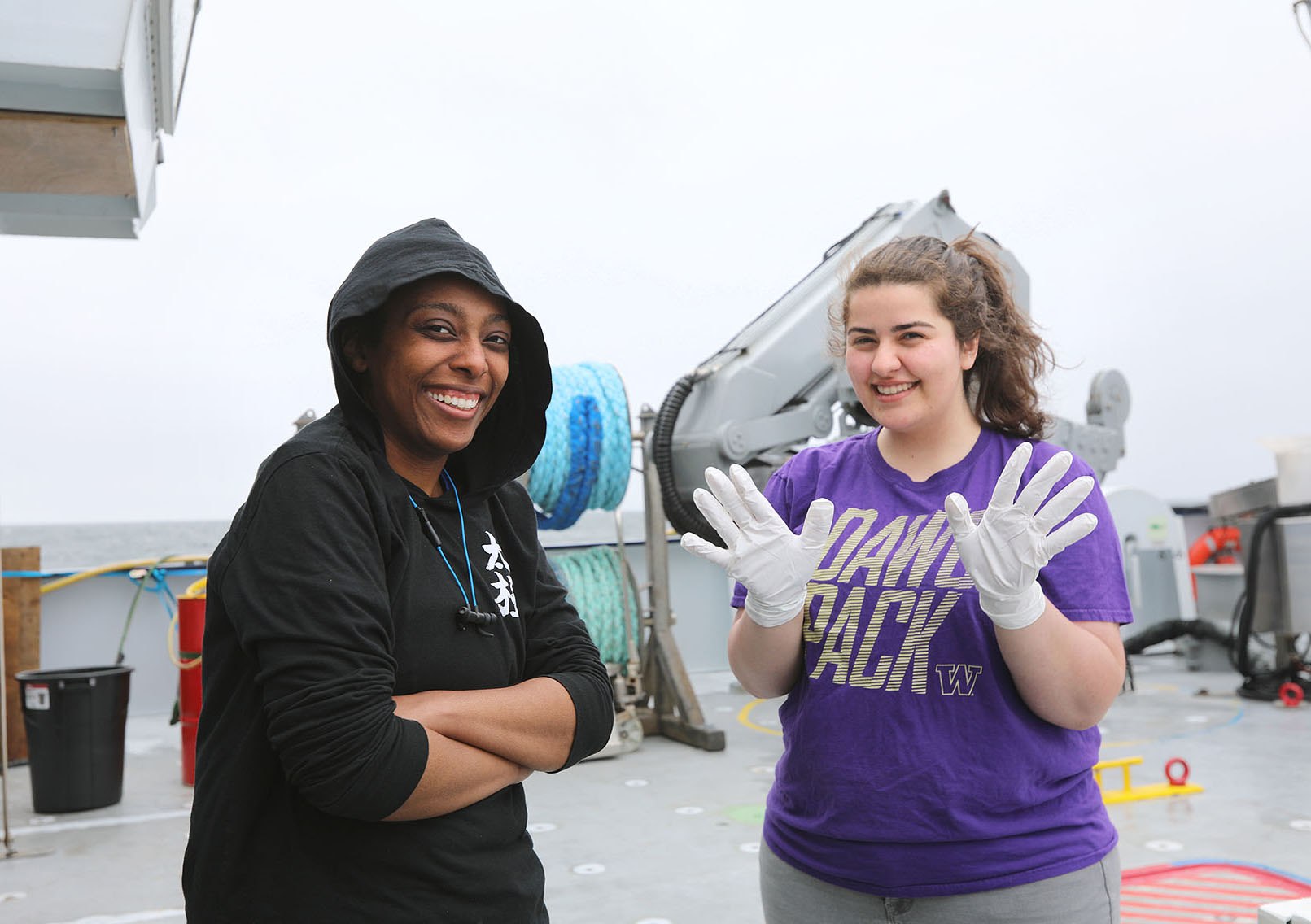
After picking up the science team in Astoria, we headed back out to sea! This time we headed northward to the Olympic Coast National Marine Sanctuary
I have worked with a few different oceanographic sampling methods as part of my undergraduate coursework, but I was excited to learn new systems aboard the R/V Falkor. The first instrument I worked with was the XBT, or the Expendable Bathythermograph
Digging in
On this search I also was able to witness some of the first steps in developing a sampling methodology. Finding meteorites on the seafloor - a year after they landed - is no easy task. Dr. Marc Fries used sonar systems to determine probable locations for different size classes of meteorite fragments. Knowing where these fragments are likely to be is only part of the battle, and locating them under months of continental shelf sedimentation requires specially designed tools. The initial plan was to use a device lovingly referred to as the “cosmic dust pan.” This piece of equipment was pushed through the sediment by Remotely Operated Vehicle (ROV) SuBastian to collect the upper layer of seafloor and filter for larger fragments. However, during the second dive there was the collective decision to switch methods to help the ROV cover more ground in less time, increasing the odds of finding meteorites. The ROV and science teams worked to create a new system that enabled active sifting. The new device acts as a flour sifter
Planning & Adaptability
Another valuable experience I am taking away from this expedition is being involved in logistics and planning regarding how samples are handled when they arrive on deck. Prior to boarding, there were multiple conference calls with the team headed by Dr. Fries to discuss what was the best course of action. Even with all of the meticulous planning, teams at sea still have to be adaptable. One of the things I really admired about this science team was their incredible ability to roll with developments as they happen, and find ways to further refine the approach to research.
I am incredibly thankful to Schmidt Ocean Institute for this amazing and unparalleled experience at sea. Through this I have gained so much and it has certainly solidified my desire to continue pursuing a career in oceanographic research. For now I must say farewell to the Falkor, and look ahead to all the wonderful opportunities for which this experience has prepared me.