
All Systems Go
Early Saturday morning Falkor entered the Papahānaumokuākea Marine National Monument (PMNM) with all systems up and running.



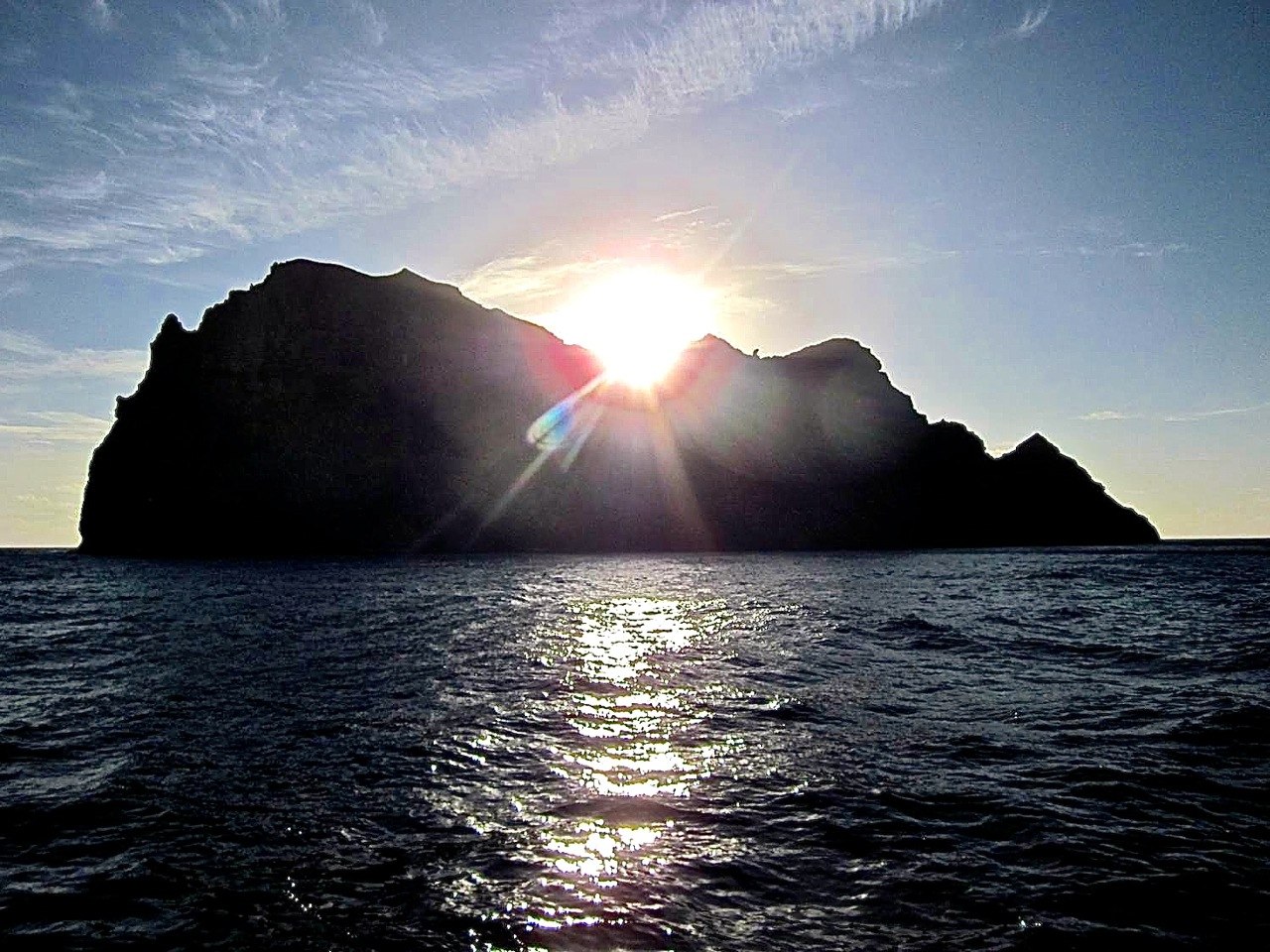
As a young scientist whose research has thus far focused on the geochemical analyses of rocks collected from such seamounts, the first sight of this island left me speechless. Of course, I got it over it, and was then inspired to express my excitement to anyone who would listen to my fervent geologic description of the Nīhoa volcano. The rocks I have from this volcano are unusually rich in a common mineral in Hawaiian basalts called olivine—so named for their olive green color. That unusual abundance of these olivine minerals, called “picrites,” indicates that they formed and accumulated in a magma chamber before the lava erupted at the surface.
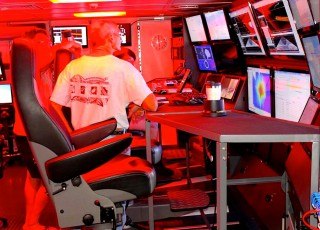
Before we even reached the monument, we were already working, including collecting data with the gravimeter
Immediately after completing the gravimeter test, Falkor turned to the northwest and made its way toward the monument’s boundary to begin the cruise’s main task of using the sonar system
Meanwhile, on the highest observation deck (a.k.a. the Monkey Deck) above the ship’s bridge, Dan Luers, our expert NOAA marine mammal observer, was training rotating members of our science team in how to keep a keen eye out for any marine mammal passersby and how to properly record sightings. We have already collected data on 2 individual humpback whales and a group of approximately 10 pilot whales.
We’re only two days into our 36-day expedition, but things are already very busy and promise to stay that way. There’s a lot of work ahead, but that should mean a lot of productivity as well.

