



I love the saying “everything that is visible hides something else that is invisible” by artist Rene Magritte. It summarizes what both fascinates and calls to me from nature… the forces behind what we see. In many ways artists and scientists are alike, they are both creative and seeking to understand the nature of things. This exploration of things seen and unseen is a collaborative between art and science, known as art-science. Everyone has some idea of art, but art-science is a special breed of art, one that allows art to inform or influence science (think science fiction influencing science developments) or vice versa (science helping artists with more ways to express their vision). Having an opportunity to conduct art on R/V Falkor allows us to explore not only the Ocean, but this intersection of the artistic and the scientific.
Who we are
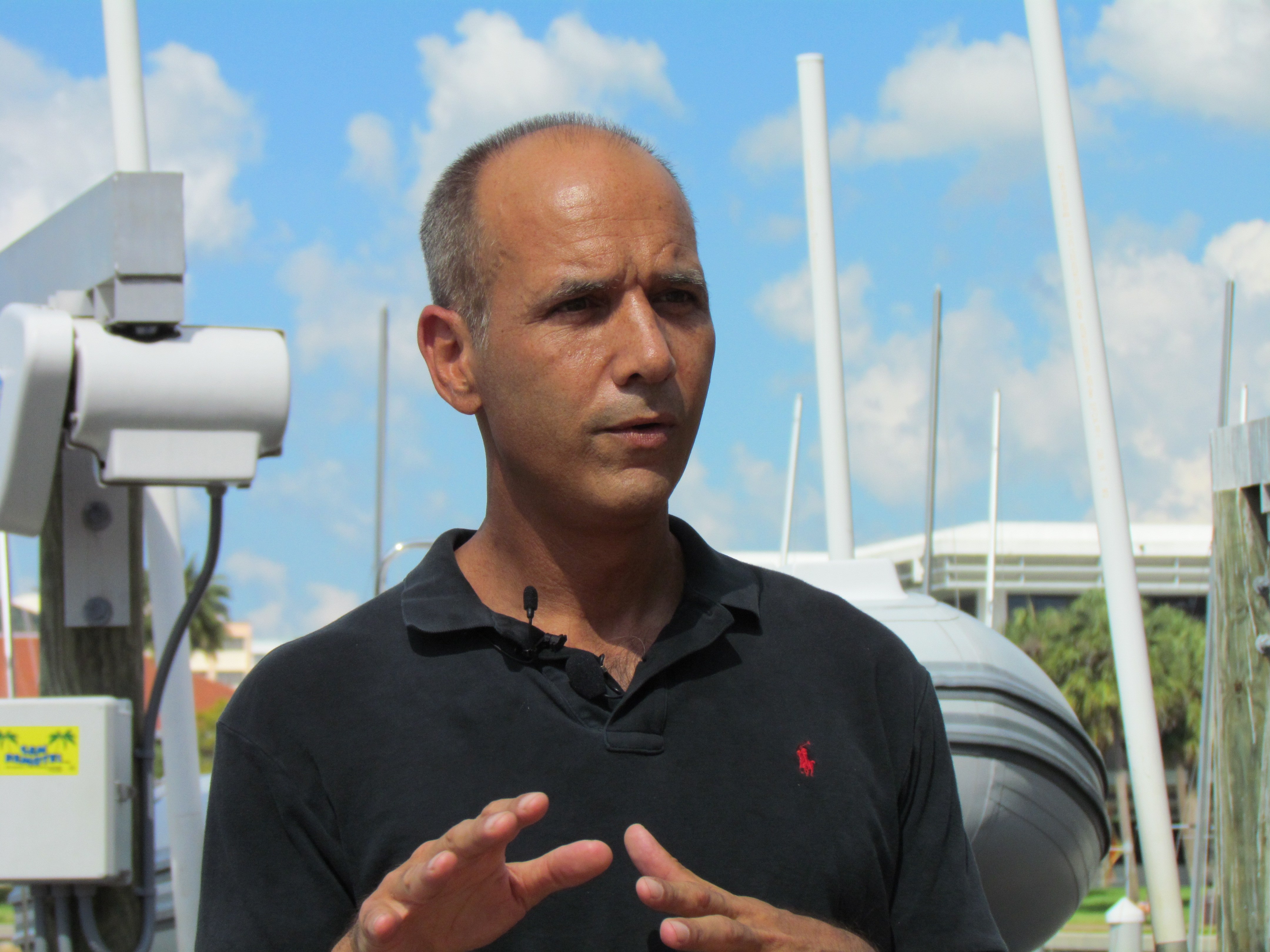
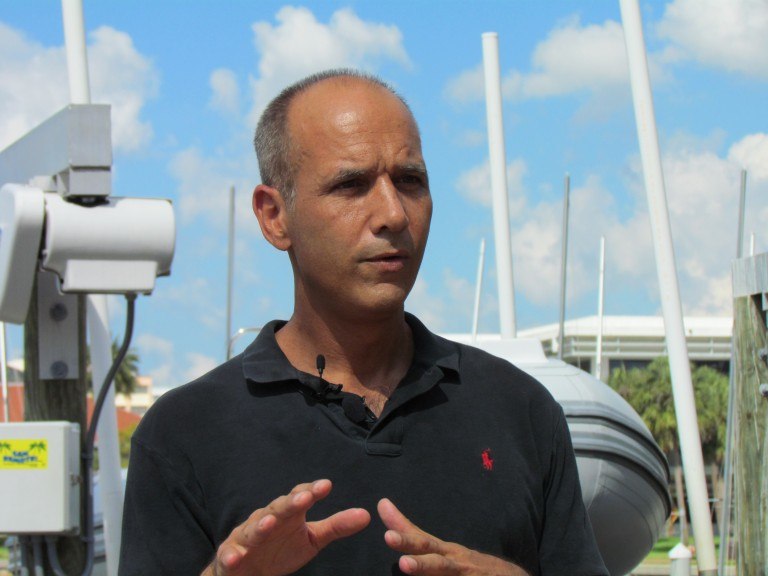
My name is David Fries
These computer codes are made to mimic Turing’s reaction–diffusion systems and are mathematical models that explain how the concentration of one or more substances distributed in space changes under the influence of local chemical reactions and diffusion (which causes the substances to spread out over a surface in space). From these seemingly abstract equations, visual and audio patterns are generated which can range from simple squiggly lines, to highly complex patterns. We call these biomorphic patterns, and seeing them emerge can be mesmerizing.
pH PLASM
During the transit, we are exploring this art-science balance, examining how some “unseen” element of the ocean, in this case pH, can be used to alter the biomorphic patterns of PLASM. To do this, we are collecting pH data from the recently installed Wendy Schmidt Ocean Health XPRIZE
To contrast the digital art, we will also combine the PLASM work with analog photographic art. Leslie is on board downloading the pH data and capturing visual moments simultaneously by taking analog images (photographs) and developing the film with ocean water that Falkor transits through. She is hybridizing and reinvigorating older photographic processes, such as using a pinhole camera and exposing the images to seawater samples. We are using natural chemical variations such as pH to develop novel generative images. By combining analogue techniques with new forms of imaging, Leslie hopes to use the magic of photography to share her experiences.
So there’s Leslie on the Falkor, Tez in Europe, and I am reporting comfortably from shore remotely linked to the Falkor, and keenly interested in what Leslie sees and dreams up. My interest lies in peeking into the unseen with the pH measurements. Trying to decode, understand, and share that unseen change through PLASM. Stay tuned.
David Fries