
Discovering the pattern language to connect seemingly disparate elements and systems is the common thread within the art and design-based work I create. I use these discoveries to call attention to the ever-present interconnectedness of our environment. I was thrilled to be selected as the Schmidt Ocean Institute's Artist-At-Sea
To prepare for this cruise, I packed a variety of art materials and supplies ranging from paper and fiber to PLA filament and silicon mold-making ingredients. During the two-day orientation in Honolulu, I was able to visit Professor Les Watling’s Biology lab at the University of Hawaii at Manoa
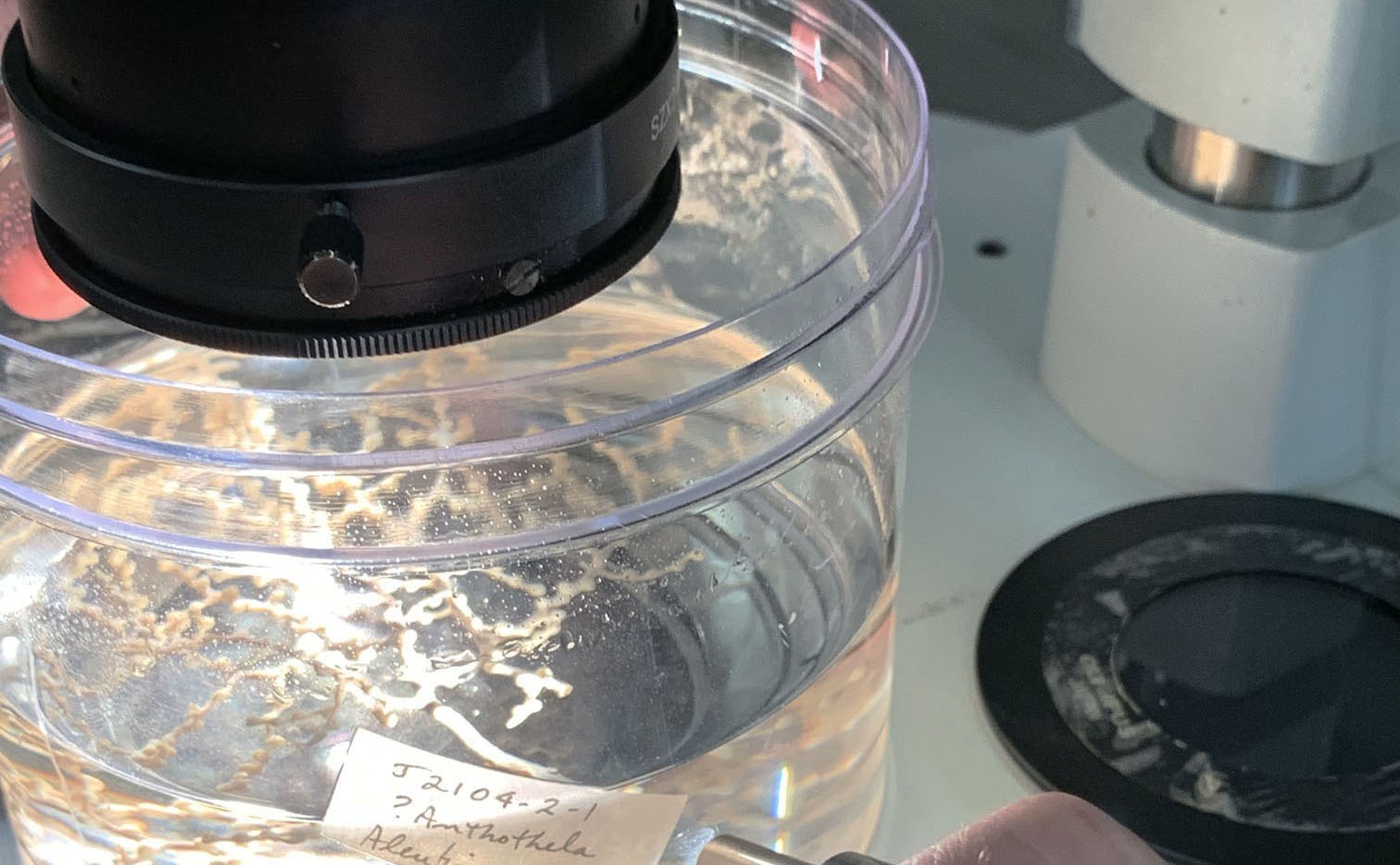
With the Keratoisis and Anthothela specimens I borrowed from Watling’s Lab, I performed test runs with the 3D scanning photogrammetry
This was my first day feeling normal at sea. It took time for me to get my sea legs![/caption]
Coming up…
As I adjust to the dynamic motion of the water, I have been absorbing an enormous amount of information both from the scientists and the technicians during this first stage of the cruise with more details to come in the upcoming posts. A valuable and significant aspect of my experience so far has also been to converse with the scientists about the questions that lead to deeper inquiry. I find the overarching question regarding the existence of a biogeographic boundary along the Emperor Seamount Chain really fascinating as it causes me to think about what constitutes or defines “boundaries” in a fluid and dynamic system, how are they controlled or directed, are they permeable, and whether diffusion occurs along the boundary. Reframing these questions in the context of art and science helps to push me out of my comfort zone. Additionally, my interest in utilizing textures, tactile qualities, and fluid pressure has been growing, as I consider links between ourselves and the deep sea/marine life and organisms we are exploring.