



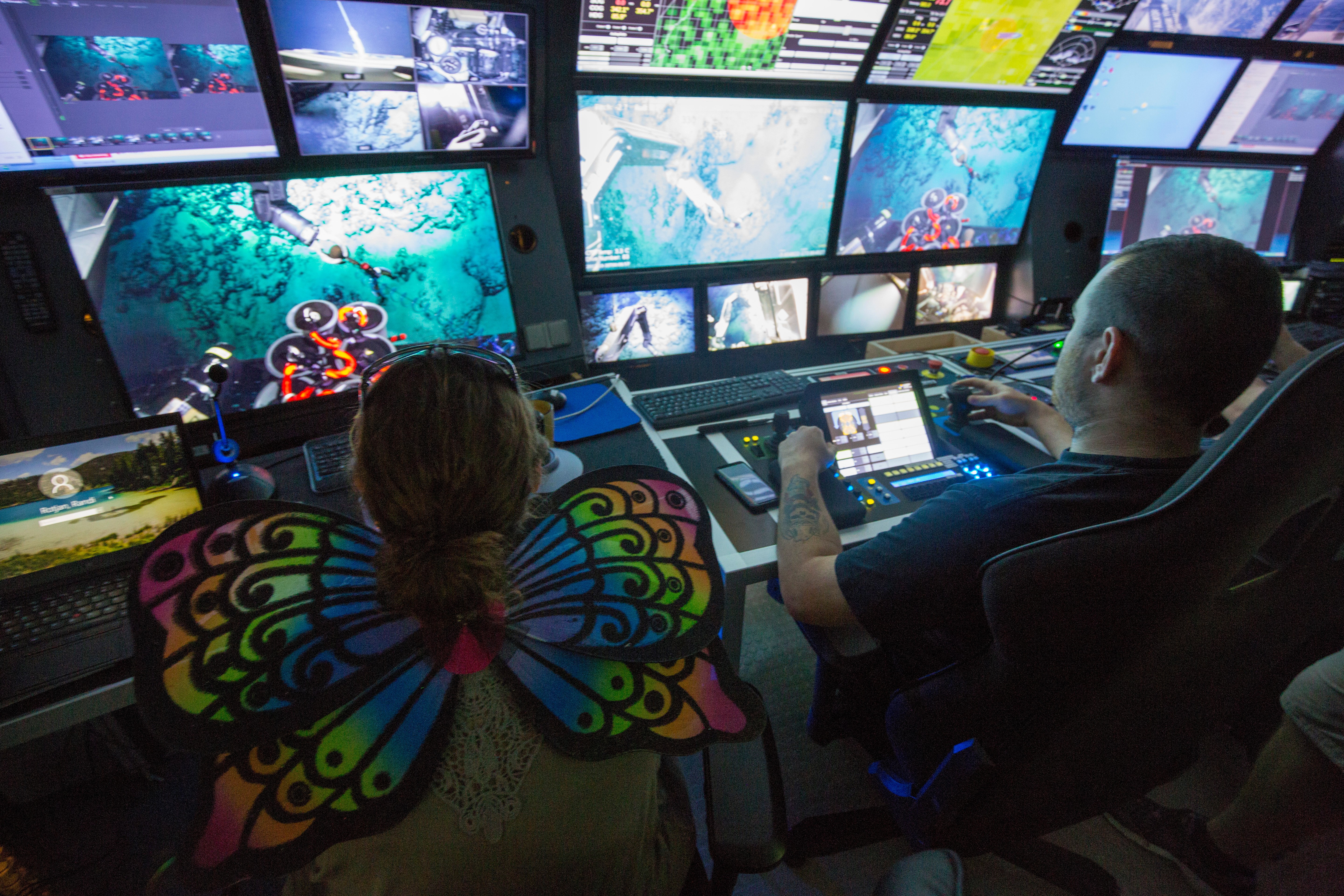

This Halloween, we found ourselves in what may some regard as a relatively spooky environment: 1646m deep, on the bottom of the ocean, under bone-crushing pressure that is 160x more than normal, alone in the most remote part of the Pacific, in a place where light never shines, and distant sounds only echo hauntingly.
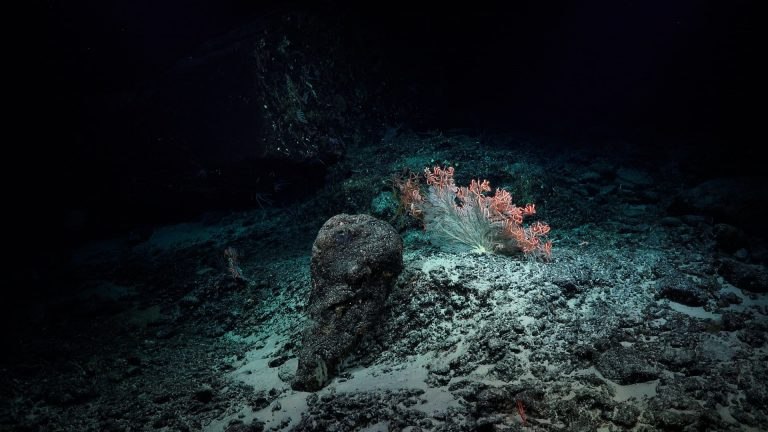
Although we are near the equator, it is 2.6 degrees C in these deep sea environments, and we are working on seamounts that have never been mapped - let alone seen - prior to today. We are in a part of the Pacific so remote that the closest humans to us are on the space station. But fear not: although everything I have said is true, we are safe on the surface, surrounded by colleagues, navigating an unmanned undersea robot
We spent last night using the ship's high-tech multibeam systems
Not only are we using this incredible technology to look at this incredible biology, but we’re doing it in a special place that I have been privileged to work on and with for almost a decade – the Phoenix Islands Protected AreaSo. Where are the ghosts?
We are diving on ancient volcanoes, 50-80 million years old, that are haunted with history. There are some corals that are estimated to be thousands of years old, still alive, still thriving. But then there are those that have died, evidenced now only their rubble, or their ancient calcareous bases and stalks still standing as a tombstone, marking the grave of a deep sea marine invertebrate that once was. There are iron-manganese crusts, a sign of slow and steady precipitation of minerals over time, accumulating over basaltic substrates, blanketing the former volcano. And finally, there are the living invertebrates – so many of which are clear and ghost-like (transparent or translucent) – with pale or shimmery coloration – just quietly sitting on the lightless seafloor, eating marine snow as it gently falls from the surface.
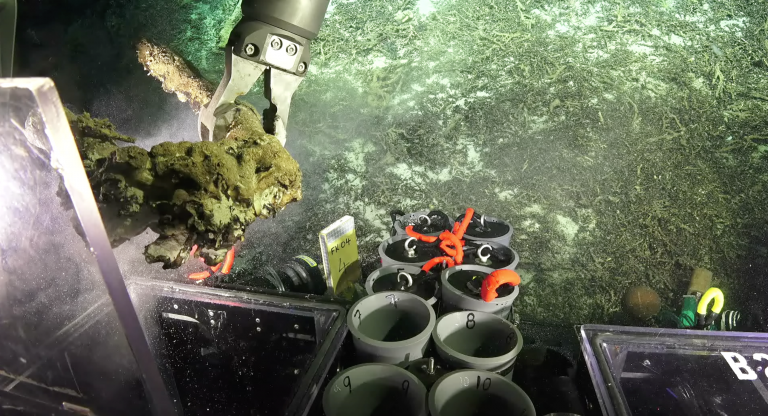
We are here to document, collect, and study some of these organisms. This process will establish a baseline inventory of deep sea creatures for PIPA, as well as illuminate species-specific interactions between corals and their predators, and their microbes (in collaboration with Anna Gauthier and theKagan Lab at HarvardTricks and Treats
Along the way, we’ve been tricked and treated. The tricks? Some elusive samples have literally fallen between our robot fingers, denying science the opportunity to study them. Some haloed corners of our screens have whispered excitement, but have turned out to only shadows or oddly-shaped rocks. The treats? New discoveries, almost by the hour. Fair weather. Calm seas, a collaborative and energized ship
Ghosts are everywhere, but we are more interested in the magic of science. Through careful thinking, hypothesis-testing, engineering, natural history and curiosity… we do not need a costume or a mask this Halloween. We are scientists, and this is as real as it gets: No tricks. ;-) Happy Halloween!