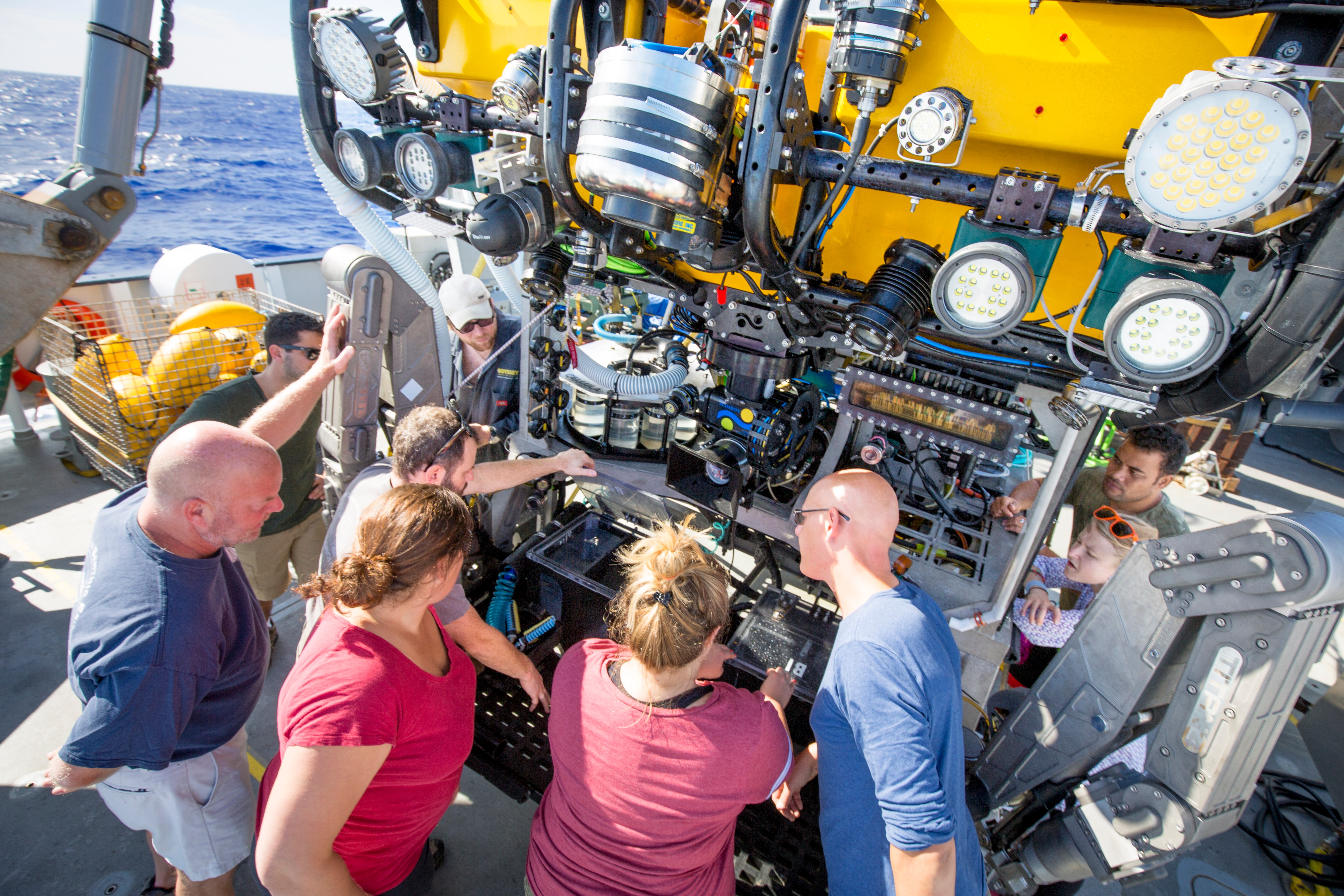

If I asked you to picture a coral reef, you might think of snorkelling around colorful ocean architecture surrounded by curious fish. But you can’t snorkel or scuba around deep ocean corals. Thousands of meters below the sea surface, these are high pressure, intense, cold, dark environments with low oxygen levels - not exactly a great holiday atmosphere for humans. Fortunately this is where ROV SuBastianExcitement On Board
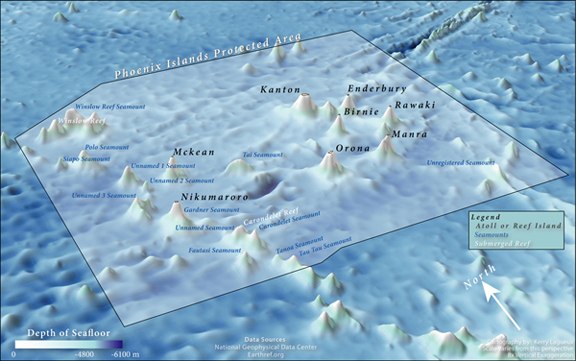
There is a special type of anticipation reserved for rarely visited dive sites and places human eyes have never seen; and I can feel that buzz on board R/V Falkor right now. We are headed for the Phoenix Islands Protected AreaGoing Deeper
No-one on board can be sure exactly what we will find down there, but discovering new species seems certain. These unusual, deep, dark environments are host to some really interesting adaptations. We want to understand which creatures are thriving down there, and how they are navigating, communicating, and making a living. How are the reefs changing in an age of ocean warming and acidification, and what kind of impact is the creation of these marine protection areas having?
Answering questions
We will be doing visual surveys with ROV SuBastian’s high powered cameras, taking fluid samples, measuring pH levels, as well as sampling coral and other animals. We are using special cameras to get a ‘shark’s eye perspective’ looking at biofluorescence around coral reefs.
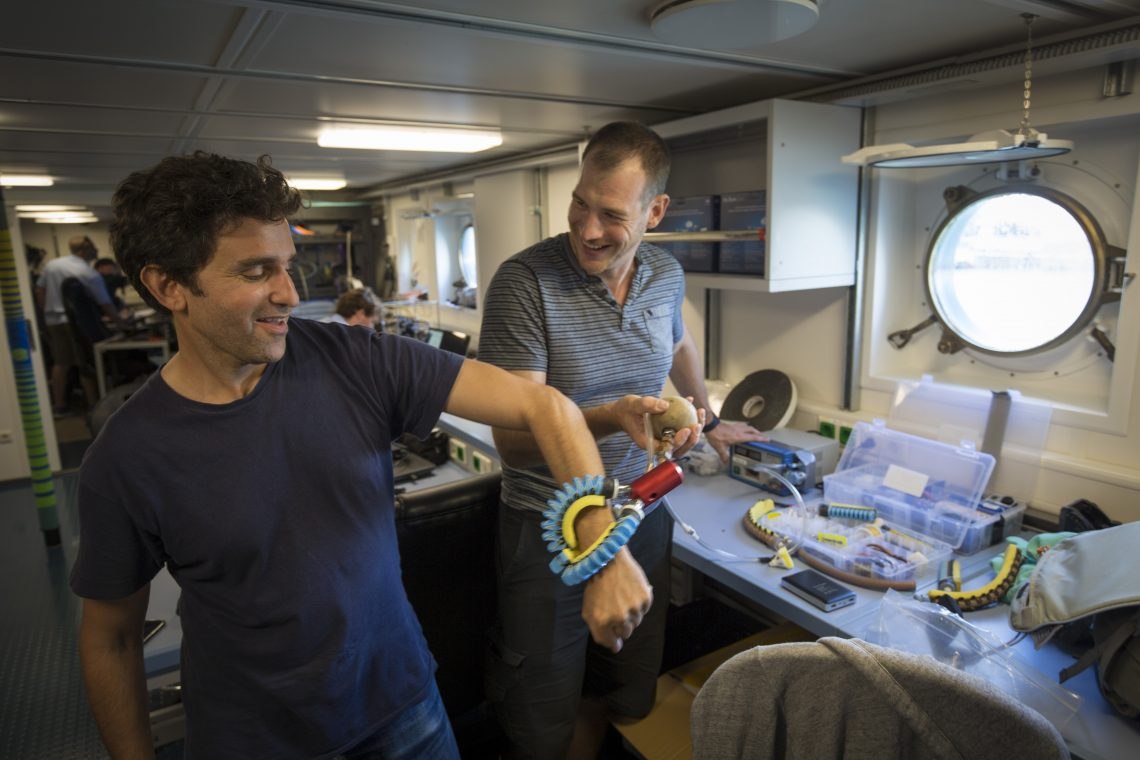
We will also using soft robots that can delicately interact, sample and examine the corals and deep sea marine life of the Phoenix Islands.
Making Plans
Our first stop is visiting the Kiribati Island of Kanton to get our passports stamped, exchange cultures and ideas and learn more about PIPA from those who helped create it. After that comes three straight weeks of robotic diving on deep coral sites. We are due to send SuBastian down to our first location on 13th October and we would love you to join and listen in on the science as we livestream the dives on our YouTube