




Today was quite a day, and I’m still in the midst of it, so this might be short. When last I wrote we had just completed our first successful dive at Marker 113, collecting samples for viruses, microbiology, and chemistry. By midnight, due to hard work by both the ROPOS crew and our science team, we had managed to turn the vehicle and our instruments around and we were back in the water.
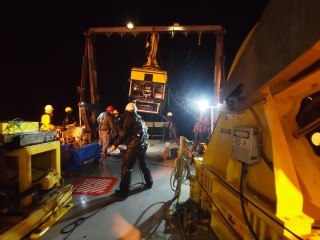
We made our way again to good old Marker 113. This time, we were armed with Dave Butterfield
There are also special filter units with a preservative in them that effectively stops the microbial cells' genetic’ machinery as they hit the filter. This creates a snapshot of all the genes that were turned on, what they produced, and overall gene activity patterns, all of which we can determine through later analyses back in the lab. Such data help us answer questions like which microbes are the most critical producers of food in the subseafloor. Without that preservative, the cells would change in countless ways on their trip to the surface, and what we want to see is what the microbes are doing in their natural home.
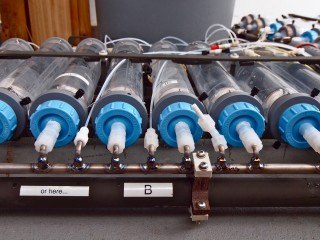
Clearly, The Beast can do many things, and I’m quite fond of it. However, one thing it can’t do is collect those large volumes of water we gathered yesterday for viruses
But there was no time to rest between dives, as we had to turn everything around one last time. This was our fourth ROPOS launch in about a 30-hour period. We normally don’t work at such a crazy pace. But there is a major storm system on its way, so we are all pushing ourselves to make the most of this good weather window and to stay focused on our primary dive goals. The ship's crew and ROPOS team are doing an awesome job of supporting our craziness, for which I am very thankful.
It's approaching 9 p.m. now here on the Falkor, and I can see ROPOS is only a few hundred meters from the seafloor. I better make my way into the control van to get the work going. There are fluids to be sampled and microbes to be discovered.