




The expedition ended with a marathon dive through a portion of the Olympic Coast National Marine Sanctuary and the successful completion of a long day’s hunt.
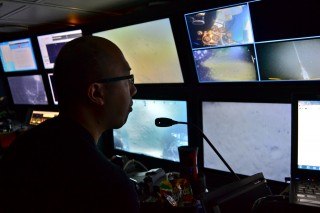
The target was Tully Canyon, on the U.S. side of the borderline, and it’s considered an important pathway for lower oxygen water offshore to make its way inshore. As far as we know, the deeper reaches of this canyon—we were working down to about 300 meters—have never been seen before.
The team had to apply for special permissions to work in Tully because of its sanctuary status, and we weren’t allowed to collect any samples. We were only allowed to dive beginning at midnight this morning, so the team launched the ROV right after that and stayed down until midday. Then, after a quick move to another site, ROPOS was down until about 9pm.
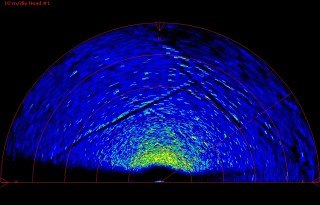
One striking feature of the canyon was the lingering signs of past commercial trawling. Past trawl scars can be visible for years. Each shows up as a dark line on the ROV’s sonar (see image at right) because of the indentation the trawling gear leaves behind.
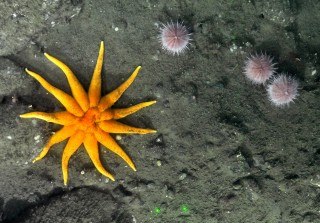
Another standout event came early on, when the cameras revealed the skeletal remains of a mammal of some sort, possibly a seal, with urchins and other animals gathered around still taking advantage of this rare food source.
The Hunt
Jackson Chu
As the long dive day was wrapping up, everybody who could retired to the upper deck for the traditional end of cruise barbecue—this one American style in honor of our brief dip below the Canada-U.S. border.
After ROPOS was on deck, we began making our way back to Victoria. A successful cruise means a great deal of work for all involved back on shore. In the case of the science team, there are countless hours of video surveys to analyze, and samples to process.
Over time, the team will be able to put together the first clear picture of life in Barkley and Tully Canyons, which will lend vital context to the work on the NEPTUNE observatory with all its ability to gather non-stop data on the region.