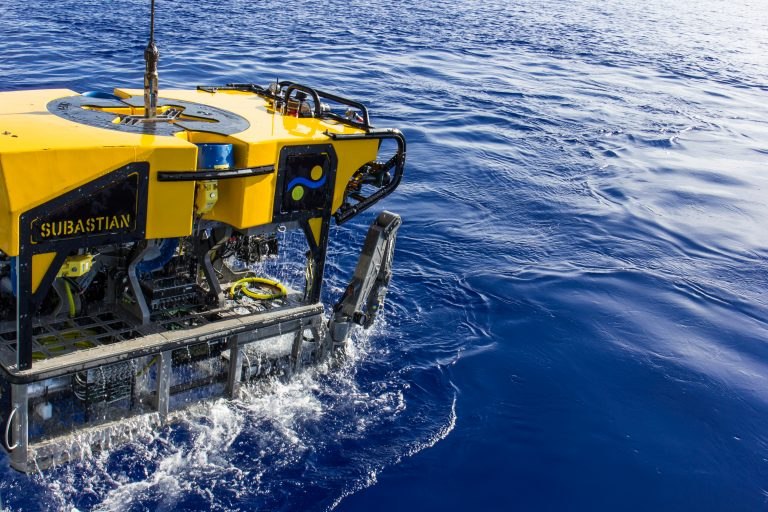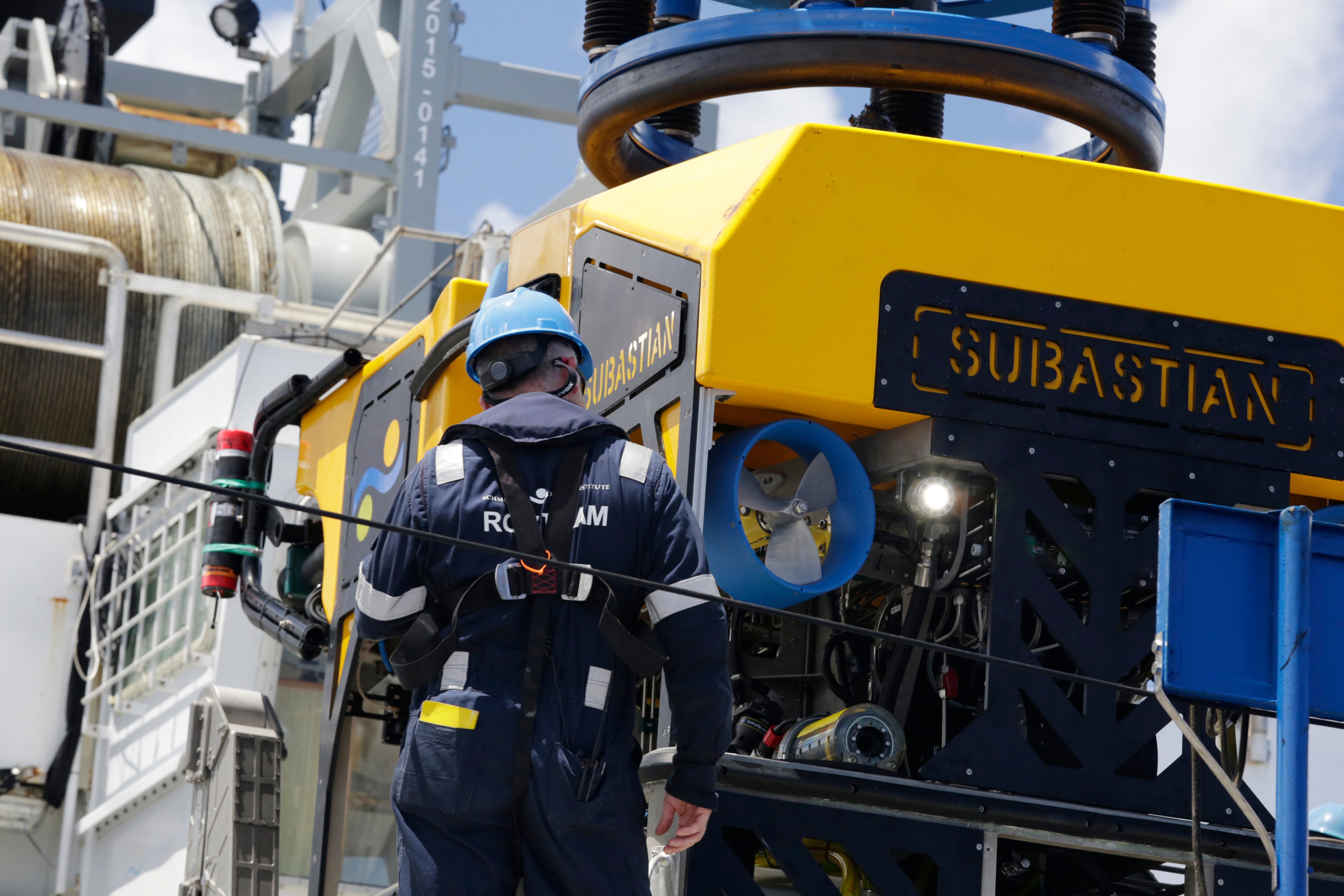
Schmidt Ocean Institute’s new ROV SuBastian
The day before a dive, ROV Manager David Wotherspoon leads the engineering and marine tech team in a meeting to discuss the dive objectives and challenges. Lead Marine Technician Leighton Rolley uses Falkor's high-performance multibeam mapping sonar to assess the dive site and decide exactly where SuBastian should go. The sonar provides information on depth, shape of the terrain, and terrain type - such as mud, rock, or rough surface. This system visualizes the texture of the sea floor, and Leighton uses this information to create a 3D image of the site and then distributes it to the engineering team.

Night falls and after a very full day most of the ROV team is in bed by 11 pm. Falkor is a floating city that never sleeps; the crew rotates through 24 hour operations to ensure the safety and readiness of the vessel, as well as its crew and cargo. When morning arrives Falkor transits over to the dive site, and upon arrival, the officer at the Bridge slows down the ship.
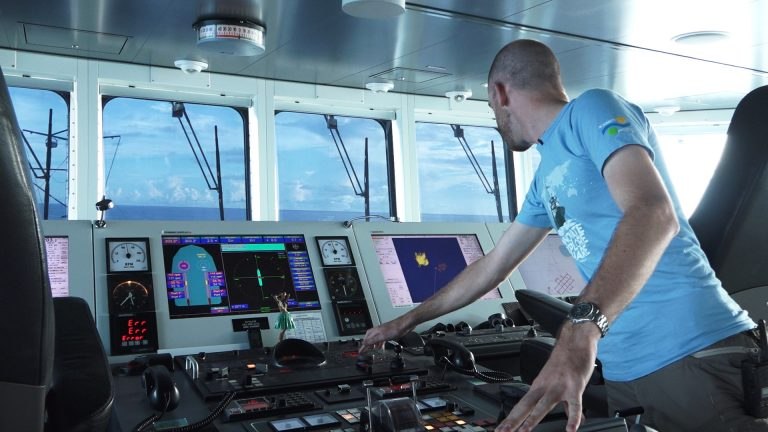
At 6 am, the ROV engineering team is already up and running to prepare for the dive. The officers on the Bridge study currents and wind to get an idea of the ocean conditions. For more precise positioning of the ship, the officers turn on aDynamic Positioning (DP) system, which allows the ship to stabilize itself automatically after taking in all of the information. This system is used during the ROV dive so that the Falkor can be stationary and stabilized no matter the weather condition. Stability is important while SuBastian explores the deep because it is tethered to Falkor by an umbilical, constantly sending electricity, data, and a control signal. Falkor needs to maintain a precise distance from SuBastian so that the umbilical does not tangle, which could build tension. An interesting comparison would be to think of a dog on a leash - adjustments need to be made to keep the situation comfortable.
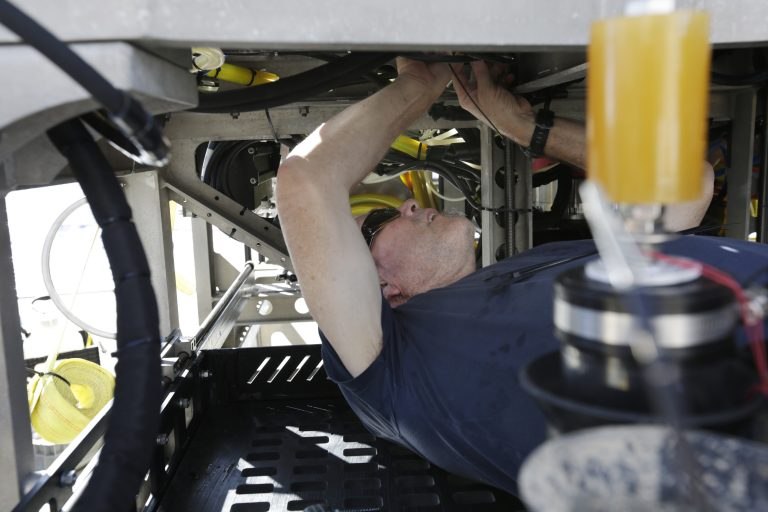
Before launch, the ROV team is divided between the aft deck and control room. The engineers perform their pre-dive walk throughs to make sure SuBastian is in perfect working order and ready for the dive. Everyone is responsible for making sure that all the lights and cameras work in the deep ocean darkness; testing the movement of the tilt and pan camera. The team also runs all the motors and thrusters, verify the manipulator arms, and last but not least,the scientific devices like biological boxes, suction sampler and core samplers. They also check that there are no air bubbles in the system - as these can clog tubes and affect the functionality of SuBastian. After validating the ROV, support systems need to be checked over - like the winch that reels out the umbilical. The team inspects the wire spool, making sure there is enough grease so it can run smoothly to launch and recover safely. Once SuBastian is in the water, it is not possible to fix minor issues quickly, therefore, these visual and physical inspections of all the systems before each dive are crucial and done meticulously. After much preparation, the pre-dive checks are completed and ROV SuBastian is ready to dive!