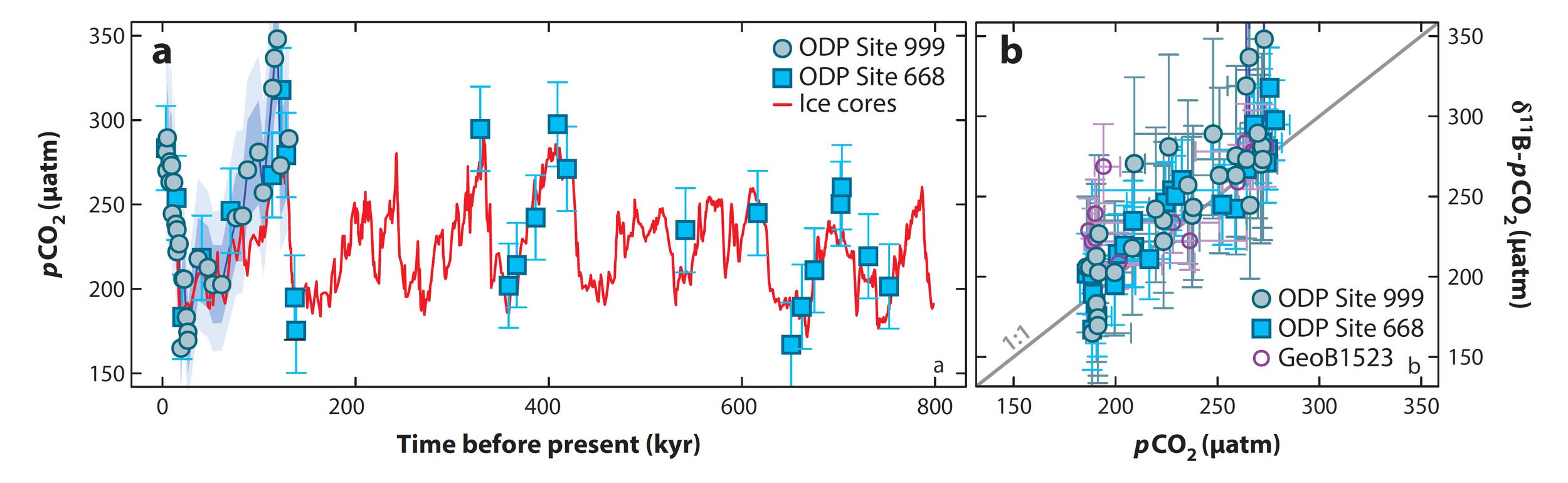

Boron isotope analysis is one of the studies that the experts onboard Research Vessel Falkor will be conducting during this expedition. In addition to calcium carbonate
Andy Collins manages the Mokupāpapa Discovery Center for Papahānaumokuākea Marine National Monument and has been working for NOAAʻs Office of National Marine Sanctuaries since 2001.[/caption]
Relative concentration of the isotopes of carbon in atmospheric carbon dioxide
Increasing the Resolution
When using the skeletons from living deep-sea corals, a much higher resolution record of pH changes can be observed since the age rings of the corals allow a given ring or sample to be mapped closer to a particular year. However, these analyses are complex and expensive. They require collection of the organisms from deep seamount habitats, sample cleaning and preparation, then analysis in a machine nearly as large as ROV SuBastian
Using boron isotopic analysis, we may be able to determine changes in ocean pH at remote locations such as Necker Ridge where there have been little-to-no ocean chemistry measurements. Understanding how ocean pH has changed within the last hundred years - during the height of the industrial revolution - can provide valuable information on how human activities are affecting ocean chemistry and marine organisms.