From grants for caregivers to an artist-at-sea residency, our programs strive to deepen knowledge and inspire a connection with our planet’s life support system.
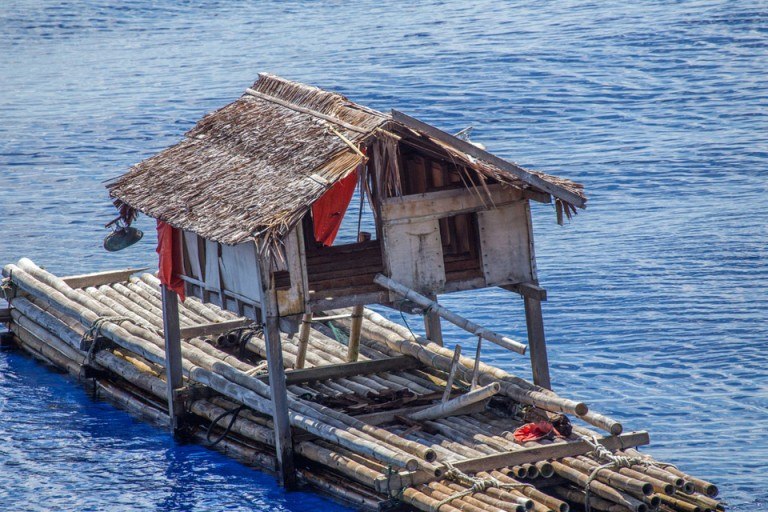
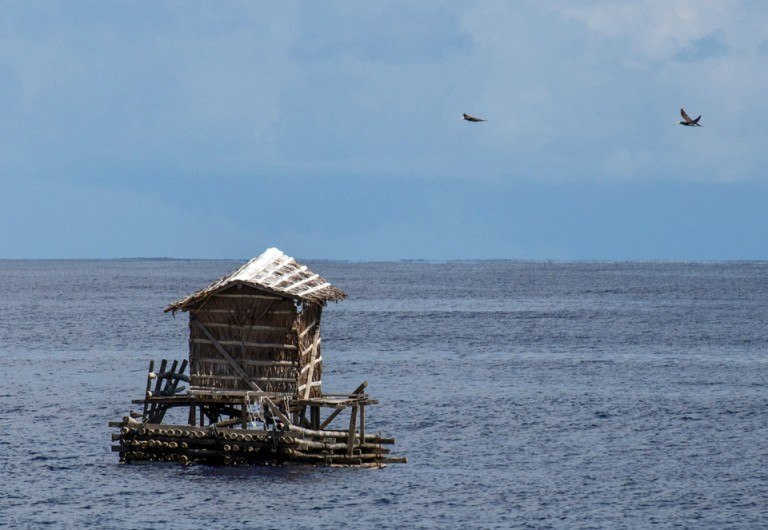
Odd things turn up in the open ocean. Research vessel Falkor is hundreds of miles from any island, let alone continent, with not a speck of land on the horizon, and all of the sudden a floating house appears.
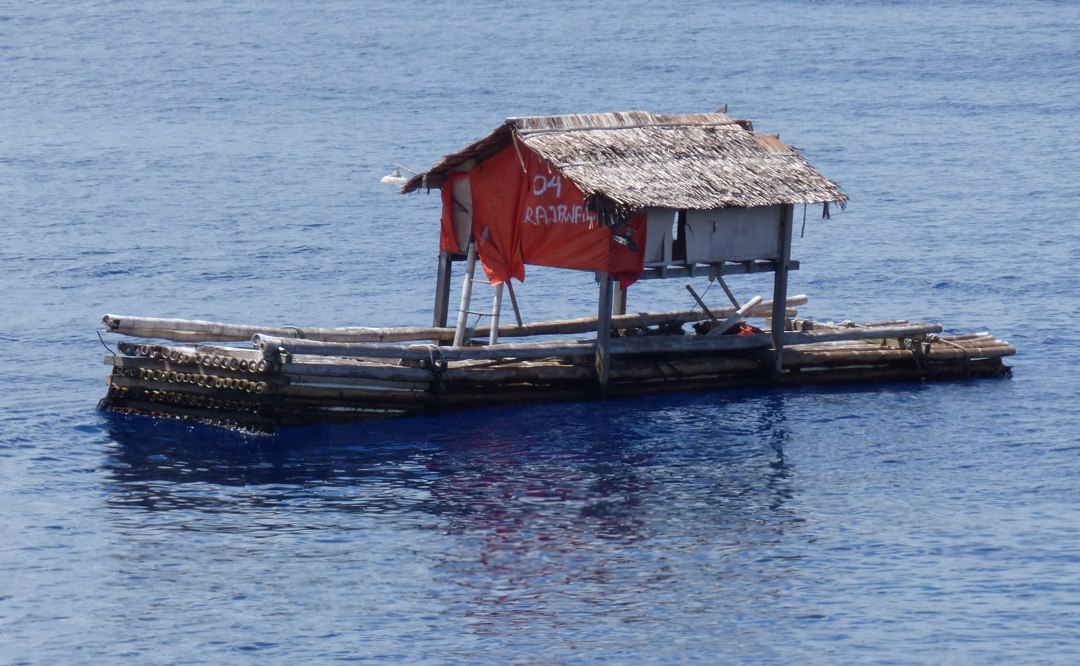
Odd things turn up in the open ocean. Research vessel Falkor is hundreds of miles from any island, let alone continent, with not a speck of land on the horizon, and all of the sudden a floating house appears. As the science and ship’s crew gaze at the wooden hut on a well-built, floating bamboo platform, a number of questions come to mind. Mainly, what in the world is this doing out here? Followed by, is anyone onboard? The second question seems rather unlikely as the sight and sound of Falkor would be enough to rouse someone, but just to make sure, the Captain blasts the ship’s horn. No one appears.
[@portabletext/vue] Unknown block type "undefined", specify a component for it in the `components.types` prop
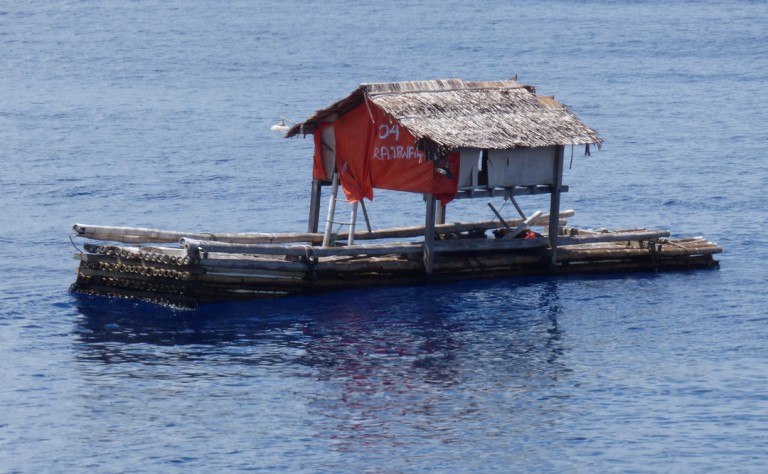
Ahead, a second house appears, and we repeat the inspection process. Again, no one is home. This large floating unit is even more obvious as we can see right through it. Some numbers and lettering appear on the house, leading me to think, “FAD!” Not as in a trend, although that does come into the story in a moment, but as a “Fish Aggregating Device”. Any floating material at sea draws fish to it. These houses undoubtedly have lots of fish underneath them. I was about to suggest that Chief Bosun Mick Utley put out a line, when he shows up on the bridge and lets us know that although he hooked two mahimahi as we passed by, they did not make it up on deck.
[@portabletext/vue] Unknown block type "undefined", specify a component for it in the `components.types` prop
A little research and a look at a colleague’s blog at ISSF, International Sustainable Seafood Foundation's website, brings a possible answer to the floating houses. They are the same design seen in some coastal areas and are indeed FADs. FADs come in a variety of shapes and sizes, and are important to tuna and other targeted ocean fisheries. To quote from a 2012 blog from Dave Itano (What Does a FAD Look Like?
As Falkor leaves the floating FAD houses behind, we will never know if these particular FADs are functioning units, or, as is more likely, floating debris, torn from a coastal mooring and set adrift across the ocean. In the water we see evidence of other accumulated materials such as a fluorescent light bulb, floating plastic bottles, fishing floats, and other trash, mostly plastic. A sobering reminder that our human impacts can reach even remote stretches of the Pacific. These houses may have drifted from the Philippines or other Pacific areas. For the moment, they are rogue FADs, hopefully acting for conservation, and building fish stocks rather than targeting them for a harvest.
[@portabletext/vue] Unknown block type "undefined", specify a component for it in the `components.types` prop
For more information on FADs, check out the links below.