
Life in the Internal Hydraulic Jump
The ocean’s inhabitants are strongly dependent on conditions in the environment in which they live.



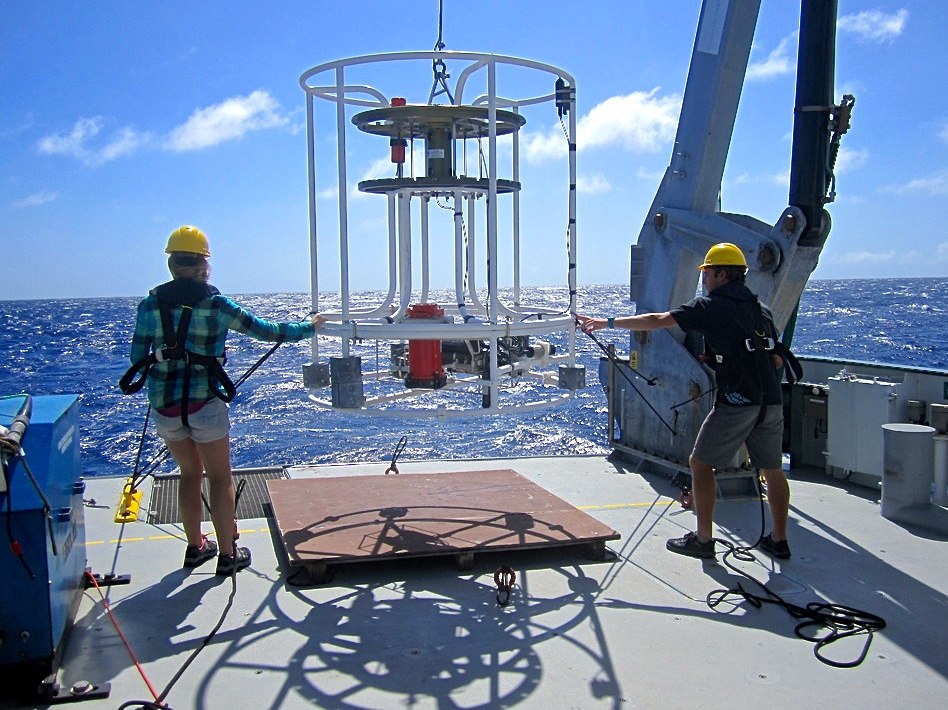
Additionally, Falkor has sonar
We are also collecting water samples from multiple locations over the ridge at various depths using large bottles attached to the CTD. These samples will allow us to quantify nutrient concentrations, count the number of phytoplankton present, and identify other small organisms in the water including types of zooplankton. In other words, they will give us a better picture of what our other data, such as the signals from the sonar, may be telling us.
The data from the Falkor cruise will help us understand what role the hydraulic jump plays in the local marine ecosystem. Our understanding of the ocean allows us to make predictions of the kinds of things we may observe, but the ocean is a complex environment and there is still plenty of room for us to be surprised. The element of discovery is what makes scientific research exciting.
