
Looking into the Plastisphere
Whilst Falkor is rushing about chasing internal waves for next few weeks, this platform is also being modestly utilized to hunt down any microplastics that may cross its path.



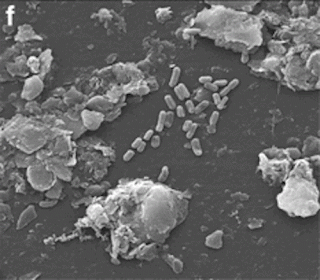
Concentrations of microplastics in the oceans wildly vary. A recent study in the North Pacific found they ranged from 8 to 9200 particles /m3 (Deforges et al 2014)
Each individual plastic fragment present within the marine environment will have been subject to complex dynamic changes in its biofilm community (microscopic organisms that produce a film on the plastic surface). During a myriad of divergent routes that transition across and between the terrestrial, freshwater and marine environment, each plastic fragment may develop into a unique environmental microhabitat, shaped by travel through differing physical–chemical environments. Adsorption of organic and inorganic chemicals and by colonization of diverse microorganisms produces a sort of fingerprint of their journey. For the region Falkor is operating in, drifter tracks shown in the figure indicate source areas are predominately associated with the East Australian Current system, though some originate from the Indian Ocean and beyond.
The microplastics being collected by Falkor will be passed onto Slobodanka and Mark to further their investigations into the local microbial community, and general observations of the plastics collected shared with others studying the regional microplastics community. Hopefully, enough data will eventually be collected to provide information to policy makers and resource managers.
