



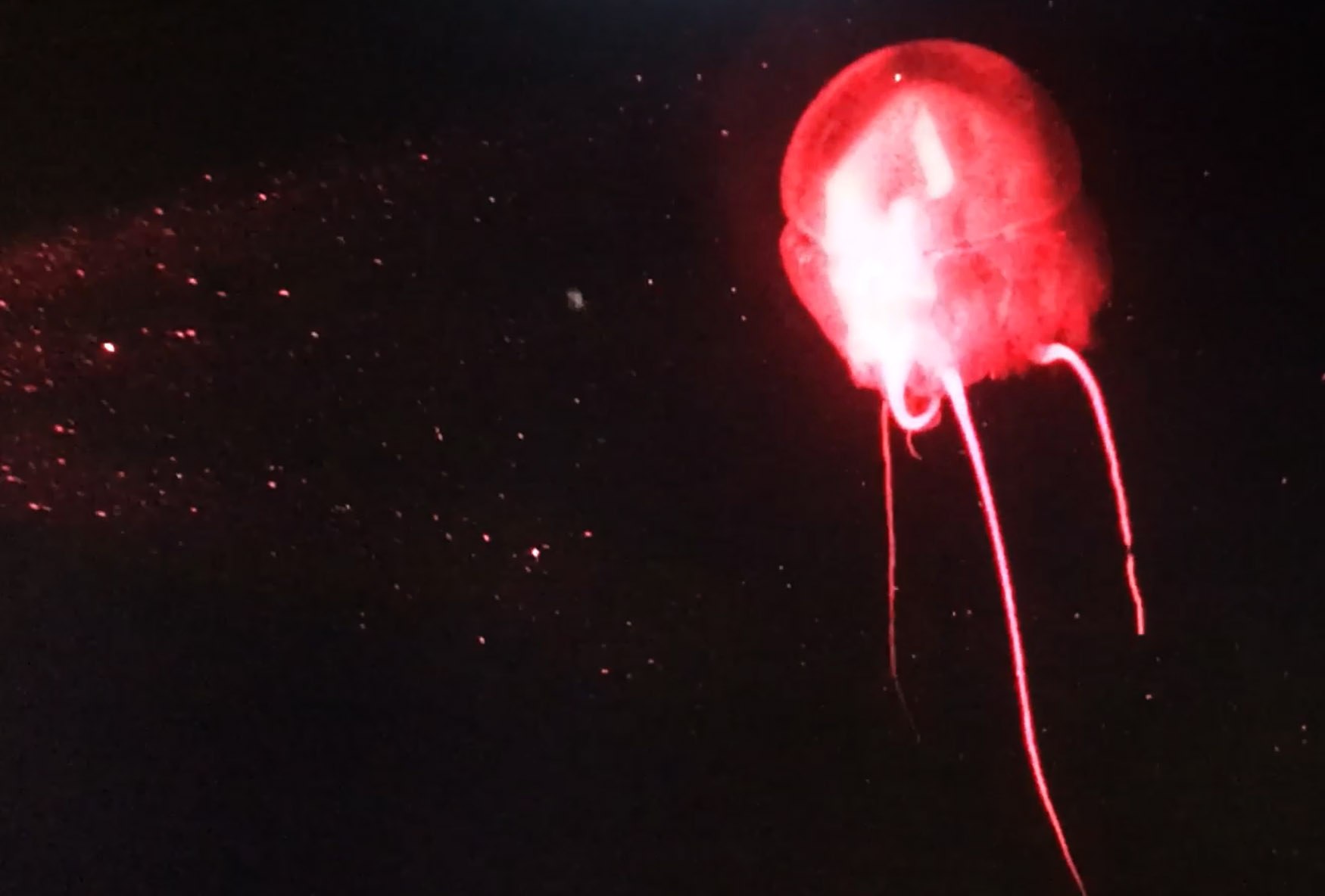

A holotype
For deep-sea biologists, this is a real-world problem. Many deep-sea animals, particularly gelatinous zooplankton that reside primarily in the midwater zone (i.e. water column), remain frustratingly undescribed- even though in a lot of cases, there is a good chance they are new to science. There are limited tools available for sampling such delicate specimens, and navigating undersea vehicles like ROVs and manned submersibles to accomplish repeated collections is extremely challenging in its own right. What if we could get a good 3D-scan of a deep-sea animal (the morphology), and collect a little bit of tissue to sequence its genome: would that ‘digital holotype’ be enough to describe some of these ultra-delicate, hard-to-collect midwater animals?
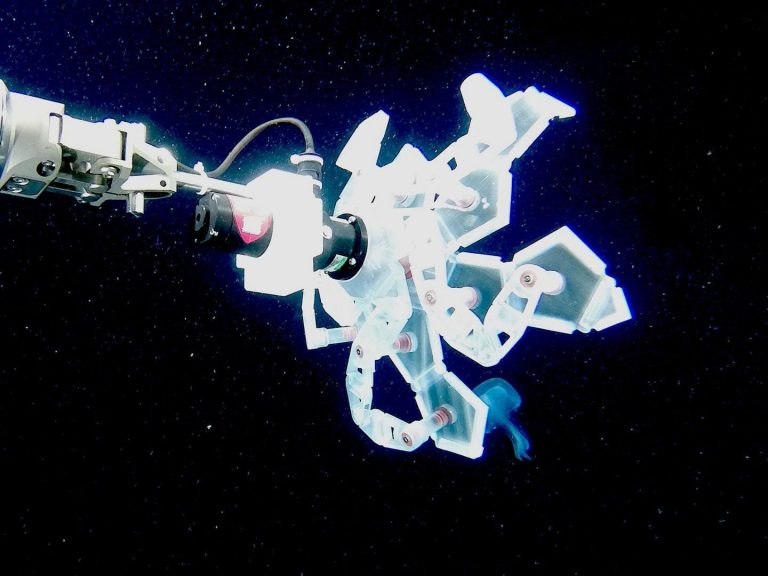
This is the challenge we are hoping to address on this expedition, “Designing the Future 2
For this expedition, the ROV SuBastian gets outfitted with several new pieces of cutting-edge deep-sea technology.The 2nd-generation Rotary Actuated Dodecahedron (RAD2)