



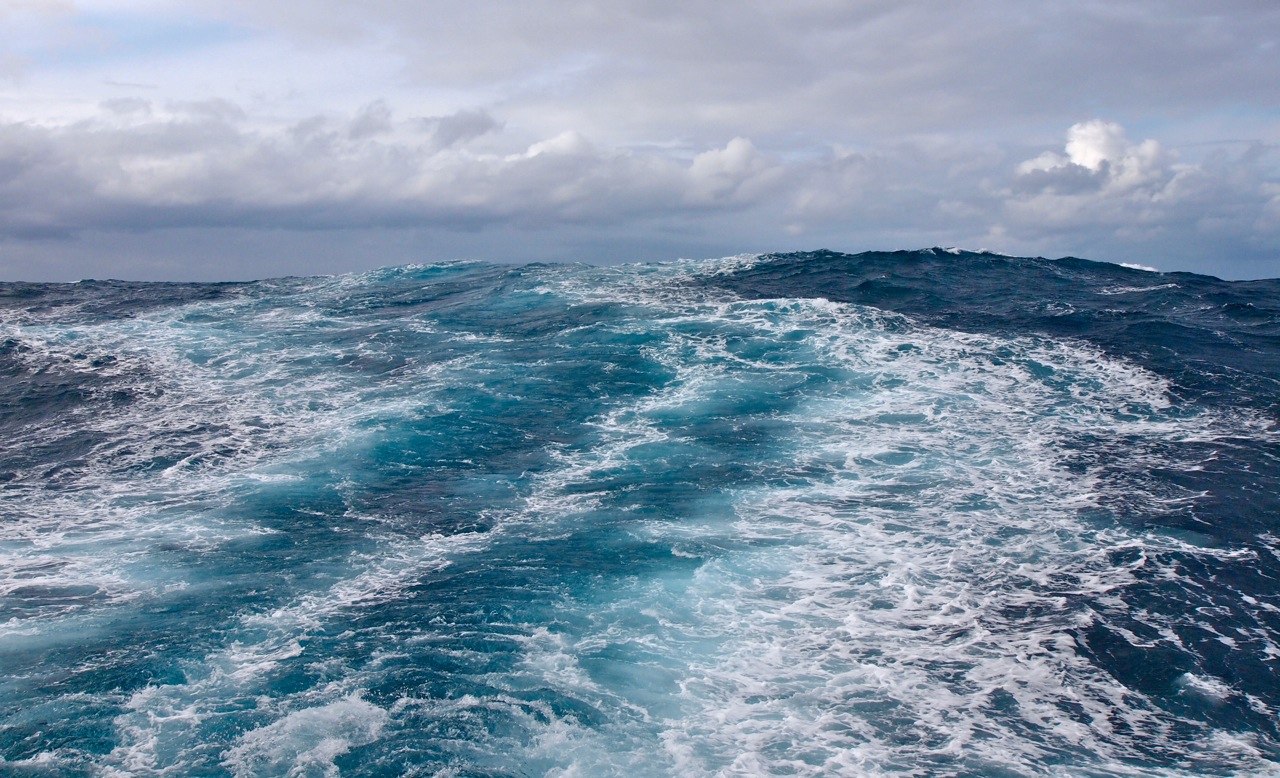

Typically on a research cruise as the weather permits, the sub goes down, the samples come up, they get processed, and the samplers get turned around.
Then the whole process is repeated: down, up, process, prepare, all times 10 or more. If you’re lucky, you sleep a little. It can be exhilarating, but it’s also exhausting. There’s barely enough time to maintain good hygiene, much less stop and reflect.
So, I have a confession. I have on occasion hoped for a weather delay to get a break from what can be a debilitating pace of cruise life. After perfect weather and non-stop diving on my last cruise, I suppose I may have been a bit overzealous in my entreaties to the weather gods. Therefore, in an attempt to redeem my karma, I hope to highlight the silver lining in what has turned out to be the mother of all clouds.
It’s been like watching a series of TED talks, only it’s in my living room...
World-class Science at 50 Knots
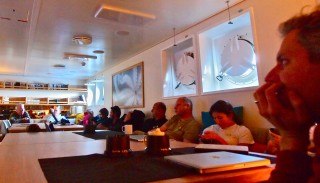
Although the storm has been severe, the Falkor crew has been utterly unperturbed. In fact, the captain informed us he has been on only one other ship that has ridden so well in such turbulent waters. Admittedly, this was probably cold comfort to the more seasick among us, but comfort nonetheless.
With our minds at ease and our hands idle, we needed something to focus on. To keep us engaged, chief scientist Julie Huber
These are all presentations I might have heard in some piecemeal fashion over the years, but to encounter them in such rapid succession, in such an informal setting, is tremendously helpful in drawing connections between seemingly disparate fields of science. So, while the weather may have thrown a wrench in our field operations, the scientific process is alive and well. In the words of the infamous Doctor Emmett Brown in Back to the Future, “You can’t keep a good scientist down.”