



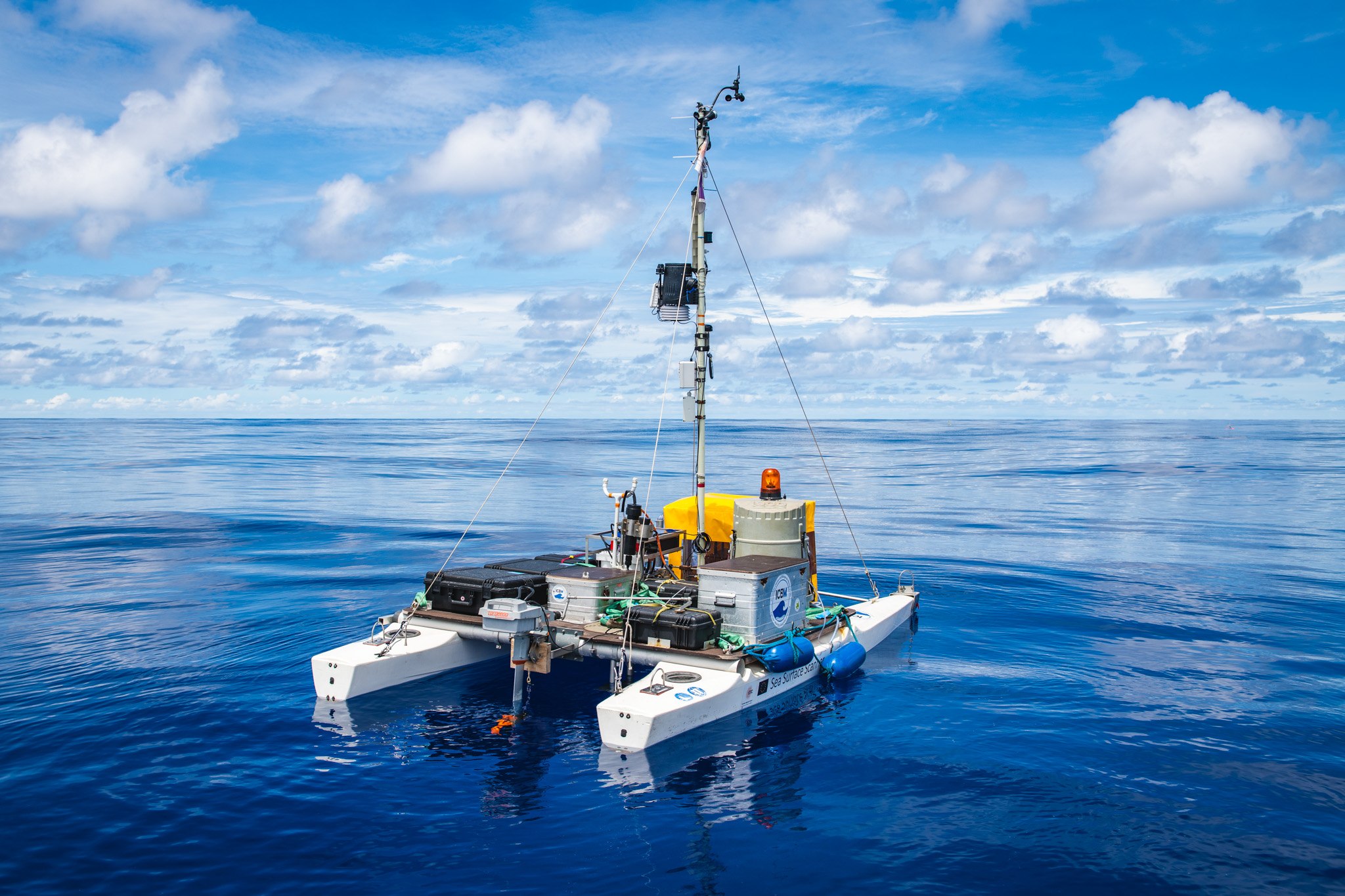

The sea-surface microlayer (SML) is the boundary interface between the atmosphere and ocean, covering about 70% of the Earth’s surface. Gases, heat, and particles entering (or leaving) the ocean need to pass the microlayer. Its thickness is equivalent to a human hair, but can grow to a thicker biofilm in the presence of surface-blooming cyanobacteria.
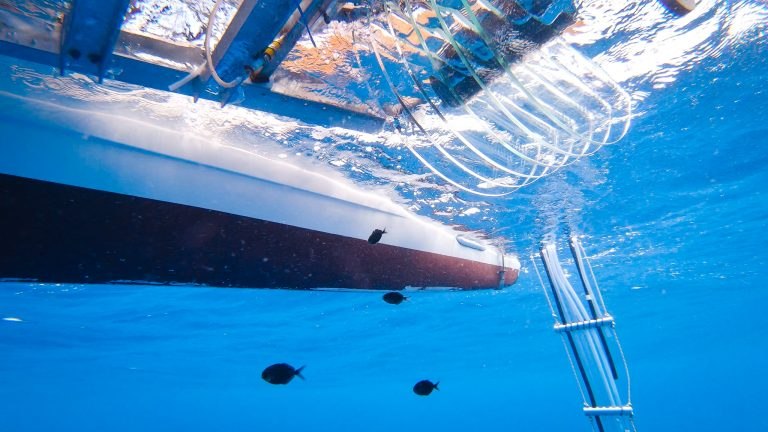
Collecting samples from the microlayer needs to occur away from a ship, which destroys its integrity. Getting far enough away to gather samples - without disrupting the thin layer - is a major challenge. In response to this, we have developed a radio-controlled catamaran with several rotating glass disks mounted between the hulls. The disks are partly immersed in the water: rotating through the sea-surface and collecting the microlayer under capillary forces. The adhering water is scraped off by a set of wipers, then pumped through onboard sensors, and finally collected in a bottle carrousel for further analysis in laboratories. The catamaran also takes several measurements in the upper two meters of the ocean (including on the partial pressure of CO2 and pH), working in tangent with a second piece of equipment: Sniffle. Sniffle is a free-drifting buoy
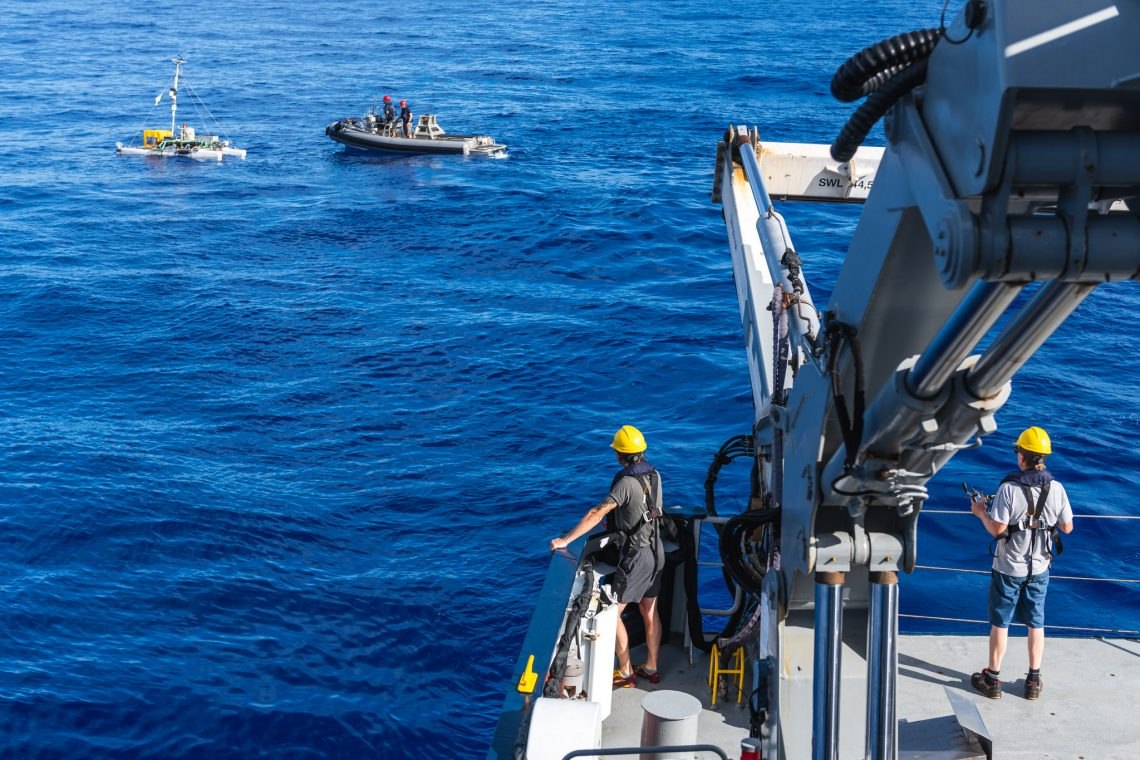
Before launching the catamaran, preparation takes about 2 hours in the morning, including installation of charged batteries and sensor packages, calibrations of sensors, and finally a safety checklist to make sure everything is functioning. After deployment from the ship’s crane, the catamaran is navigated in the proximity of other buoys making flux measurements. After 3 hours, a team on the small boat exchanges the battery of the electric outboard motor to complete the measurements throughout the afternoon. After recovery, the catamaran gets a good rinse with fresh water, after which the data download from the sensors can begin.
With in situ observations such as these, including those from our AirESea expedition on the Falkor back in October 2016