



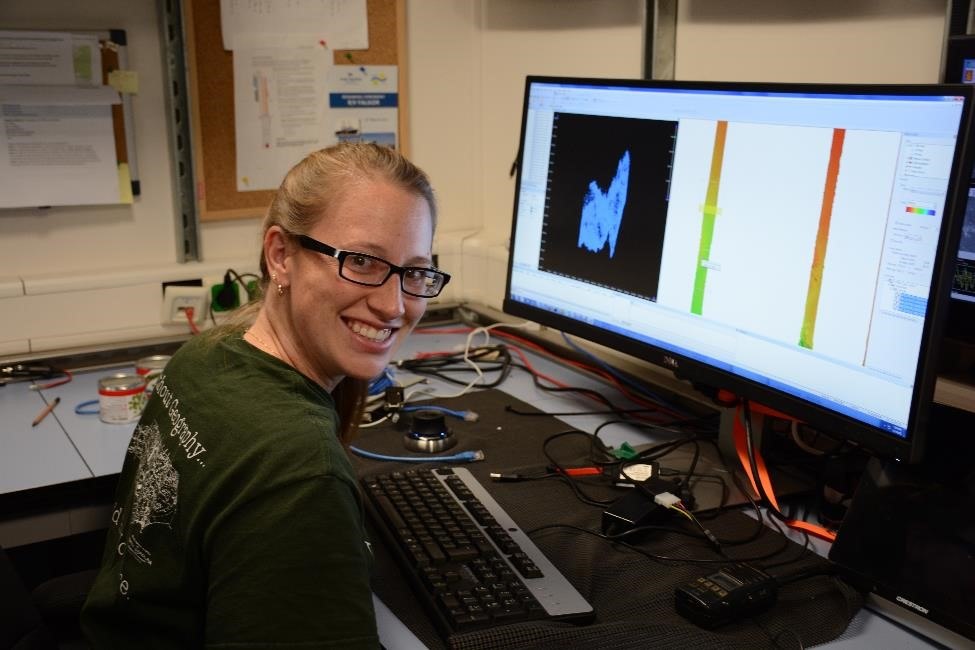

Hello from the Pacific Ocean! This is Rachel Edwards, the Student Opportunity Participant, and I wanted to share my final thoughts and reflections on the Tamu Massif Expedition.
We have finished mapping our last survey lines and are now headed to port in Guam. We have a few days left in transit, but we are on the final homestretch. That said, data collection is still going strong, and we are all working hard to wrap things up before we leave the Falkor.
The Brains
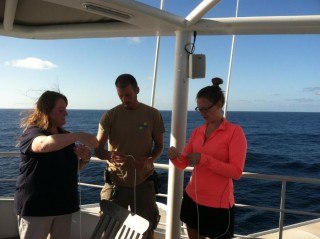
I have had the opportunity to be part of a scientific team comprised of brilliant individuals who have participated in and lead groundbreaking research. I’ve worked with and learned from our Chief Scientist Dr. William Sager
One of the best parts of this expedition has been getting to know the Falkor’s crew. They are highly trained individuals, and it has been a pleasure to observe and shadow them in their daily running of the ship. I am so grateful they have been willing to teach me new skills, as well as help me volunteer my time in the different departments aboard Falkor. They have let me look over their shoulders as I ask many, many questions. Their patience has been much appreciated and has allowed me to gain an understanding of how the bridge manages the other departments and makes decisions, how the engineers maintain Falkor’s engines and generators, how the purser manages the administrative paperwork including international legalities, and how the deckhands and stewardesses maintain Falkor’s interior and exterior to ensure safety. I have worked the closest with the marine technicians who oversee and run the scientific data systems on board. Leighton Rolley, Lead Marine Technician, has taught me how to plan multi-beam sonar surveys and how to process the raw data collected from Tamu Massif. These valuable science skills are best taught via a hands-on experience, and I was able to learn right alongside other student scientists.
Sharing the Science
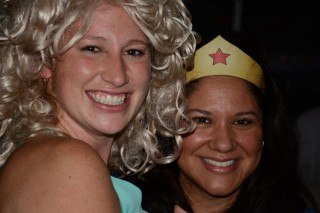
I also participated in the outreach of the expedition with Suraida Nanez-James, our multimedia journalist aboard the Falkor. She allowed me to assist in live connections with students and teachers from around the world. I was able to share what I did throughout my shifts as a watchstander and give the students and teachers from Texas and California a virtual tour of Falkor, as well as explain the science that we were conducting. It was wonderful answering the student’s questions and interacting with them from the middle of the Pacific Ocean. It is my hope that I inspired some of them to consider a career in marine science or oceanography. For me, this was a great introduction into science communication and community engagement, something I had not considered to be such an essential part of conducting research. These outreach events will be instrumental throughout my career training as I engage and communicate my own research to the public.
Signing Off
This expedition is something that I will never forget. I return home with a new found appreciation of science and life at sea. Everything I have gained will be instrumental in both my personal and my professional life, and I have a rekindled inspiration to continue exploring and researching our marine environment. Thank you to the Schmidt Ocean Institute, the Falkor’s crew, and Science Team Sager for being part of one of the best times of my life.