
My name is Emily Conn, and I am a Bachelor of Environmental Science student at The University of Queensland
I am interested in all deep-sea structures: seamounts, guyots, hydrothermal vents, seeps, and brine pools. Outside of geology, I am passionate about sustainability. This motivated me to investigate Falkor’s environmental impact.
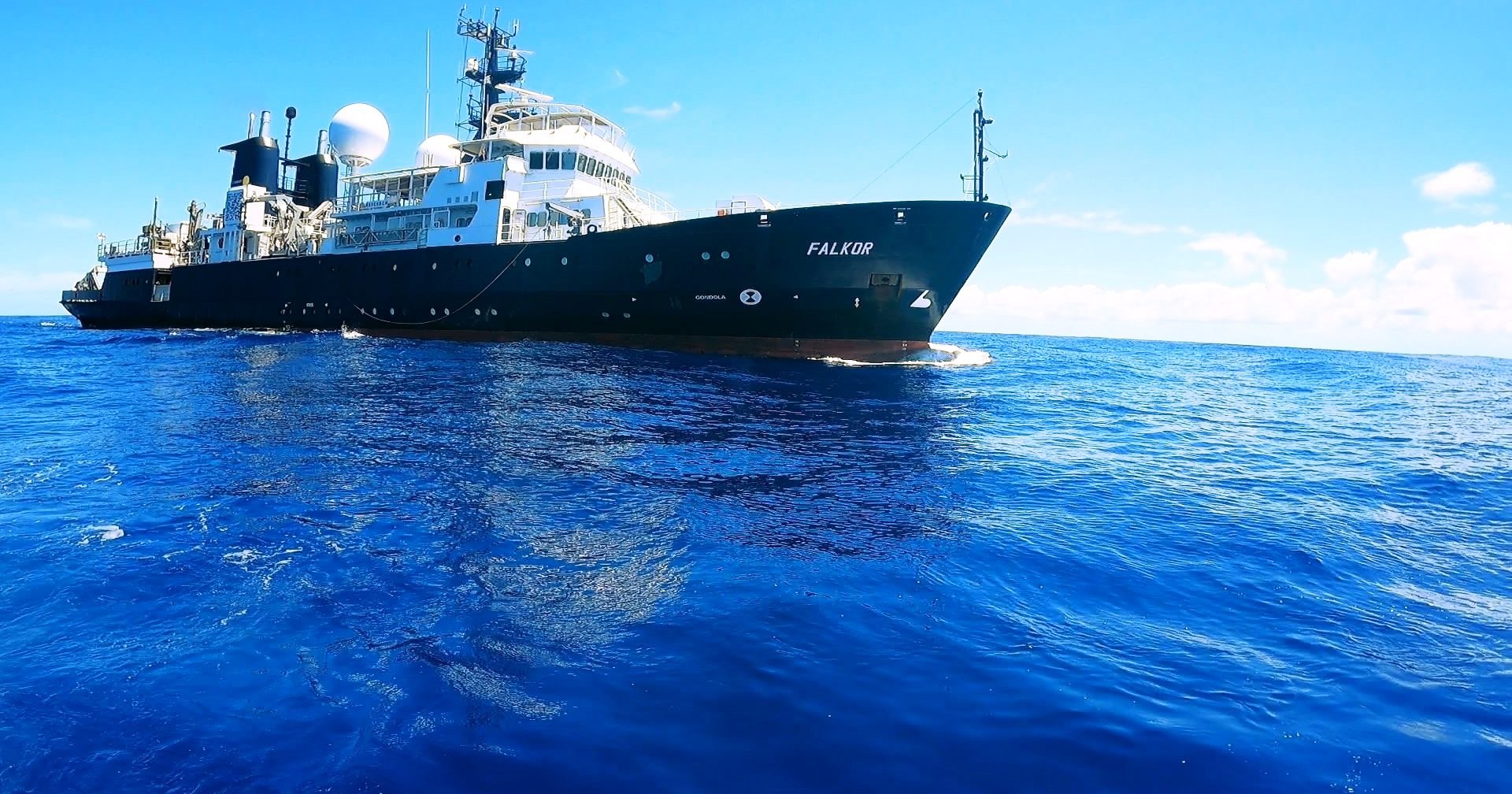
Any research vessel that traverses the ocean is inhabited by those who love the sea. This sentiment is echoed in Falkor’s scientific pursuits and its sustainable practices, specifically around energy, recycling, and waste management.
Energy
The heart of the ship is its engine (although some may argue it is the kitchen!). R/V Falkor was built in 1981Waste
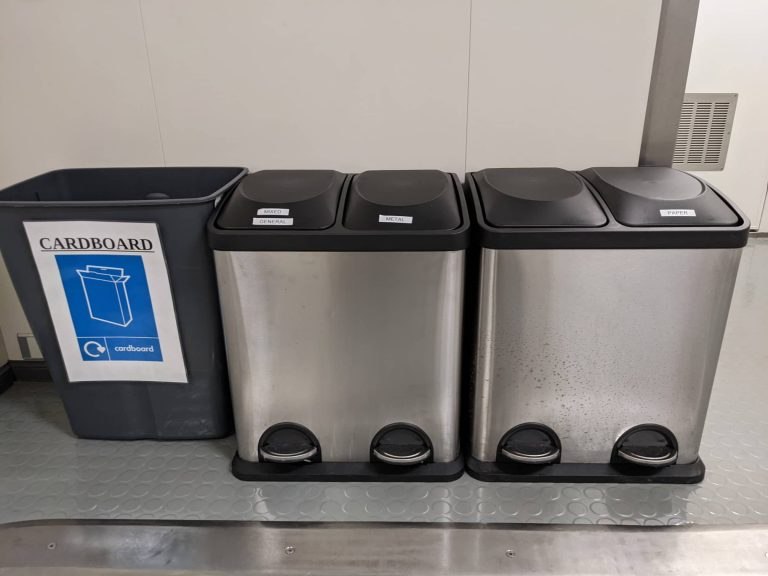
The Falkor focuses on recycling, reuse, food management, and water/sewer treatment to manage waste on board. While at sea, all waste is sorted depending on material and form, ensuring ease of recycling back on land. Lack of bin liners in cabins and multiple waste separation stations around the ship encourage conscious rubbish sorting.
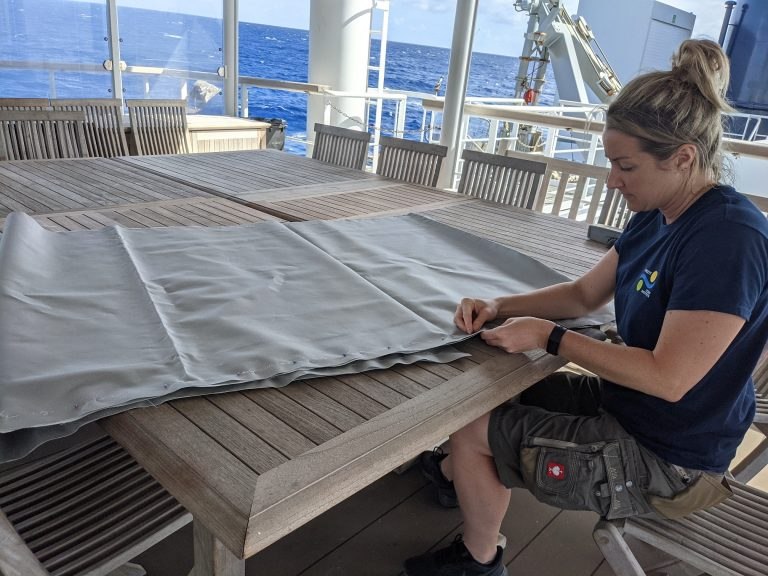
Reuse is a focus on Falkor. Empty yoghurt cups, for instance, are reused for mixing paint. Old supplies are repurposed, like when making a new tarp covering. Items are bought in bulk, such as hand soap, so pump bottles are reused.
Food waste is minimised as much as possible. In port, fruit and veggies are hand-packed into reusable crates and lowered into storage, avoiding packaging. Chefs in the galley pre-plan meals to reduce waste and are creative with leftovers. Bolognese sauce is made for pasta and the next day’s lasagne; left-over noodles are put into salads; rice is repurposed into breakfast rice pudding with sultanas. The remaining food scraps have dedicated bins that are periodically emptied into the ocean. It is not feasible to store all refuse until returning to land – space, hygiene, and safety would be compromised. When thrown overboard, food scraps decay naturally in the sea.
The sewer system is also eco-friendly. All water from taps, the laundry, and toilets enter the system and eventually into a chamber filled with bacteria that breaks it down. Excess water is removed, tested periodically by the engineers to ensure its safety, and released into the ocean. If the ship were to store all this water, it would need a whole other ship! However, there is capacity to hold this water to be released once outside specific marine zones. The remaining refuse is put into a holding tank. Laundry machines are fitted with filters to collect microfibres and microplastics, so they are captured before entering the sewer system and ocean.
Overall
The R/V Falkor takes its environmental impact seriously. The crew strives for eco-friendly practices and infrastructure wherever they can. They ensure that whoever lives and works aboard contributes to marine scientific knowledge and marine ecosystem health through decreased environmental impact.