




During the two legs of this expedition on R/V Falkor, the science team is studying coral reefs that drowned during periods of rapid sea level rise that occurred at the end of the last ice age. By doing so, we are hoping to determine exactly when this past sea level rise occurred and get some hints about how coral reefs may respond to rising sea levels in the coming decades.
Underwater Robots
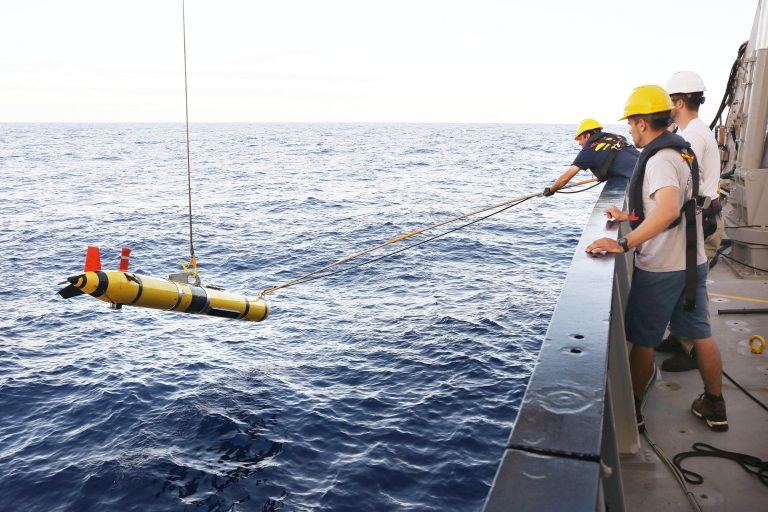
To do this, we are using a number of sophisticated instruments to map and sample ancient reefs that are now covered by more than 100m of water. On the first leg we used an autonomous underwater vehicle (AUV) named REMUS in conjunction with a multibeam mapping system on the ship
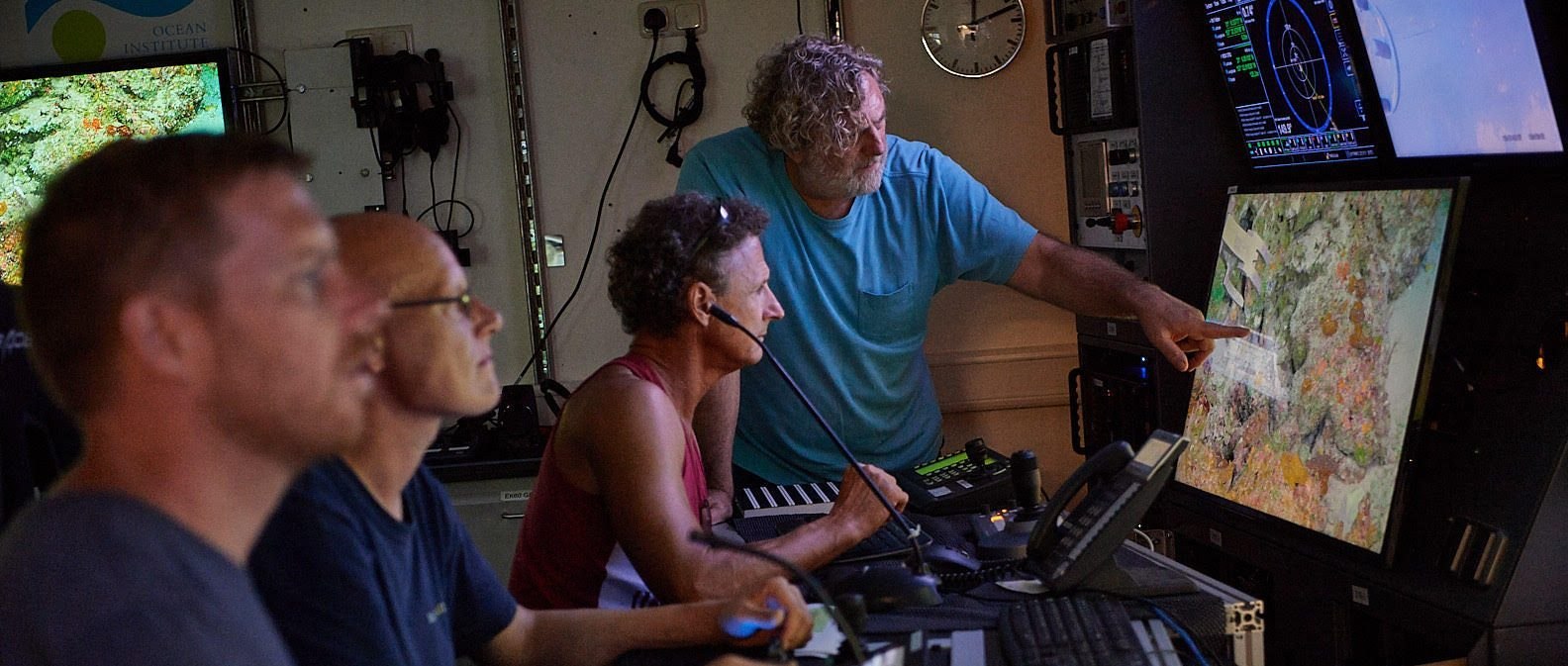
During the second leg, I have had the chance to watch the feed from the ROV and log interesting and key events, such as where samples were taken or how the terrain on the seafloor has changed. It is amazing to be able to sit in the ship’s control room and see live, high definition footage of these ancient reefs. I was surprised by the amount of life that is down at these depths, as we are finding sponges, deep sea corals, eels, and all sorts of fish that manage to survive despite the limited amount of light that reaches the depths.
Once the samples are brought on board, they are cleaned, dried, and storedNew Tools, Techniques, Discoveries
All the research we are currently performing is only possible due to the advanced technologies we are using. In the not-so-distant past we would have obtained samples by dragging a dredge along the seafloor – now the ROV allows us to carefully collect only those samples that are likely to be the most interesting. We are also able to select sites for ROV dives that we know contain corals thanks to our newly created maps, whereas in the past we would have wasted valuable ship time diving in irrelevant areas. While so much of the ocean remains unexplored, rapidly advancing technologies are creating new opportunities and avenues to explore this vital system.