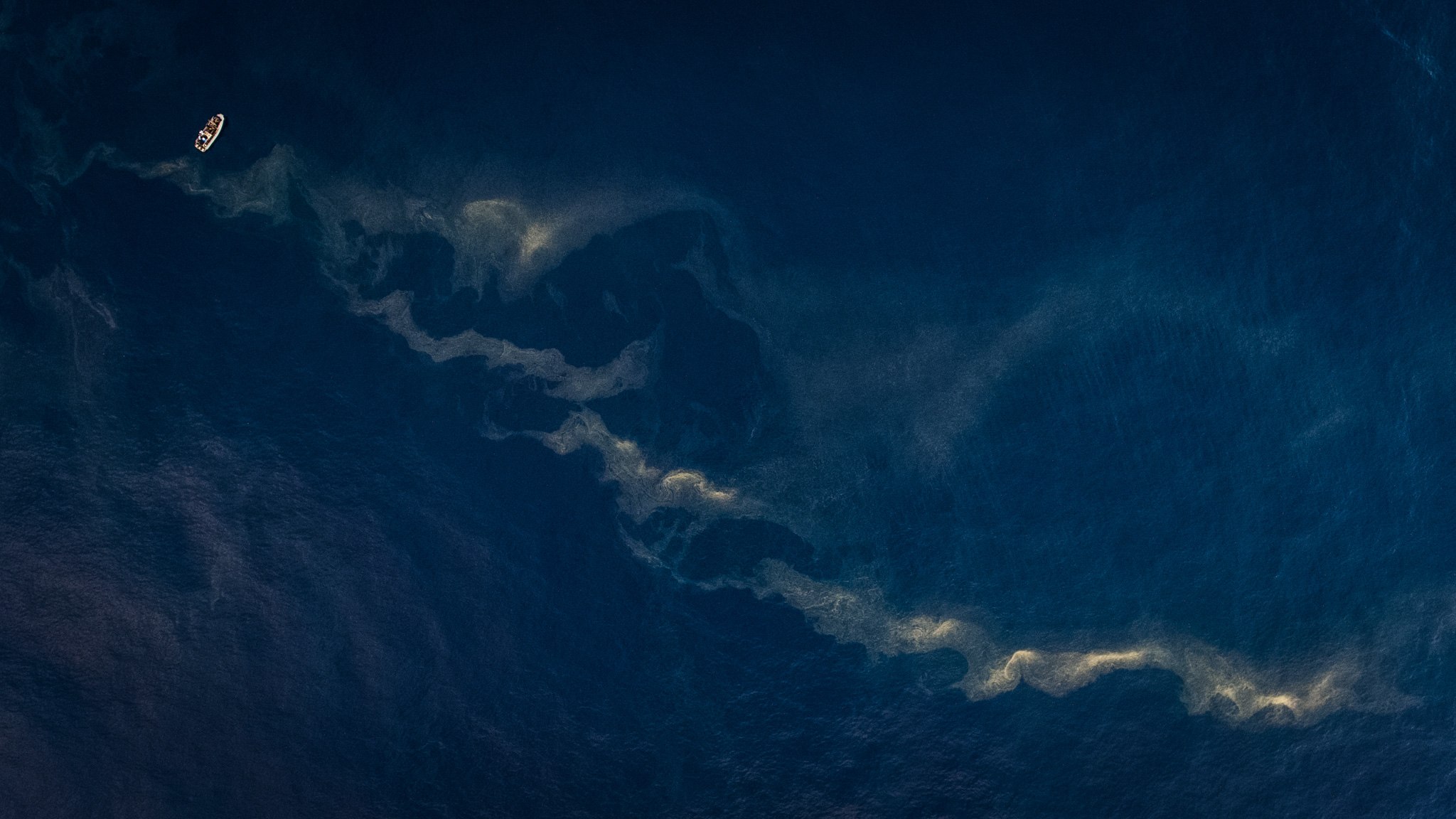

When phytoplanktonVisible From SpaceTrichodesmiumTrichodesmium has other unique properties that set it apart from other phytoplankton – it is a colonial, filamentous cyanobacteria: i.e. it is found in filaments of about 200 cells, and often these filaments clump together to form colonies that are the size of an eyelash and visible to the naked eye. It has gas vacuolesAn Enigmatic OrganismOver the last 40 years there has been concentrated effort to study and understand this organism, however it still remains an enigma. While we know that it produces its own nitrogenous nutrient, it still requires phosphorus and iron to grow and is not found where these elements are scarce in the surface waters. But we still do not know why it blooms where it does, or why blooms die when they do. The Trichodesmium colony can be thought of as a loose confederation of friends and associates, some of whom might have some sort of symbiotic relationship with Trichodesmium. For example, it has been recently suggested that some of the bacteria associated with Trichodesmium help it digest iron that would be otherwise unavailable to it. It has also been suggested that by regulating its buoyancy, Trichodesmium can “mine” phosphorus from deeper depths – i.e. it can dive down to 150m or more where there is little light - but where phosphorus is more available - and then float back up to the surface where there is light for photosynthesis. Trichodesmium is toxic and is not eaten by many other organisms.While we know that viruses probably play a role in disrupting the blooms, there is still much to be learned about why and when viral attacks happen. All in all, Trichodesmium is my favorite charismatic microfauna!