Plastics of varying size, quantity, type, and origin have been found in the ocean, from surface waters through the water column to deep-sea sediments. There are five large offshore plastic accumulation zones in the subtropical gyres
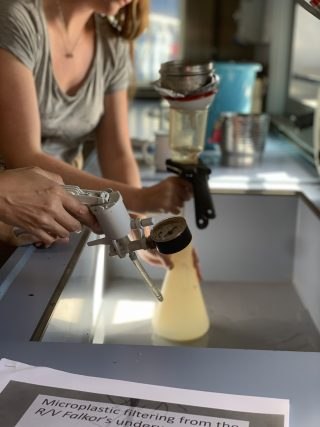
To sample microplastics, we have been using the ship’s underway system, which takes in surface water to measure temperature, salinity, and sound velocity. Over the course of two voyages, we have filtered 2000 litres of seawater per sample from the ship's underway system through a 125-micron sieve to find evidence for microplastics. In total, we collected almost 150 samples.
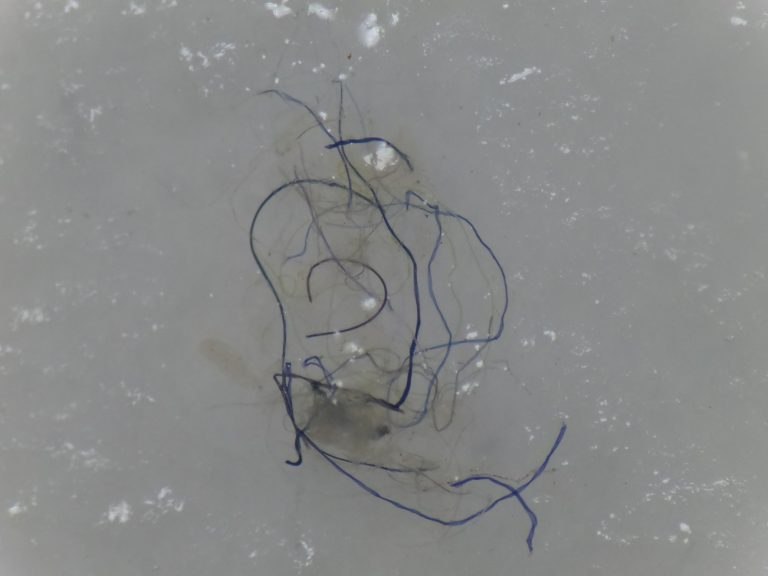
In each one of the filters, we have found microscopic marine plankton
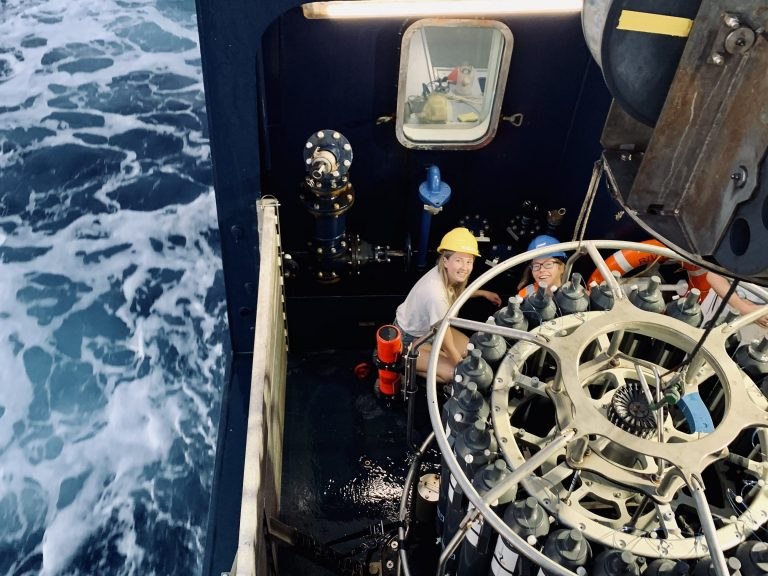
To independently assess the presence of microfibers in the underway samples, we also filtered water collected by the Niskin bottles on the CTD (Conductivity, Temperature, Depth) profiler. The CTD is an instrument lowered to the bottom of the ocean measuring the temperature, salinity (conductivity), depth, and dissolved oxygen content of the water column.
These parameters allow us to understand the different processes in the ocean. For each of the CTDs deployed, we sampled 72 litres from 4 different depths – at the bottom around 4500 m, 800 m, 50 m, and 10 m. We found microplastic fibres in all of these samples.
The presence of these microfibers in the surface and deep waters of the Tasman and Coral Seas is in line with findings from other ocean basins where microfibers are ubiquitous and make up 95% of the plastic pollution in the ocean waters. This leads to the question: what is the source of these microfibers? And what is the impact of these microfibers on the plankton, fish, and birds in this region? These are active fields of research, and the analysis of polymer types can inform the source of the fibers and in which sectors (e.g., textiles, maritime, plastic packaging) work is needed to reduce pollution to prevent plastic from getting into the ocean.
By assessing the extent of the problem through sampling the world's ocean, we can increase awareness of the issues plastic pollution poses to marine ecosystems. Increasing awareness about reducing, reusing, and recycling plastic packaging before it enters the oceans and removing plastic debris already present in the ocean are vital steps needed to minimize further impacts to the marine environment.
Co-PI of FK201228 and Chief Scientist on the FK210206 voyage Dr Derya Gürer is passionate about reducing plastic pollution in the marine environment, which has led to her involvement in eXXpedition – a nonprofit organization that runs pioneering all-female sailing research expeditions to investigate the causes of and solutions to ocean plastic pollution.