
“Wait, stop, back up! There were bubbles back there!”
With a cry and dramatic gesture to the screen, GEOMAR scientist and shipboard bubble expert Jens Greinert
“Trust me, I’ve got a sixth sense for bubbles,” Jens assured us, or more specifically, ROV SuBastian's pilot. And sure enough, after we performed the delicate navigation involved to make the ROV do a U-turn 1,500 feet below the surface, there they were - a silvery stream of bubbles wobbling up from the seafloor.
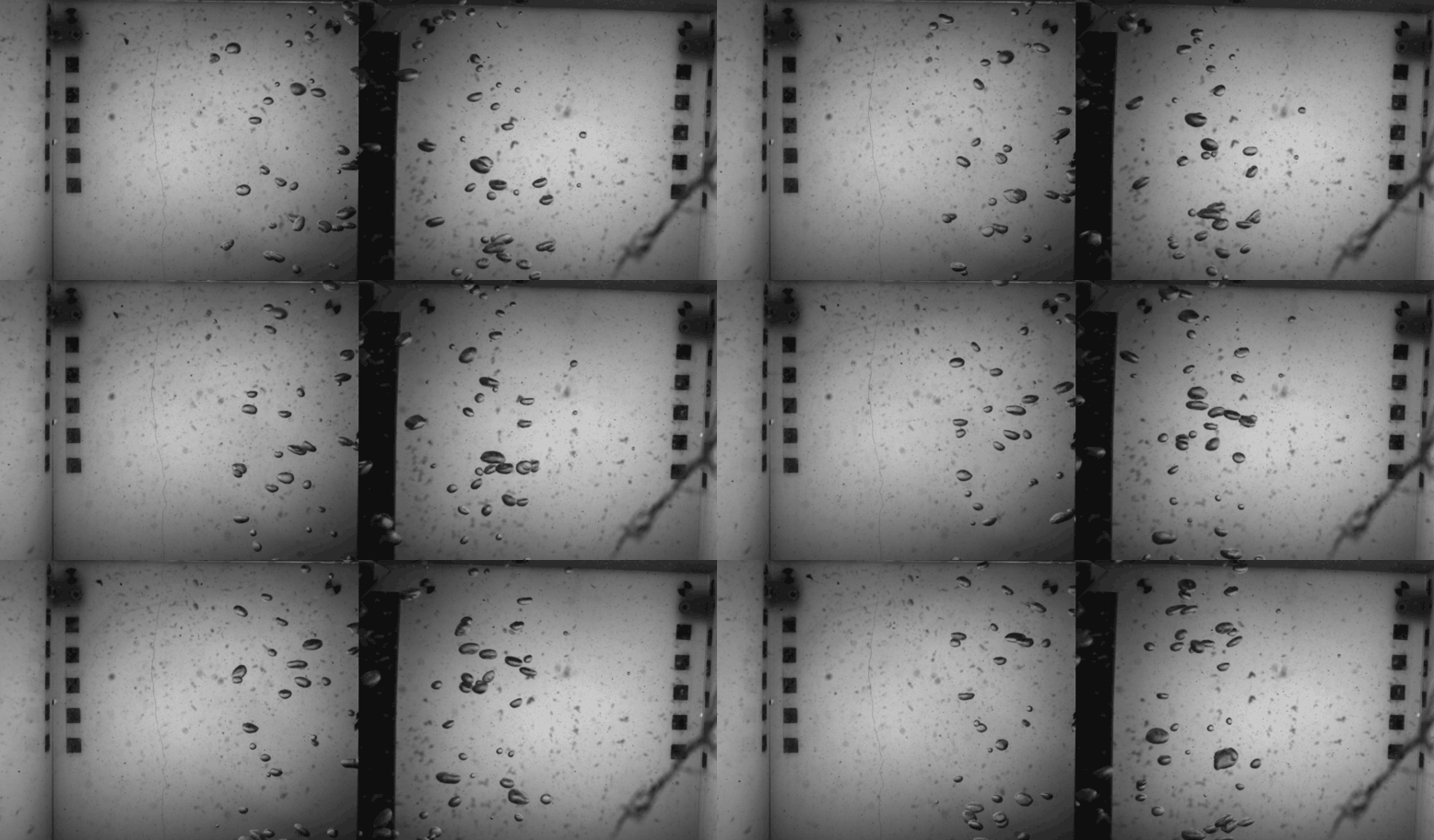
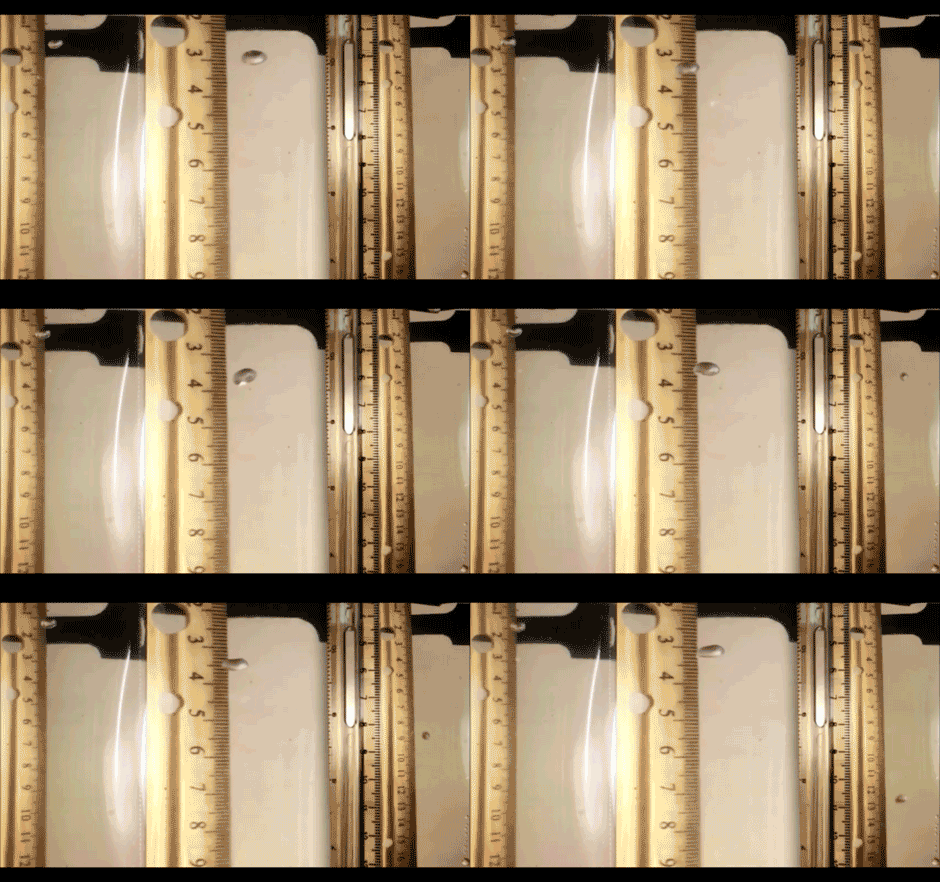
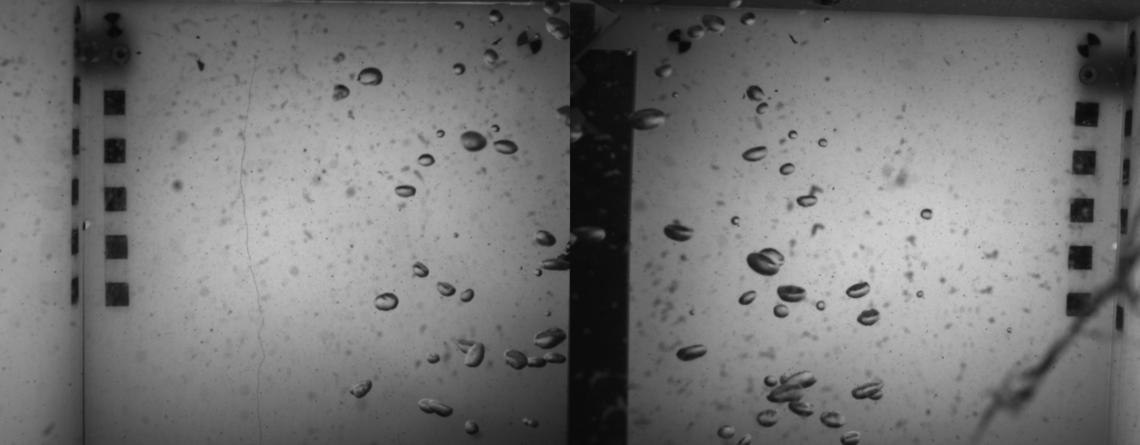
In a real sense, this is what we came for: These bubbles contain the methane coming from the seafloor at those seep environmentsThe BubbleBox
The BSizing Things Up
So why are we looking at bubbles in such detail?
“The biggest reason is to help figure out how much gas is coming out of the seeps,” said Tim. “That’s one of the main goals of this cruise.”
The information from the Bubble Box will then be paired with hydroacoustic data from an echosounder onboard R/V Falkor to give an idea how much gas is coming out, not just at a particular moment, but also over time. The hydroacoustic data gives us the information on the stream of bubbles, and the Bubble Box gives us the particulars on the bubbles within the stream.
But the Bubble Box also sheds light on a whole host of other fascinating aspects of bubbles that Jens was only too happy to describe.
How Long Does a Bubble “Live?”
When you blow a bubble under the pool, how long does it last? Until it reaches the surface and pops, right? What if the source of the bubble is not just a few feet below the surface, but instead hundreds or even thousands of feet down?
“The general rule is that if a methane bubble starts more than 100 meters (328 feet) below the water surface, its chances of making it to the surface are very slim,” said Jens. “So down here, at four hundred, five hundred meters, or eight hundred meters even, there’s almost no chance the bubble will make it to the surface.”
But what happens to it? Mostly, the gas of the bubble dissolves into the water. As the methane bubble pops out of the seafloor, it represents a super-high concentration of methane close to the seafloor, while the surrounding ocean water has a much lower concentration of methane.
“The water and bubble methane concentrations are not in a chemical equilibrium,” explains Jens. “Immediately, the ocean starts trying to rectify this imbalance by dissolving the methane bubble into the ocean water.”
There are factors that can change how long the bubble dissolution takes. The larger the bubble, the longer it lasts. Another factor that can change how fast bubbles dissolve is a protective barrier around the bubble.