From grants for caregivers to an artist-at-sea residency, our programs strive to deepen knowledge and inspire a connection with our planet’s life support system.
During the first of three student cruises, the team aboard RV Falkor answered questions about whales' decision-making process about how and where whales feed in the deep sea,while providing invaluable at-sea experience for students.
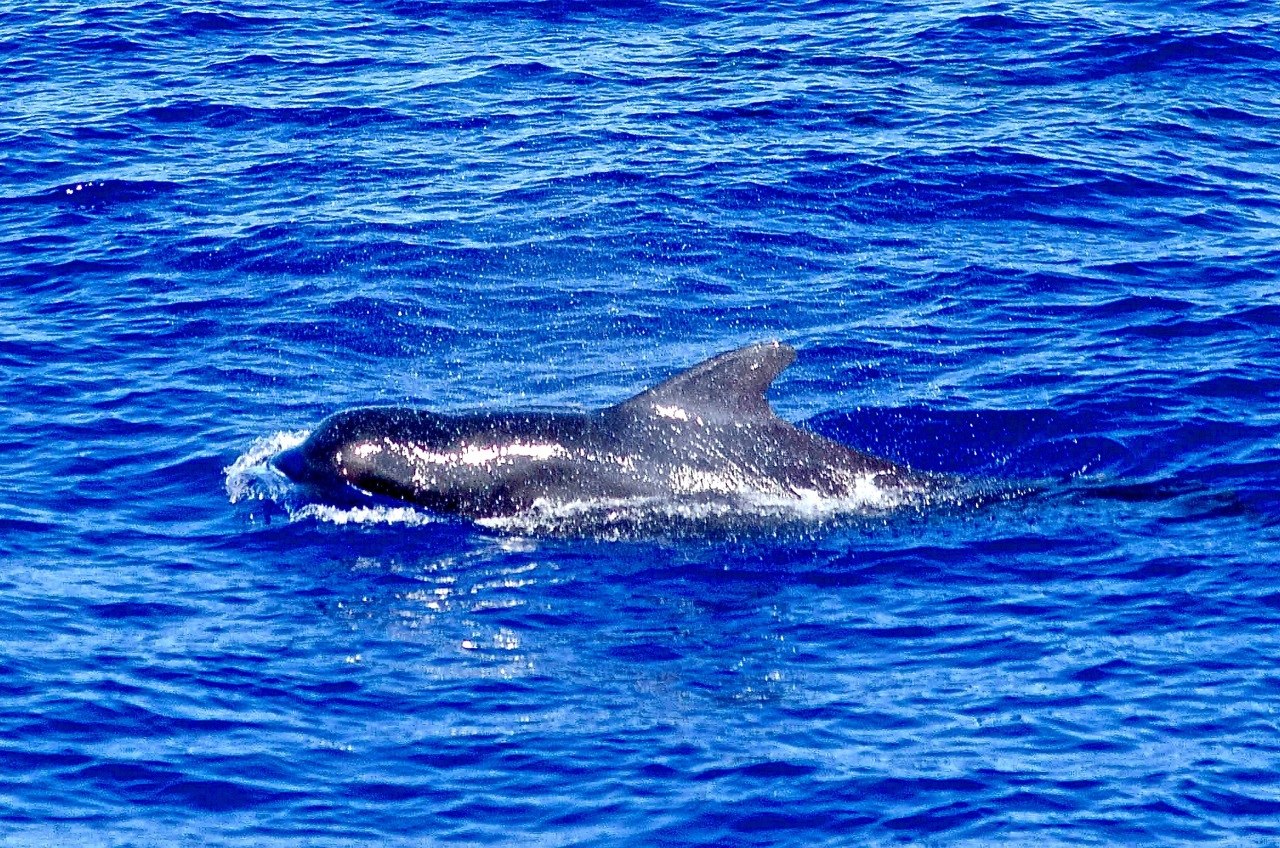
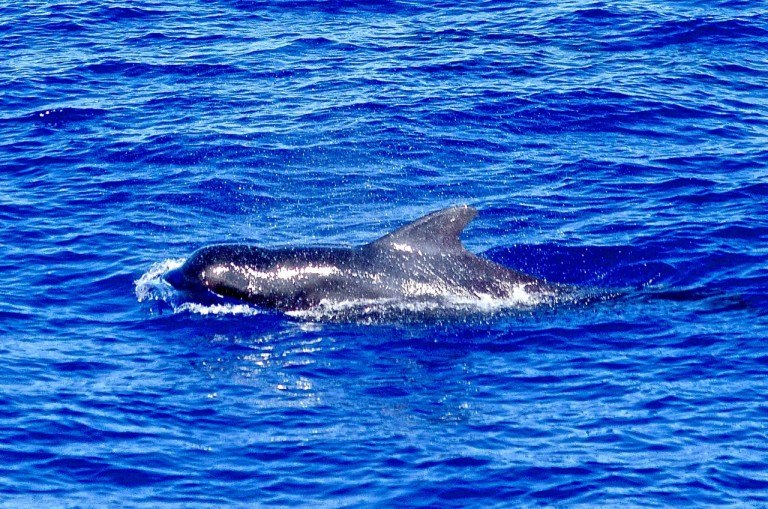
The focus was deep-diving toothed species found in Hawaiian waters—beaked, short-finned pilot, and endangered sperm whales. While extensive work has been done throughout most parts of the world to study whale migrations and concentrations, much less work had been done to understand the factors that control these migrations. This cruise included two projects focused on that topic with student team members from the University of Hawaii at Manoa (UH), the Hawaii Institute of Marine Biology, and the National Oceanic and Atmospheric Administration (NOAA).
Dive Deciphering
Adrienne Copeland, a Ph.D. zoology student at UH, was chief scientist for the cruise to the waters off the Kona Coast on the west side of the Island of Hawaii. She built on past work, using sonar to learn more about where whales feed. Toothed whales, known formally as odontocetes, sometimes dive down 1,000 meters or more, complicating the job of studying what attracts them and what holds their foraging attention.
[@portabletext/vue] Unknown block type "undefined", specify a component for it in the `components.types` prop
Copeland used sonar to track diving whales and quantify how much food is available in the areas where they spend their time during dives. Her hypothesis was that whales may be targeting places where prey is particularly abundant within or below what’s known as the deep scattering layer.
The deep scattering layer (DSL) is a layer at which smaller fish, crustaceans, jellies, and other organisms tend to concentrate. During the day, this happens in deep waters below the reach of sunlight, where these smaller animals retreat to the relative safety of darkness to avoid predators. But many feed on algae in shallower waters, so each night about half of the organisms collectively move to shallower depths under the cover of darkness. This daily movement up and down constitutes the planet’s largest migration.
What They Will Do
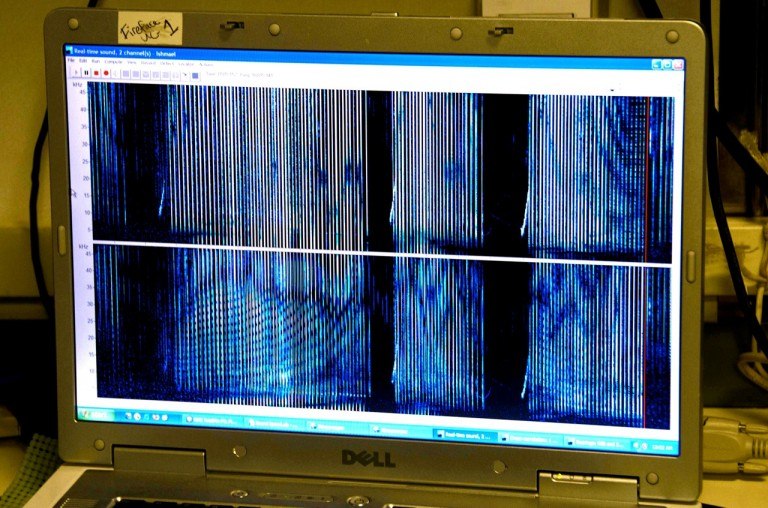
Studying all of this took a few components. First off, students stood watches on the observation deck during daylight hours looking for whales. This helped the team target areas for research. They also toke photos of the whales they spotted for use by NOAA researchers in ongoing programs that identify individual whales and track their movements using a photo database of the animals’ unique dorsal fins. To expand on observations the students also lowered hydrophones to confirm that their target whale species are eating in the area based on the whales’ characteristic echolocation clicks.
[@portabletext/vue] Unknown block type "undefined", specify a component for it in the `components.types` prop
Besides correlating DSL data with the areas where the whales are directly detected or observed, the team also was able to tie information about DSL structure and inhabitants in various spots with a longer-term record of whale locations. For about a year, the team had two Ecological Acoustic Recorders (EARs) deployed in the area where they worked. These acoustic listening devices recorded the whales’ clicks, which enables tracking. They also were comparing all their findings on this cruise against past work to look for any seasonal differences in the whales’ behaviors.
For the students involved, Falkor’s availability, announced in November, was welcome news and an opportunity that significantly advanced not just individual research projects, but also the skills and aspirations of the students aboard. “It’s really hard to get ship time,” says Copeland, “When this popped up it was a great opportunity and my colleagues and I jumped on it.”
VOS2-17 Onboard the Falkor: Whale Watching Voices of the Sea TV November 8, 2015
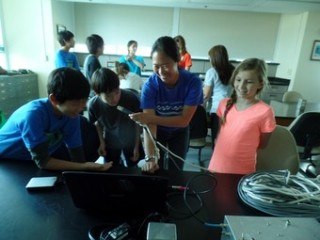
An estimated 660 students and 17 classes in Hawaii followed The Secret Lives of Whales blog. Additionally, three classroom visits were made by the graduate students to share about their research and experiences, upon returning from the cruise.