Training Day
The team has done lots of training to get ready for this cruise aboard Falkor.



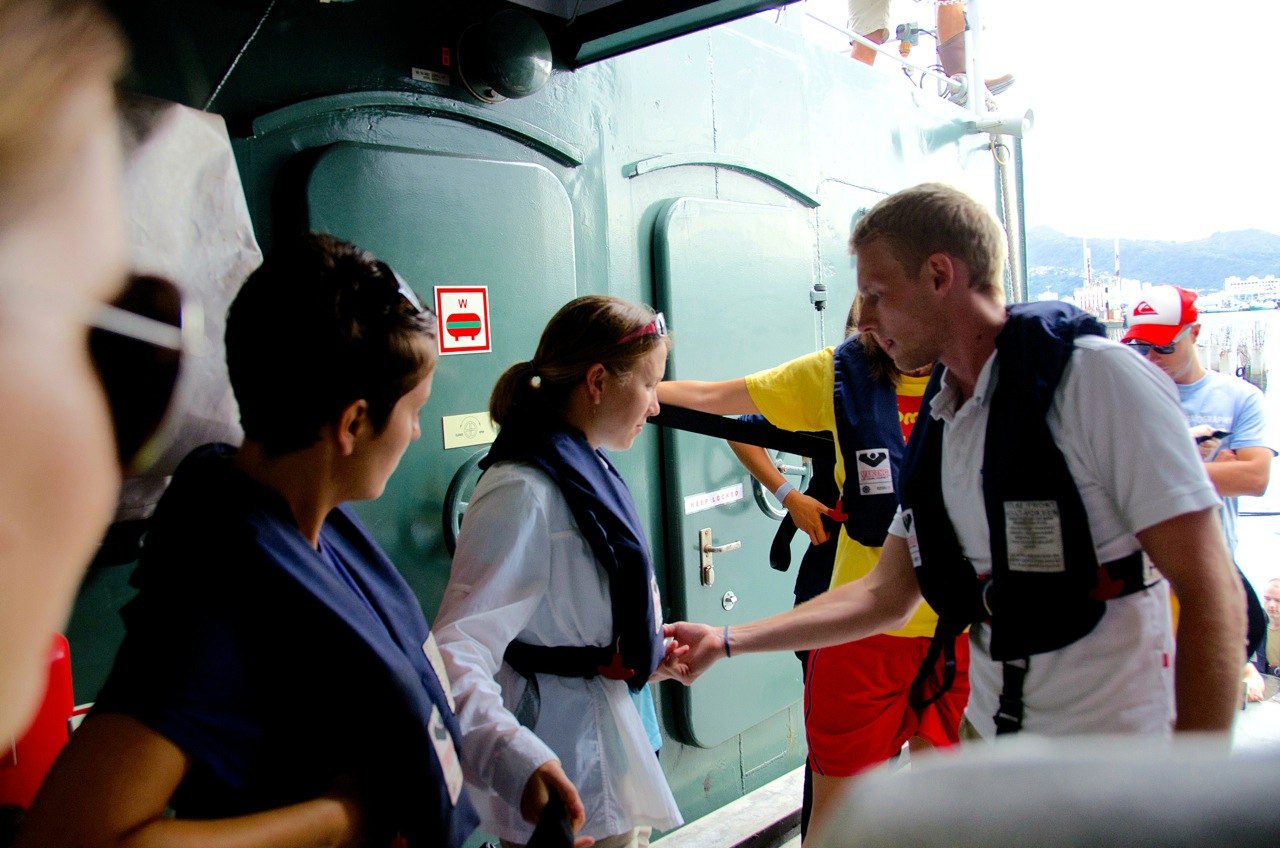
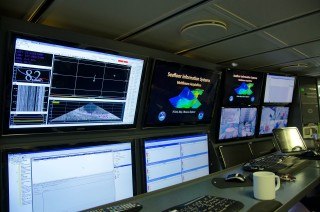
It’s our second day on the ship and we leave the dock tomorrow. This morning we learned about small boat operations with Chief Officer Paul Shepherd, Safety Officer Jason Garwood, and Navigation and Medical Officer Allan Doyle. We then spent a couple hours with Marine Technicians Colleen Peters and Leighton Rolley learning about the CTD and the sonar systems. The afternoon was dedicated to safety training and emergency drills.
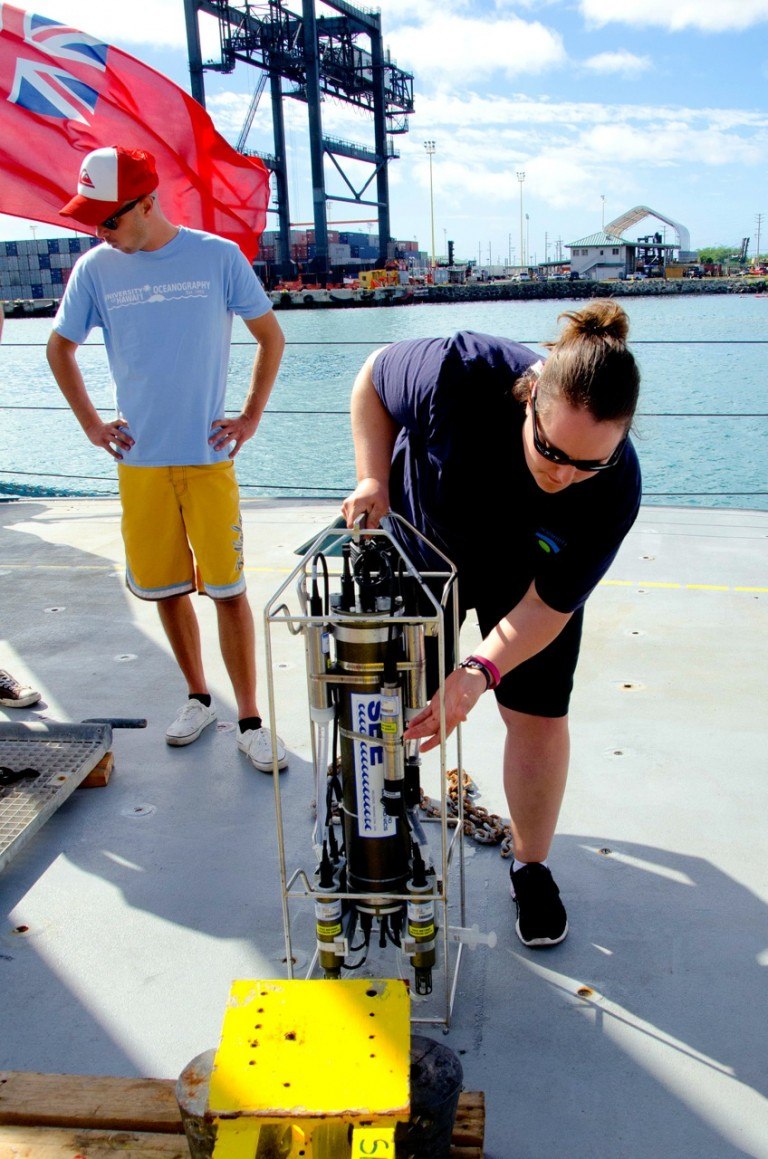
The CTD (Conductivity-Temperature-Depth) is a metal frame with multiple sensors attached that we’ll lower up to 1,000 meters down to measure the water properties at different depths. The CTD is usually mounted on a rosette
One of the sonar systems we’ll be using, called the EK60, is known as a single beam echosounder. We will use this to study animal concentrations in the water column. It produces a single cone of sound, and the parts of the bottom included in that cone can then be mapped. But more importantly, the fish and plankton in that cone also show up so that we can map animal locations and concentrations. This information will be critical to understanding what makes whales decide to dive down and feed in certain places. For mapping the seafloor we could rely on the two multi-beam systems on Falkor, which can each produce a whopping 432 acoustic cones! This would allow a very detailed mapping of a wide swath of the ocean bottom.

We’re very excited about our departure tomorrow and looking forward to telling you all about what we learn as we put all this training and equipment to use.