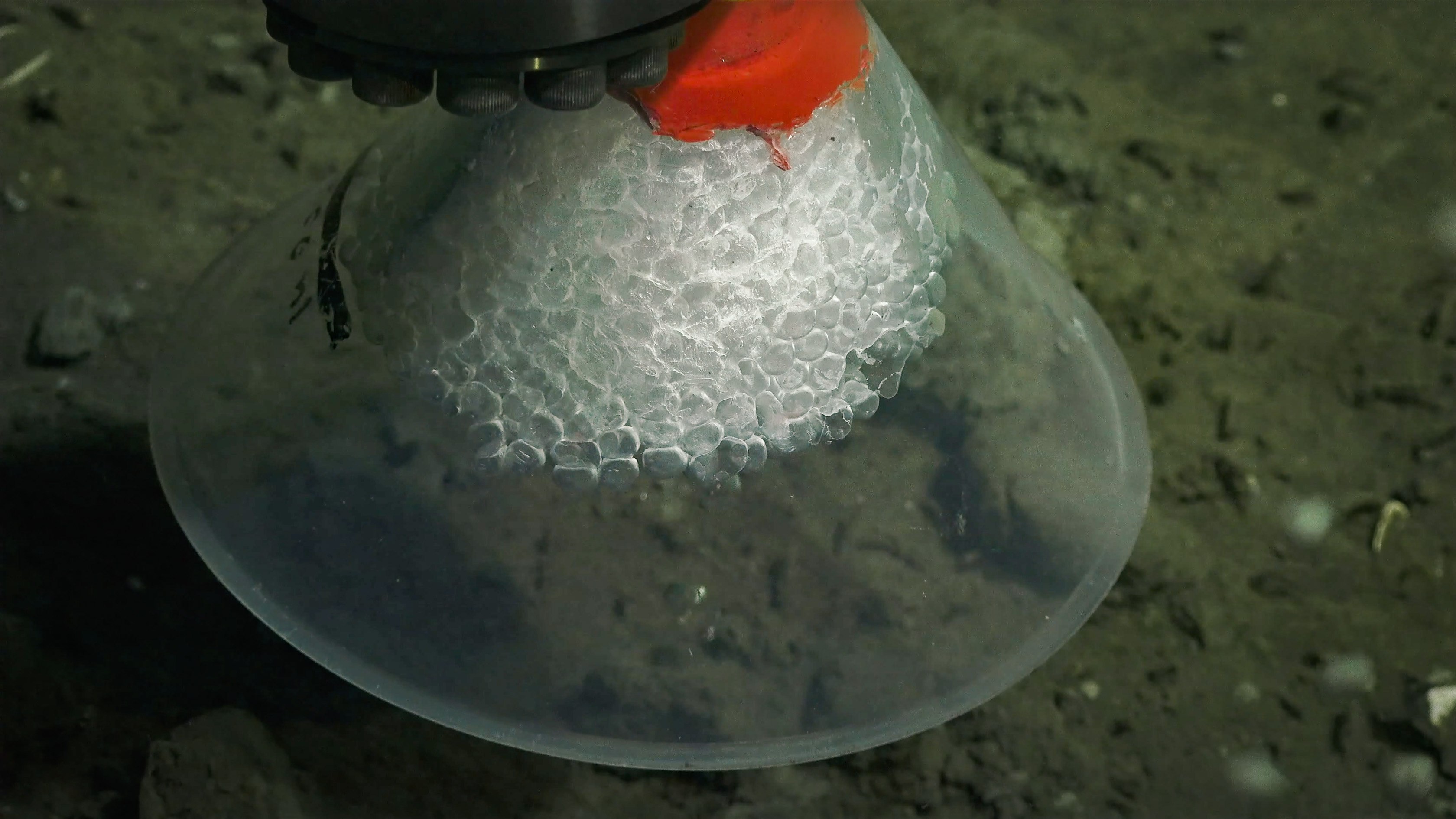

“I never intended to be studying these cold seeps, but then I found the anomaly.”
With those words, Oregon State University/National Oceanic and Atmospheric Administration scientist Tamara Baumberger
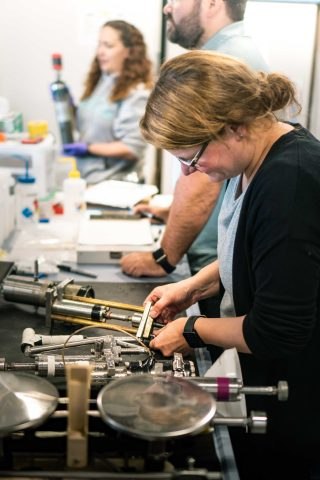
As a specialist in studying marine gases, Tamara would collect samples of the hot water flowing out of the seafloor and analyze it for what kinds of gases were dissolved in it. Her usual results were typical of most volcanic activity: hydrogen, hydrogen sulfide, and carbon dioxide. She would even find helium-3: an unusual and primordial isotope of helium that has two protons and one neutron, as opposed to common helium’s two protons and two neutrons.
It is that last gas, helium-3, that brought Tamara into the realm of studying methane seeps, and it was a bit of a surprise.
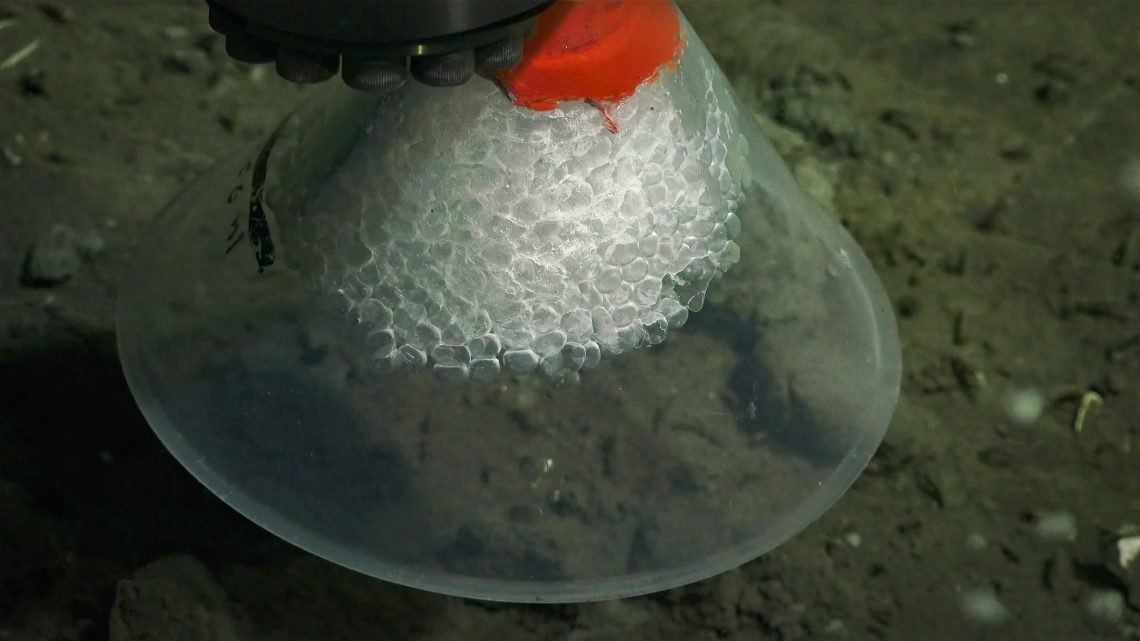
“I had been asked to help out with a research cruise in the Cascadia margin in the northeast Pacific, where we are now in fact, looking at these methane seeps,” Tamara recalls. “As a gas expert, I was familiar with methane seeps, but I had never really studied them. When we got the samples from these seeps back to the lab, we decided to run them through the analysis we used for the hydrothermal vents too. And that’s when we found the anomaly.”
The anomaly was helium-3.
The Anomaly
So why is it a big deal that helium-3 was in the methane seeps here on the active Cascadia margin? Helium-3 is usually only found where there is a direct link to the mantle, the portion of the Earth between the crust and the core. You will see it at hydrothermal vents, volcanoes, and areas where faults in the rock formations have created pathways to the mantle.
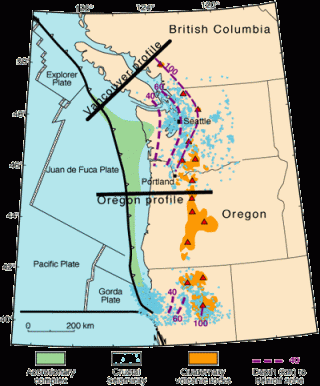
“The fact that we found helium- 3 in the methane seeps here means that those seeps are likely connected to the mantle somehow,” Tamara said. “When you consider that we’re on an active continental margin, where tectonic plates are interacting, it makes sense that fluids are moving around in the rock layers. In fact, the helium can even act as a tracer to show us how the rocks are faulting.”
The active margin that she is referring to is part of the famous “Ring of Fire” around the PacificNot Her First Rodeo
Although Tamara’s path to studying the methane seeps of the Cascadia Subduction Zone has been a little unexpected, she has already got significant experience with this research. This is her third cruise to this region to study the seeps.
In 2016, she joined the original cruise led by NOAA’s Pacific Marine Environmental Laboratory
Now, in 2019, she is back aboard R/V Falkor to revisit the 2016 and 2018 sites and expand again to new areas to see just how widespread the helium-3 is. Several of the sites we are visiting have never been explored before, marking entirely new ground.
“This has been super exciting for me,” Tamara said, “I’m always enthusiastic to go to places no one else has been, to be one of the first to see and sample the area.”
Fingerprinting the Methane
Tamara will also be helping with the study of the methane itself. Her analysis will help us understand how the methane came to be in the sediments on the seafloor in the first place.
As we learned from Nancy and Diana, the organic material that is the source of the methane was deposited from the land, mostly, brought by rivers and other runoff. The organic material is then converted to methane, which fuels the seeps (and the carbonate
There are two ways that the organic material can become methane: getting cooked by heat and pressure, or as a byproduct from bacteria eating the organic material.
“Each method for making methane has certain signatures, like a fingerprint,” said Tamara. “By studying the gas samples from the seeps, I can tell if the methane is made from the bacteria or from heat and pressure deeper in the Earth.”
Figuring out which process is making the methane and where helium-3 occurs at the seeps will help explain the plumbing system that transports fluids through the sediments in this whole area. It will also help Tamara finish mapping out this unexpected path she’s taken ever since she first noticed helium-3 popping out with the rest of the methane bubbles.