




“OK, let’s fly.”
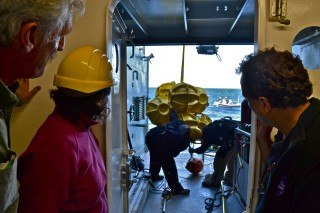
That was Keith Shepherd, general manager for the ROPOS ROV

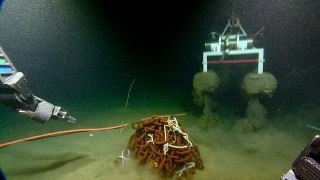
So, the ROPOS pilots expertly connected it to some powerful floats we dropped over the side this morning. A huge wad of heavy steel chain held the floats down and once the pilot removed the connection to the chain it should be time to fly. We watched, and waited. After a few seconds the package’s legs broke free from their partial cementation in the sediment. The whole shebang launched toward the surface and left our view in an instant looking very much like a rocket, with streams of sediment trailing below. This was undoubtedly to the dismay of the large starfish that had taken up residence on the package and came tumbling (safely…) down.
Later, Falkor’s crew would spot the yellow buoys at the surface and use one of the small boats to drag everything over to the ship. We’ll bring this package back to shore so engineers can troubleshoot the unit and get it back out later.
That was just one item on a long list of jobs for the ROPOS team to perform on NEPTUNE observatory equipment packages scattered about the seafloor. Some jobs were basic maintenance, but one was especially relevant to the current mission. We added a new oxygen sensor to another package and we’ll do the same at another site tomorrow.
These sensors will help the research team better track and understand the movements of low-oxygen water in the depths here. Ultimately they hope to combine such data from NEPTUNE and from the inland VENUS observatory with other research efforts to one day allow them to detect and forecast events that lead to low-oxygen water making it inshore where it can cause problems for marine life, commercial fisheries, and aquaculture.
Early tomorrow morning, the ROPOS team will take on another long list of tasks aimed at enabling future experiments and keeping the basic equipment running in good shape. And for now, at least, it seems like the weather is going to cooperate.