




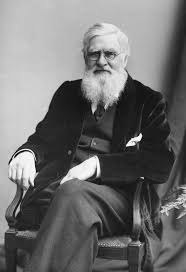
Nineteenth century naturalist, explorer, and geographer Alfred Russel Wallace. He arrived at the theory of evolution through natural selection independent of Charles Darwin.[/caption]
In 1859, the famous British naturalist Alfred Russel Wallace drew a line between the Indonesian islands of Bali and Lombok as the proposed dividing line between Asian and Australian fauna. On the East side of the line were animals particular to Asia and Australia, and West of the line were only Asian fauna. The deep waters of the Lombok Strait did not fully drain during the last glacial maximum when vast ice sheets covered large swaths of the Northern Hemisphere, and sea levels were over 100 meters lower than they are today. While other animals - including humans - crossed new land bridges around the planet, the deep Lombok Strait still prevented Australian fauna from entering into Asia and this faunal variation can be observed today in the unique animals found only Down Under, such as wallaby, platypus, and koala.
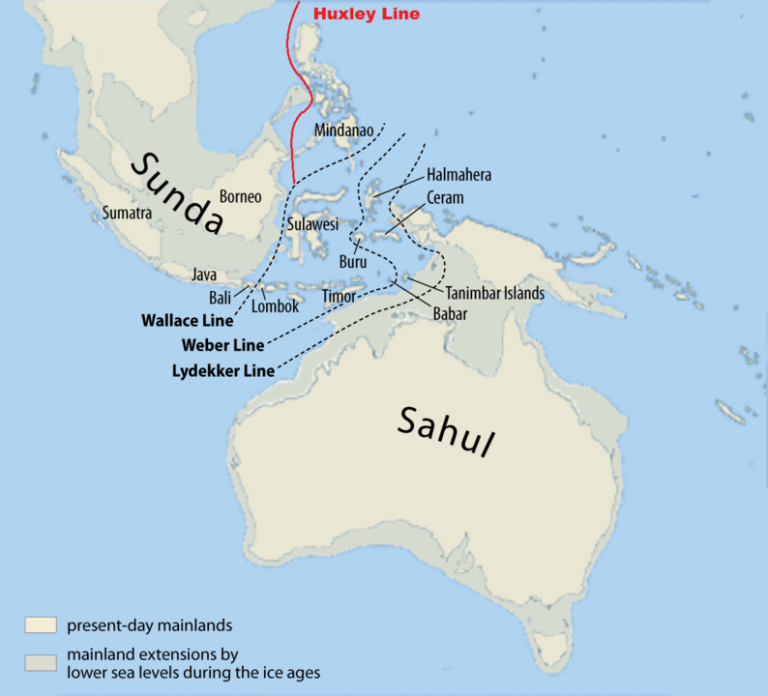
Map of the Wallace line, showing the division of Australian and Asian fauna. Attribution: Altaileopard - Own work, CC BY-SA 3.0, https://commons.wikimedia.org/w/index.php?curid=21853452[/caption]
Deep Sea Partitions
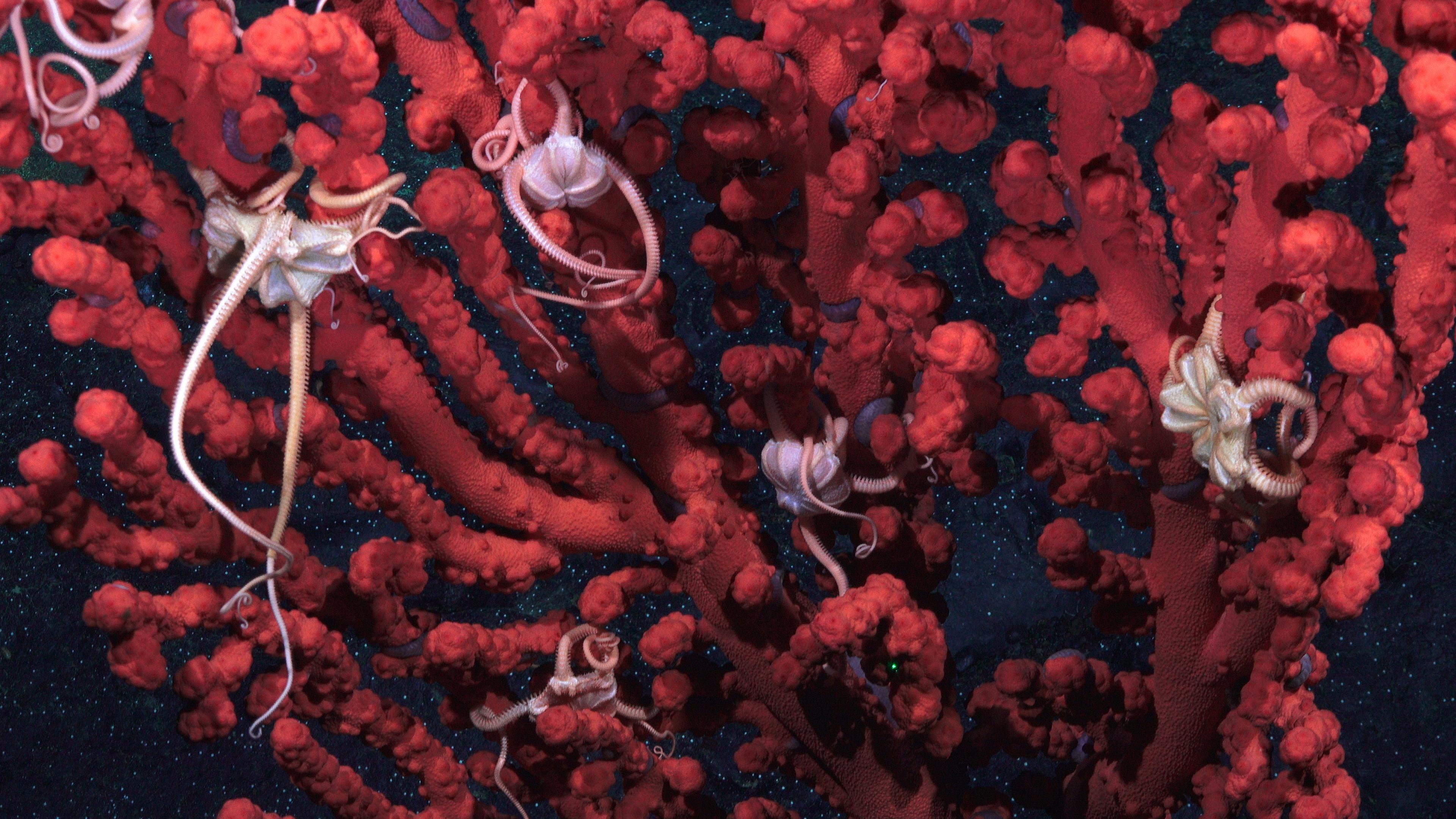
Similar, though poorly understood, faunal dividing lines exist in the oceanic depths. Changes in composition of deep-sea corals, crinoids, and other organisms exist along underwater mountain ranges such as the Hawaiʻi-Emperor Seamount Chain
Understanding Movement of Larvae Along Oceanic Ridges
It is important to understand how freely organisms spread along oceanic ridges, since this can influence how isolated - and potentially at risk - some populations are, should they become threatened by impacts such as deep sea mining, bottom trawling, or even disease. While Wallace was able to wander through the jungles of Southeast Asia to make his observations of animal distribution, exploration of the deep sea takes very specialized equipment that can withstand extreme pressure and temperature changes, while making observations in total darkness. Wallace certainly had his challenges with dangerous environments, disease, solitude, and cultural barriers, but the tools for observation and discovery we have today would likely make the most adept naturalist of the 1800's think of magic and sorcery. Instead of Wallace's small wooden cages for birds and insects, we have high definition cameras, bio-boxes for samples, robotic arms and vacuums that gather on a machine that does our bidding remotely, all while transmitting observations to the R/V Falkor
During this expedition we will be using the Remotely Operated Vehicle SuBastian