
Kim Juniper
ROPOS was in the water most of the day on two dives. One of the main objectives for both was to put in play the experiments by Neus Campanya Llovet
After a few hours, the ROV returns and removes the cylinder. Each of these enriched parcels of sediment has a white frame around it designed to keep the sable fish common here from coming through and mixing things up too much. All the other animals can go about their normal business.
In about a year, Neus will return on another cruise and collect sediment samples from the enriched areas and then count the animals like worms and small crustaceans found in each. She’ll decide what effect if any the two food concentrations have on biodiversity and abundance of the animals compared to core samples taken outside the enriched areas.
All of this is taking place within an area where oxygen levels are lower
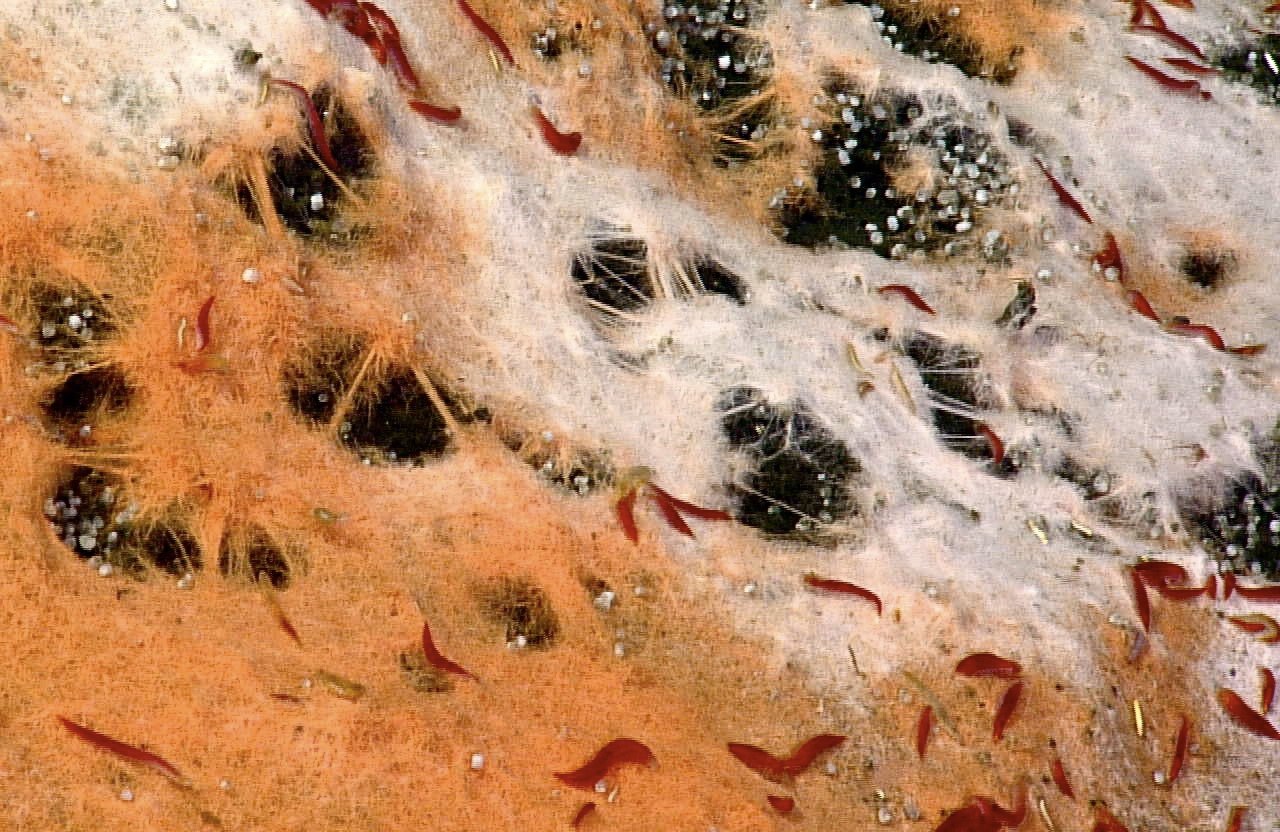
The team took the time to explore Kim Juniper’s chance discovery in between working on Neus’s experimental work and other tasks. What Kim spotted yesterday was red spots on the otherwise white patches of bacterial mats and methane hydrates found in this area. Methane hydrates are ice-methane mixes that form when methane seeps out of the seafloor in specific low temperature, high-pressure conditions.
In the Gulf of Mexico, there are worms that live within and feed on these hydrates that were discovered relatively recently. Such worms have never been seen anywhere else. That’s what Kim thought he might have seen. Instead, the worms, along with some snails, were living on top of and probably feeding on bacterial mats that grow on the hydrates.
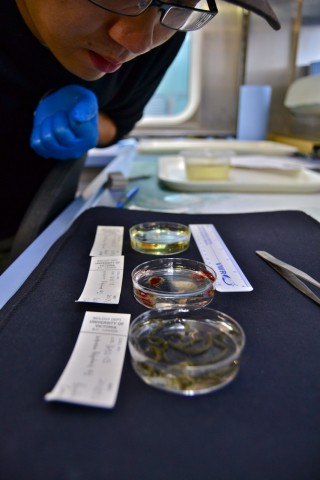
No one’s ever reported animals concentrating like this on hydrates in the Pacific, except for one possible exception. So the ROPOS pilots collected samples of the animals. The team is now sending photos to experts to see if what they found were known or new species.
Today marked the end of multiple dives focused on servicing equipment at the NEPTUNE observatory and doing the experimental work, with a few bits of exploration mixed in. Tomorrow we enter a new phase of the expedition. We’ll be using ROPOS to survey various depths along Barkley Canyon to look at the animals found below, within, and above the lower oxygen waters. It should make for an interesting series of dives that cover a lot more ground—most of it never before seen--meaning a lot more animals to see, like anemones, sea cucumbers, sea stars, and fish.
We’ll let everyone know what we find in the blogs, and all the dives will be broadcast live so you can see the work and discoveries in real time.