
Wrap-up
It's hard to believe that we've already wrapped up the second student cruise on Falkor.



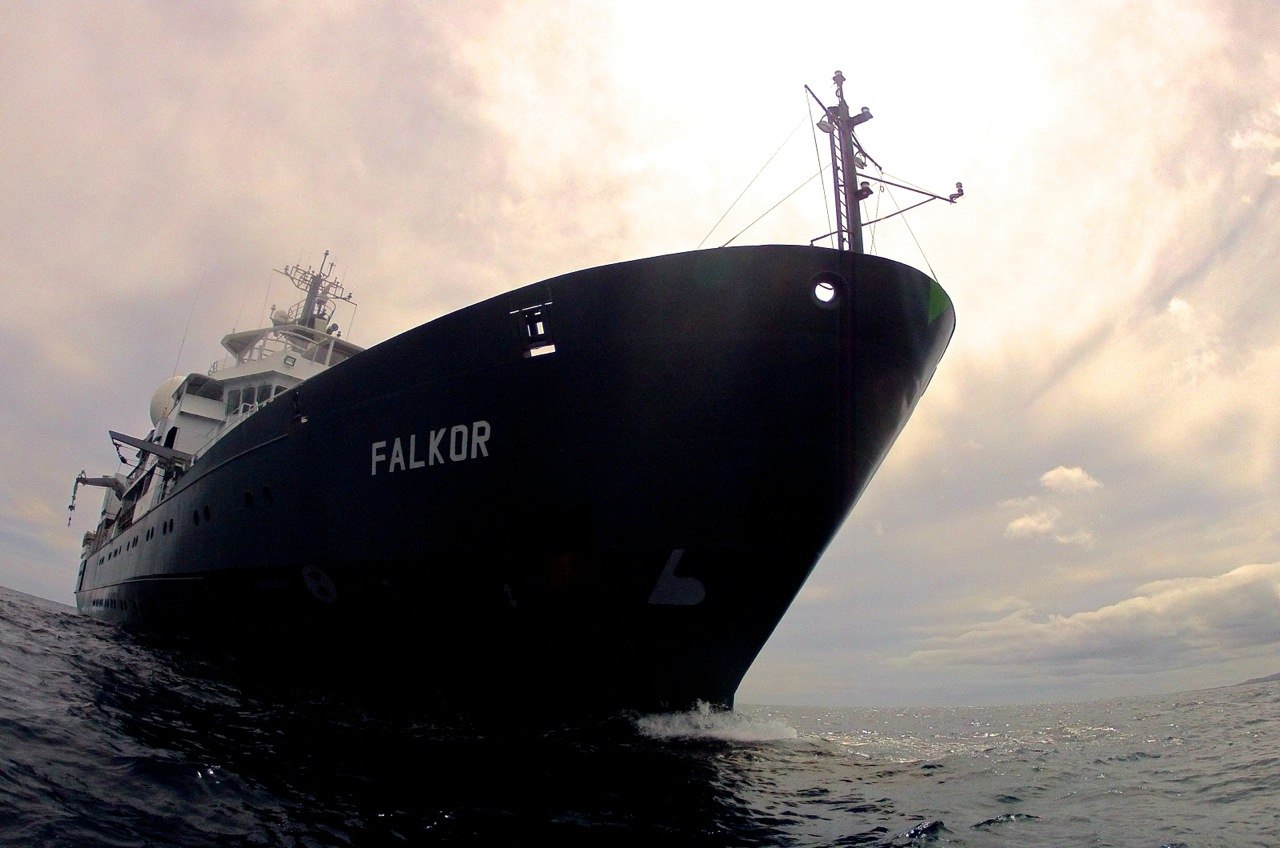
For about half of the students on this cruise, this was their first time at sea. They were excited to have the rare opportunity to get hands-on experience running the shipboard equipment. With supervision from Falkor's able marine technicians and crew, the students called the shots: working within our project plan and waypoints, they identified where and when to collect, and learned the ins and outs of storing large amounts of data using computers in the science control room. They rotated 12-hour shifts without complaint (the great coffee was a real boost here), and no matter how tired they were, many found time each evening to enjoy the sunset from the roof deck.
This was an enjoyable and productive cruise. Everyone, students and Falkor crew alike, was enthusiastic and friendly, and they approached all tasks with a ‘can do’ attitude. We would like to thank the Schmidt Ocean Institute for this remarkable learning opportunity.
