


Dive In
About the Expedition
The Atacama in northern Chile is the oldest and driest desert on Earth. While tectonic activity reconfigured the shape and arrangement of land masses over the last 150 million years, the Atacama Desert remained essentially at the same latitude. And, offshore, where the desert meets the sea, the Atacama's continental shelf also remained relatively unchanged in its position.
When scientists began investigating the microorganisms living on the coast of the Atacama, they found several ancient species, which led them to question if other types of equally ancient organisms had been reported in the region. Investigations into what local fishers caught in their nets and the findings of previous research expeditions revealed invertebrate species, such as brachiopods, commonly called living fossils.
Dr. Armando Azua-Bustos of the Centro de Astrobiologíca (CAB), CSIC-INTA, in Spain, and his team hypothesize that the unchanged position of the Atacama region creates the potential for entire ecosystems comprised of living fossil organisms. Using R/V Falkor (too)’s sensors and advanced tools like ROV SuBastian, the science team will reveal if the area contains examples of other species that have remained relatively unchanged in appearance since emerging in the fossil record. Should they successfully find ecosystems analogous to those from 150 million years ago, they could unlock insights into the evolution of life on Earth and, potentially, insights into potential deep-sea ecosystems that might exist under the surface of the icy moons Enceladus and Europa.
- Dive Markers
- Trackline
The Mission
Where the desert meets the sea
The Atacama is the driest place on Earth, with an average rainfall of 15 millimeters per year. Some areas have had no recorded rains in the last 400 years. Nestled between two tall mountain ranges — the Andes Mountains and the Chilean Coastal Range, the desert is shielded from almost all weather patterns that produce rainfall. While the Atacama has been a desert for the past 150 million years, it has been hyperarid for the past 15 million years, with vast regions seemingly inhospitable to life. Yet, scientists have found fascinating microorganisms that can thrive even in the driest regions of this desert.
The Living Fossils of the Atacama Desert team is led by scientists who have long worked with microorganisms of this desert. For example, Chief Scientist Dr. Azua-Bustos has found microalgae using spider webs to collect dew to survive and proliferate in the Coastal Range of the Atacama. This microalgae has oceanic origins, as do other microbes that Azua-Bustos has found in the desert, leading him to hypothesize that these microbes are being transported from the sea via wind and fog into the Atacama. With marine origins, the Atacama microalgae may provide clues about how photosynthetic organisms transitioned to terrestrial ecosystems and ultimately evolved into complex, multicellular plants like trees.
Finding microorganisms with ancient origins and the Atacama’s stable position on Earth led Azua-Bustos to hypothesize that the trench off the Atacama could host ecosystems brimming with living fossils. Indeed, when examining catches of local fishers, they found brachiopods and chitons that previously were only known as fossils in this desert.
The Atacama Trench
The Atacama Trench, also known as the Peru-Chile Trench, runs parallel to the coasts of Peru and Chile. A 1000-kilometer stretch of the larger 5900-kilometer-long trench runs offshore of the Atacama Desert. Like the desert, this portion of the trench has retained its relative latitudinal position since the Jurassic Period.
The trench’s width is approximately 64 kilometers, and the deepest point is 8065 meters, with a near-average depth of 7000 to 8000 meters, nearly twice that of ROV SuBastian’s diving capability. The total area of the trench is 590,000 square kilometers, making it larger than the state of California.
It forms at a convergent plate boundary, where the Nazca Plate dives beneath the South American Plate in a process known as subduction. The convergence of the two plates is responsible for forming the Andes Mountains. Convergent boundaries generate geologic activity along the seafloor, forming chemosynthetic ecosystems like methane seeps.
This international science team will target, among others, methane seeps for exploration, as there is strong evidence that they exist in the portion of the trench that lies off the desert. Based on their previous research, the team hypothesizes that they will find even more microbes and organisms living on seeps within the trench, closely similar to their fossil record ancestors.
Looking to the stars with living fossils
Living fossil is a term coined by Charles Darwin in his famous 1859 text, “On the Origin of Species.” He used the phrase to describe animals that seem nearly unchanged from their ancestors in the fossil record. Many well-known living fossils, including coelacanths, horseshoe crabs, and nautiluses, dwell in the Ocean. Living fossils have not changed much in appearance from their ancient ancestors but have evolved genetically over time.
While no unified scientific consensus exists on what constitutes a living fossil, some evolutionary biologists have created suggested definitions. For example, some believe living fossils should describe species with slower rates of genomic change, like alligator gar and sturgeon. Others suggest it should be a term reserved for species that are the last of their clade and have undergone little morphological change, like coelacanths and ginkgo trees. Regardless of a unified consensus on what constitutes a living fossil, species encapsulated with this term provide key insights into evolution and life on our planet.
Understanding the origins and the evolution of life on Earth suggests the conditions under which life might be found on other planets and their moons. While we have not yet found evidence of life on other planets in our solar system, scientists believe life could be found in the subsurface oceans of icy moons like Enceladus and Europa. By looking for ancient species in the Atacama Trench, the team will investigate conditions comparable to those under the surface of Europa and Enceladus, suggesting the types of biosignatures that could aid our search for life on these icy moons.
Team and Collaborators

Armando Azua-Bustos
Principal Investigator

Lauren Seyler
Co-Principal Investigator
Karolina Rivera-Osorio
Oscar Ercilla
Antonio Molina

Isabel Herreros
Alex Ingle
Multimedia Correspondent
Guillermo Guzmán
Miguel Arribas Tiemblo
Daniel Carrizo
Amber Wu
Carlos Gonzalez
Jessica Saranya Eberle
Francisca Valenzuela
Caitlyn Hubric
Alexis Gacitua

Victoria Baca
Berth of Opportunity
Javier Sánchez-España
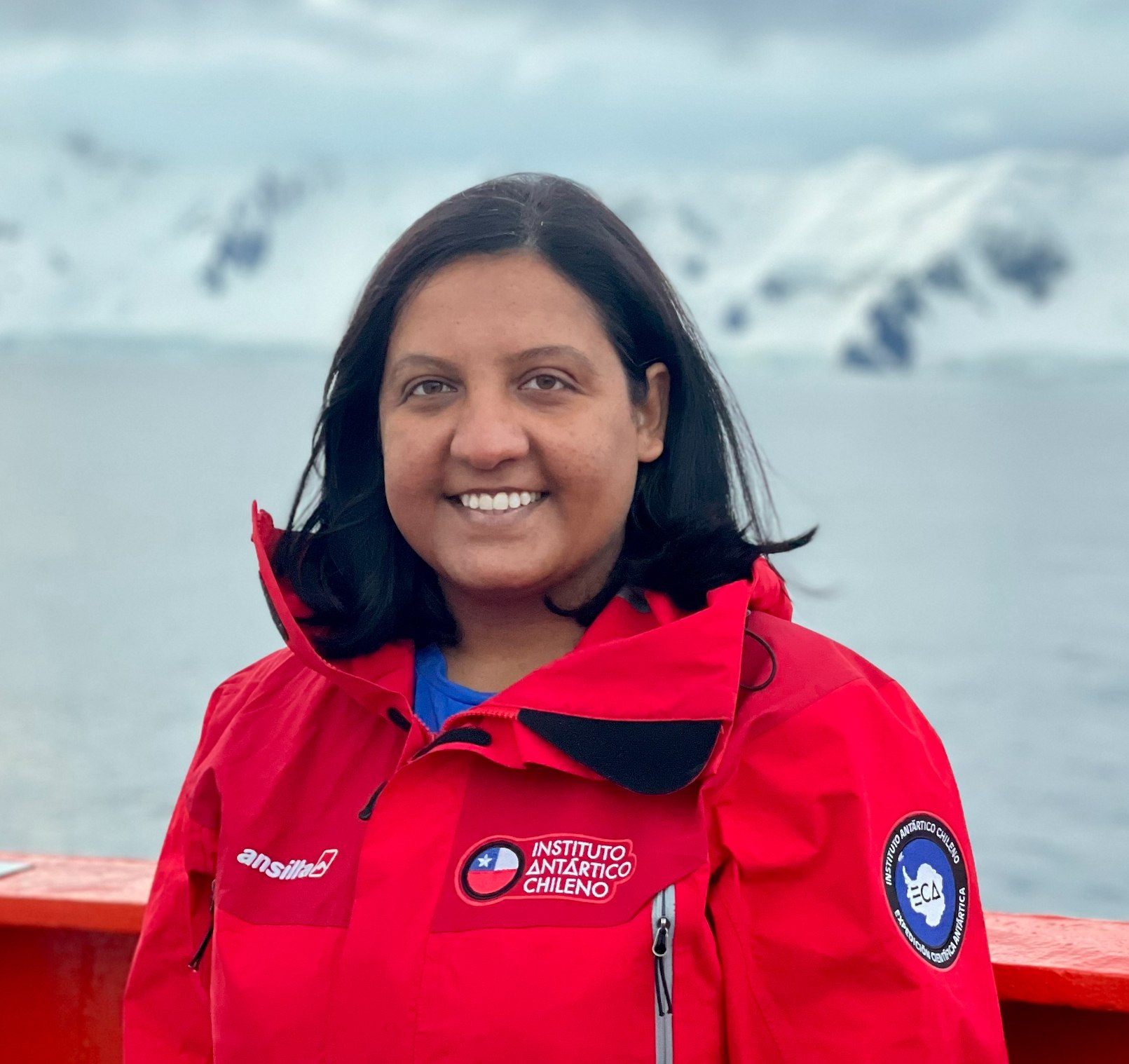
Aparna Banerjee
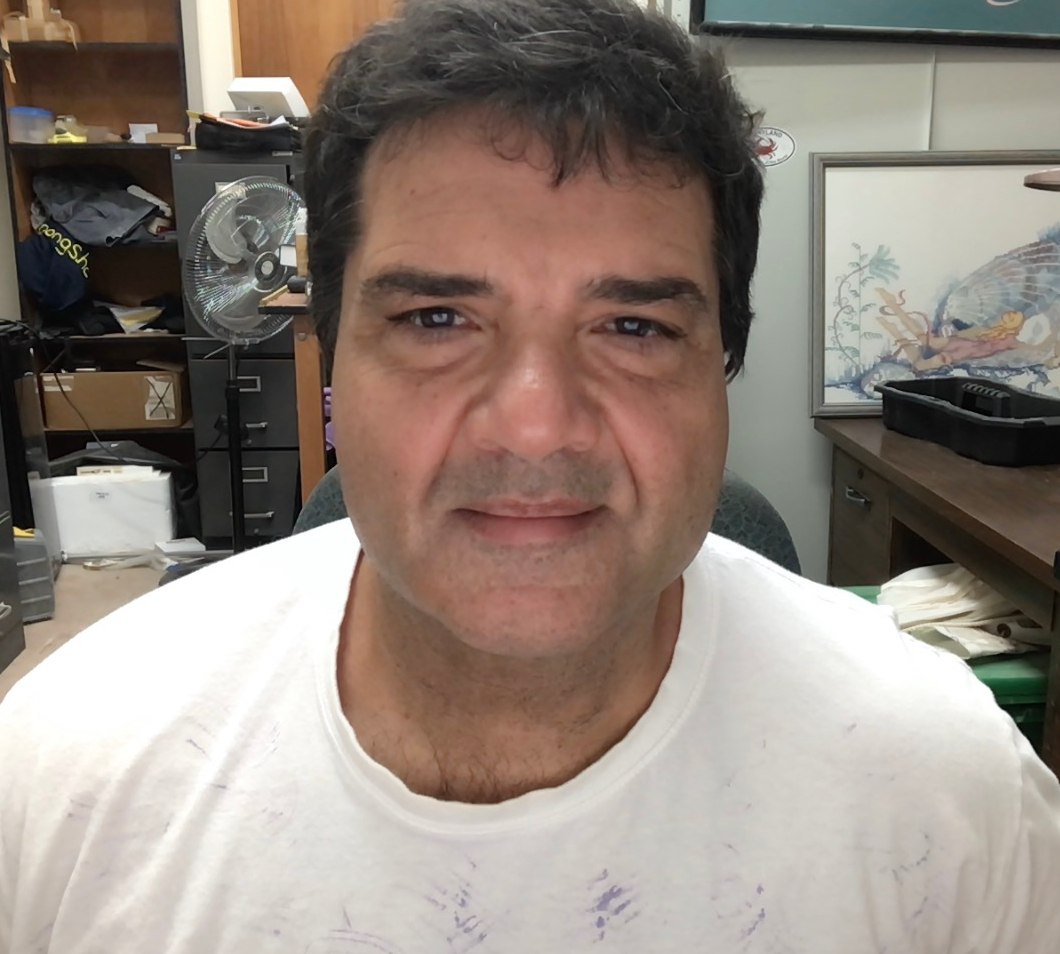
Nick Schizas

Andrew Palmer



Explore
Updates from the Ship
All Ship Updates

Related Galleries
View AllWe are happy to offer a streamlined request process when usage falls within the parameters outlined in the Creative Commons Attribution-Noncommercial-ShareAlike 4.0 International (CC BY-NC-SA 4.0) License. However, due to our legal status as a 501(c)(3) private operating foundation, no media produced by Schmidt Ocean Institute may be used in attempting to influence legislation or lobbying.
Attribution-NonCommercial-ShareAlike | CC BY-NC-SA
Under this Creative Commons License, you are free to:
Share — copy and redistribute the material in any medium or format
Adapt — remix, transform, and build upon the material
Under the following terms:
Attribution. You must give appropriate credit, provide a link to the license, and indicate if changes were made. You may do so in any reasonable manner, but not in any way that suggests the licensor endorses you or your use.
NonCommercial. You may not use the material for commercial purposes.
ShareAlike. If you remix, transform, or build upon the material, you must distribute your contributions under the same license as the original.
Not sure this license fits your use? Head over to our Image Requests page to learn more
Divestreams
View all Divestreams

Weekly Videos
View all Weekly VideosDiscover More
Expedition Data
Title  | Type | Repository |
|---|---|---|
| Vessel Underway Data | Oceanographic Property Data | Rolling Deck to Repository (R2R) |
| ADCP data | Oceanographic Property Data | University Hawaii Geological Sample Facility |
| ROV SuBastian Sensor Data | Oceanographic Property Data | Marine Geoscience Data System (MGDS) |
| ROV Image Data | Captured Image/Video | Marine Geoscience Data System (MGDS) |
| ROV Event Log Data | Other | Marine Geoscience Data System (MGDS) |
Processed Multibeam from Falkor (too) | Sonar Data | Marine Geoscience Data System (MGDS) |
| Metatranscriptomic data from sediments | Sediment Samples | GenBank/NCBI |
Publications from This Expedition
Preliminary Expedition Report: Living Fossils of the Atacama Trench
[This Article was published OPEN ACCESS]