


Outcomes of the research project supported by Schmidt Ocean Institute and conducted by Dr. Daniel Barshis are discussed in this week's issue of the Proceedings of the National Academy of Sciences. The project focused on coral reefs of American Samoa to determine what environmental characteristics aid corals in dealing with thermal stress.
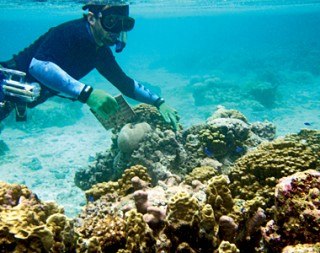
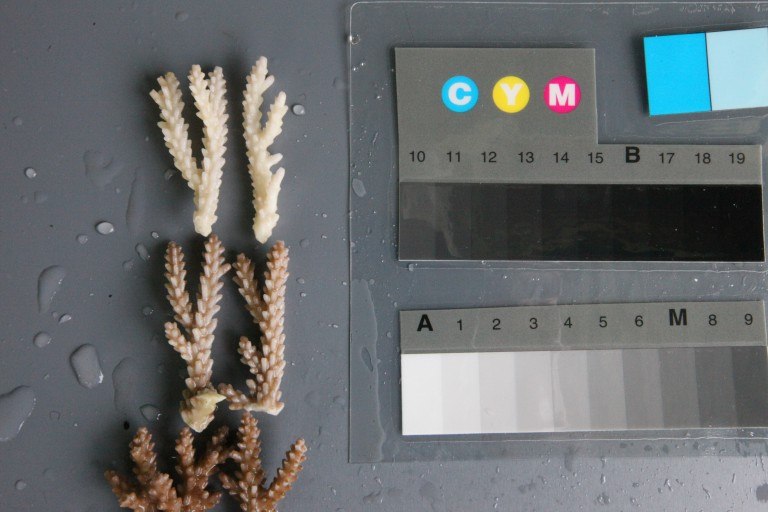
A set of field expeditions over the past several years demonstrated that corals from more heated areas of the reef with large fluctuations in daily temperature may actually be conditioned to have greater stress tolerances than corals from more moderately heated locations on the reef. This project investigated patterns of stress gene expression in these different populations to determine what molecular pathways might be causing the increased tolerances of some corals over others. Additionally, Daniel and his colleagues conducted a set of transplants moving corals from less tolerant areas to the more extreme locations to see if longer exposure to temperature fluctuation can condition these corals to be stronger. If corals can become stronger just by consistent exposure to short-term stresses, then maybe many coral populations have the capacity become stronger over time. On the other hand, if the weaker corals cannot be made stronger after consistent exposure to temperature fluctuations, it may be that the stronger corals have already adapted over evolutionary time to tolerate higher stress exposures. If this second case is true, than it is imperative that these "hardy" corals be protected, as they are our greatest hope for coral survival in an era of global climate change.
Publications: Daniel J. Barshis, Jason T. Ladner, Thomas A. Oliver, François O. Seneca, Nikki Traylor-Knowles, and Stephen R. Palumbi (2013) Genomic basis for coral resilience to climate change. Proceedings of the National Academy of Sciences of the USA. doi: 10.1073/pnas.1210224110 PNAS January 7, 2013 Coverage around the web:Why some corals can take the heat - NatureA Glimmer of Hope for Coral Reefs - ScienceOcean Science NowThe Comeback Corals - Stanford Magazine