



Announcing 2024 Expeditions
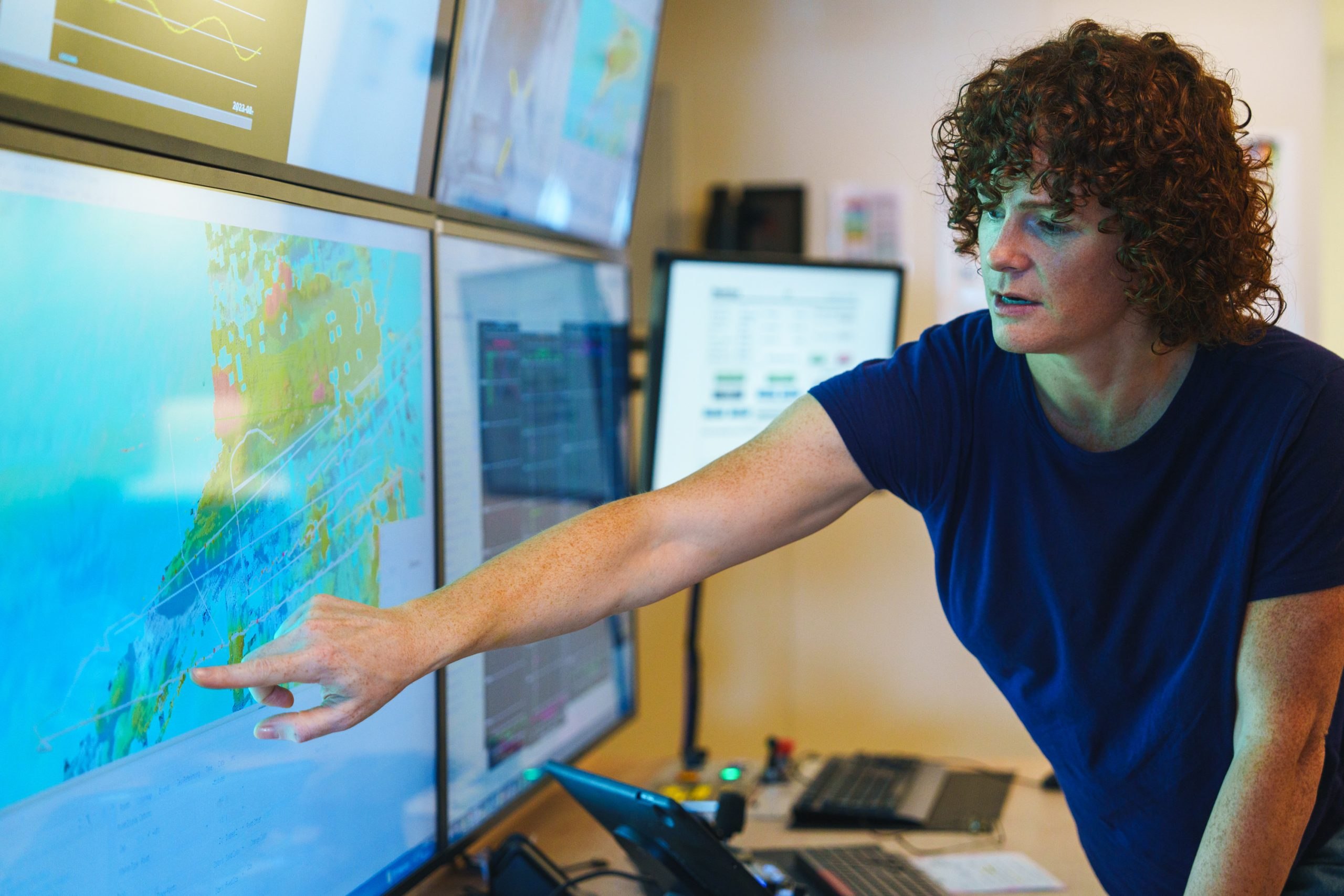
The Southeast Pacific Basin, off South America, is one of the most tectonically active areas in the Pacific Ocean. The Chile-Peru Subduction Zone stirs off the continental shelf, where the Nazca tectonic plate dives under the South America plate, forming volcanoes and the 8000-meter-deep Chile-Peru trench. Wind patterns along the South American coastline push surface waters away, which are then replaced by deep, cold, nutrient-rich waters in a process known as upwelling. This upwelling sustains one of the most bountiful areas in the global ocean, facilitating two of the largest fishing industries in the world and providing habitats for blue whales, leatherback sea turtles, and more. The eastern tropical Pacific Oxygen Minimum Zone lies further off the coast; it is an oxygen-starved environment inhospitable to larger marine animals, and it is changing in size, likely due to climate change. In 2024, R/V Falkor (too) will venture to the depths off the coast of South America, creating vital seafloor maps, gathering data to improve climate models, and searching for ecosystems on seamounts, seeps, canyons, and vents. The data collected will contribute to Chile and Peru’s stewardship of their Ocean environments and illuminate unknown marine realms. Learn more here.
2025 Expressions of Interest
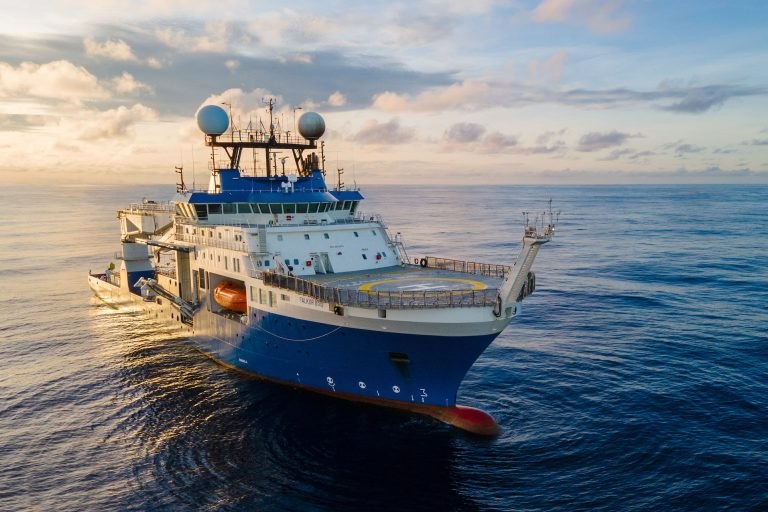
Expressions of Interest (EOI) for 2025 expeditions aboard R/V Falkor (too) in the Southern Ocean and Southwest Atlantic are due 31 Dec. 2023. Learn more here.
Uncovering the Secrets in the Galápagos Deep
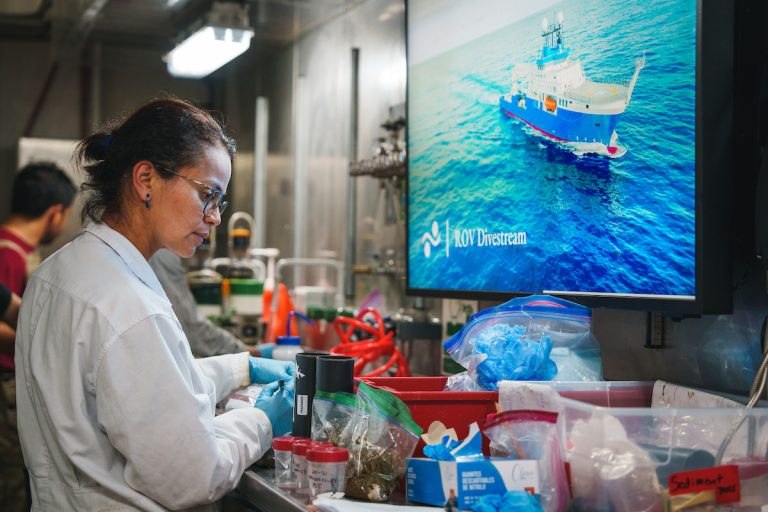
From mid-August until mid-November, Falkor (too) supported three expeditions surrounding the Galápagos Islands in collaboration with the Galápagos National Park, Charles Darwin Foundation, and Oceanográfico y Antártico de la Armada del Ecuador, or INOCAR. These expeditions resulted in the discovery of a new hydrothermal vent field and two pristine coral reefs, which host a rich diversity of stony coral species and suggest that they have likely been forming and supporting marine biodiversity for thousands of years. The team also uncovered two uncharted seamounts and mapped them to a high resolution. The seamounts were suspected to exist based on satellite data and are now confirmed.
Returning to the Dorado Outcrop
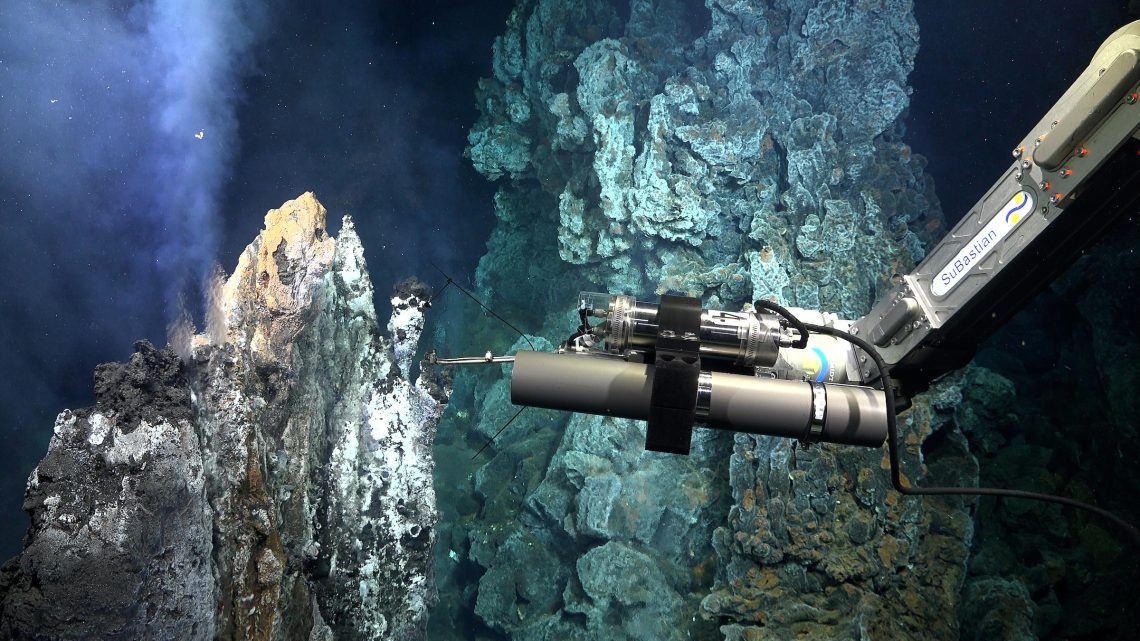
In June, Co-chief Scientists Dr. Beth Orcutt of the U.S.-based Bigelow Laboratory for Ocean Sciences and Dr. Jorge Cortés of the Universidad de Costa Rica and an international team traveled to the Dorado Outcrop — the site of the first-ever-discovered octopus nursery. One of their goals was to determine if the eggs at the nursery were viable. Scientists on previous expeditions to the outcrop had never seen evidence of developing embryos. During the first ROV dive at the nursery, they witnessed baby octopuses hatching. They also found the fifth known octopus nursery on a seamount 30 nautical miles away.
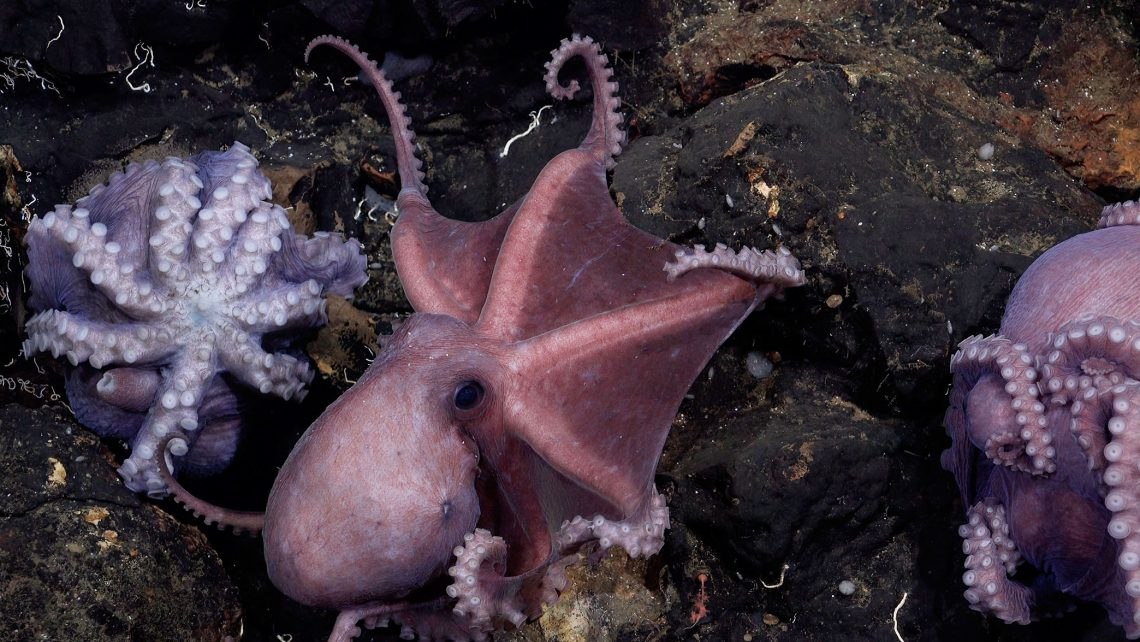
The team returned in December to continue their research, collect experiments they placed earlier in the year, and examine new regions never before seen by humans. The science team’s ultimate goal is to better understand the hydrogeology, microbiology, ecology, and geochemistry that may facilitate octopus nurseries while characterizing life-supporting services provided by the ecosystems on these seamounts. Learn more about the Octopus Odyssey (too) expedition.We invite you to share the newsletter with your friends and encourage them to subscribe, so they do not miss our first look at Schmidt Ocean Institute’s activities.
Chapter 6 Newsletter - 2023 • Menu Subscribe to our quarterly newsletter