


0 results for
- Type in the search bar to begin searching the site.

Expeditions
In the coming years, our expeditions will explore understudied regions around all seven continents in our global Ocean.
Latest Expedition
See all
Programs
From grants for caregivers to an artist-at-sea residency, our programs strive to deepen knowledge and inspire a connection with our planet’s life support system.
Latest Expedition
See all
Science Team Resources
To help you plan for your expedition, this hub includes information about outreach, technical specifications for our robotic platforms, a list of lab equipment, information about accessing data repositories, and more.
Latest Expedition
See all
- Our Team

Expeditions & Roles
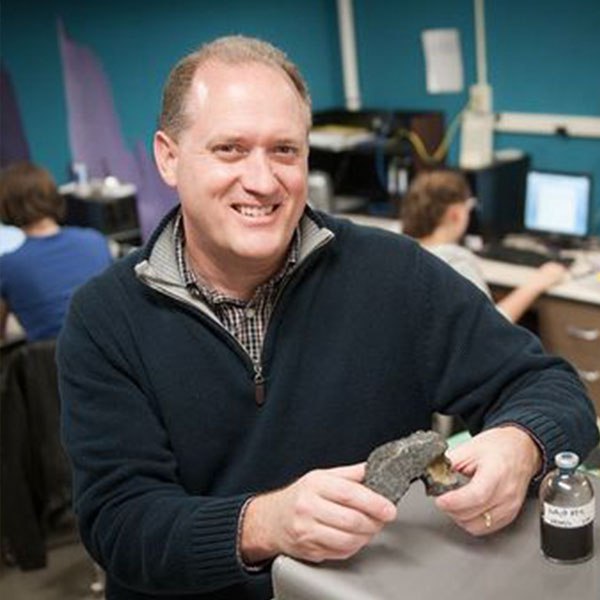
James Holden
Dr. Holden is an associate professor of microbiology at the University of Massachusetts Amherst where he began his appointment as an assistant professor in 2003. His post-doctoral research was done in the Department of Biochemistry and Molecular Biology at the University of Georgia with Dr. Michael W. W. Adams. He earned his Ph.D. in 1996 in Oceanography at the University of Washington with Dr. John A. Baross. His research focuses primarily on microorganisms that grow optimally above 80°C, or so-called 'hyperthermophiles', from geothermal environments in the deep sea. He has made 11 dives in the research submarine Alvin to depths exceeding 2 km, and was the chief scientist of two oceanographic research cruises with Alvin in 2008 and 2009 at sites in the northeastern Pacific Ocean. Dr. Holden's field research examines microbial life in the subsurface biosphere, the distribution and abundances of specific types of microorganisms and their relation with environmental factors, numerical modeling of microbial habitability, microbial responses to volcanic eruptions, and the upper temperature limit for life. His laboratory research is interested in physiological mechanisms of anaerobic respiration and CO2 assimilation in hyperthermophilic archaea. His biotechnology interests are related to high temperature bioreactors for bioenergy production.