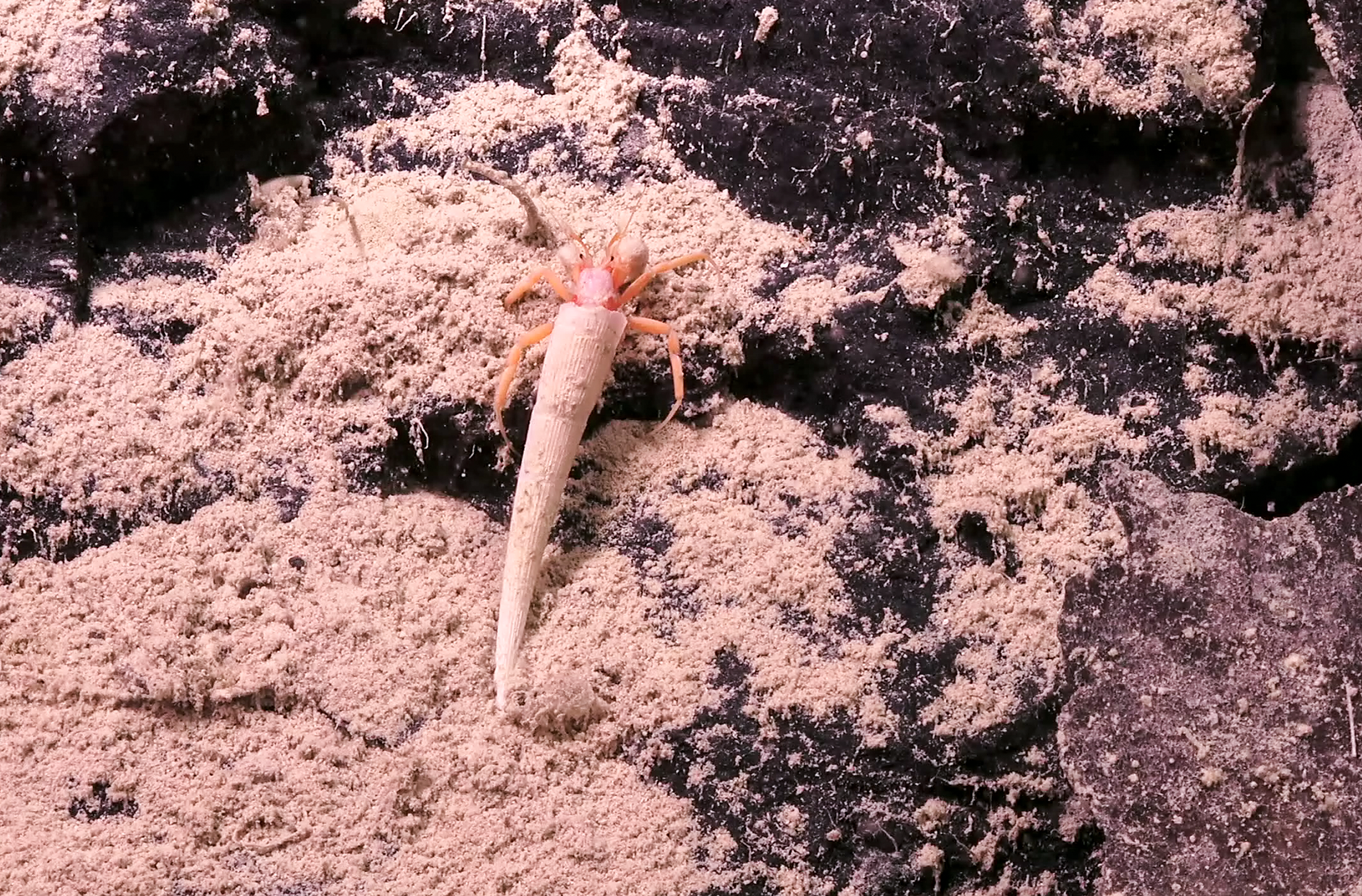

As we explore Bremer Canyon, many of the animals we encounter are being observed alive for the very first time. This includes several hermit crab species seen scuttling across the sea floor. Hermit crabs are one of the most familiar groups of crustaceans, known for their curious habit of inhabiting empty snail shells. However, the two species of deep-water hermits we have encountered on this expedition do things quite differently from those you might find at your local beach.
No twist in the tale
Hermit crabs have several anatomical features that have become adapted to living inside shells of gastropodGrowing Pains
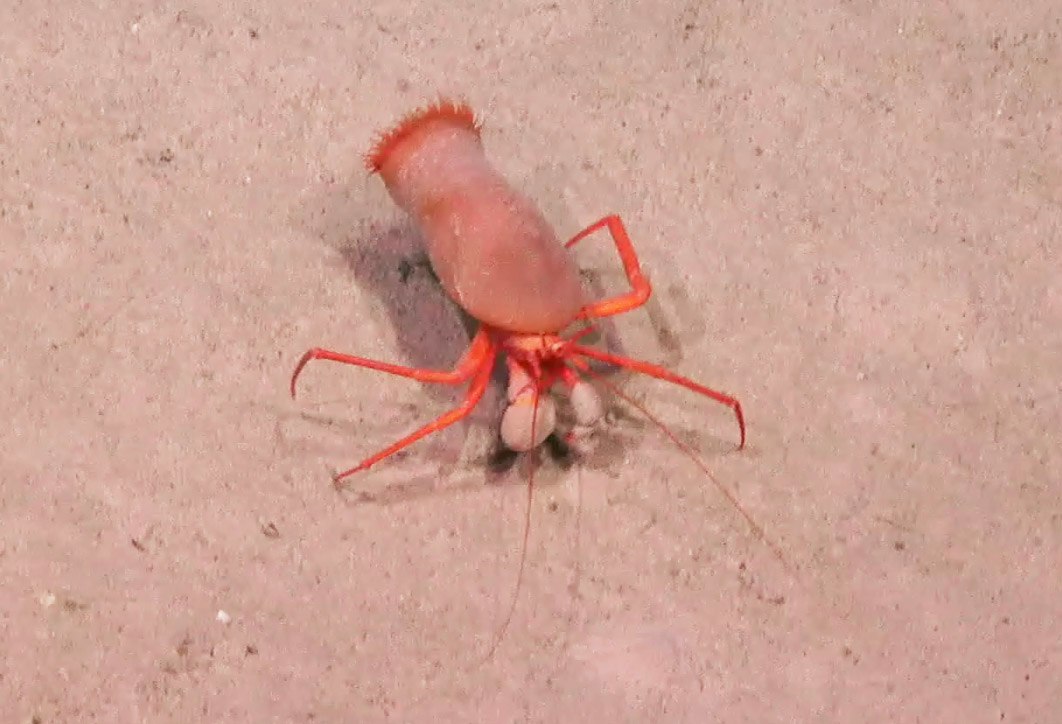
A problem that all hermit crabs face is that their bodies grow and get bigger, but the shells they occupy do not. As a result, hermit crabs must find another, larger shell in which to reside. On our first dive we encountered many specimens that have a unique work-around to this shelly problem. This hermit (a species of Parapagurus) has evolved a symbiotic relationship with a sea anemone-like animal known as a zoanthid
The soft, fleshy abdomens of hermit crabs makes them quite vulnerable, and the need to inhabit empty shells can be a significant impediment in the deep-sea where the overall abundance of available gastropod shells is low, relative to shallow waters. This potential scarcity may have pushed these hermit crabs to evolve and adapt to utilising a different set of resources that are available in the deep sea, allowing them to thrive.