




Ship time for this amazing expedition exploring the mysterious depths of Western Australia’s Ashmore Reef has finished up, so this blog is about what we know – and what we do not know – about this biodiversity hotspot.
Where is Ashmore Reef Marine Park?Ashmore ReefWhat is Special About Ashmore Reef?
Ashmore Reef is called a ‘platform reefThe Shallow Waters of Ashmore Reef
Up in the shallow waters of Ashmore Reef, there are hard and soft corals, huge sea fans, a variety of sea sponges and many different encrusting organisms. There are also seagrass meadows for dugongs and turtles, and the fish community is one of the most diverse in Western Australia.
The Australian Institute of Marine Science (AIMS)Illegal Fishing and Shark Populations
While Ashmore Reef has been a marine reserve for almost 40 years, there were major concerns about the number of illegal fishing vessels reported to be targeting sharks in 2004.
Reef sharks play an important role maintaining a healthy ecosystem, but because this population was in severe decline the number of mid-size predatory fish increased, eating more of the smaller herbivorous fish that keep the coral healthy by feeding on turf algae.
In response, AIMS investigated Ashmore ReefThe Lost Sea Snakes
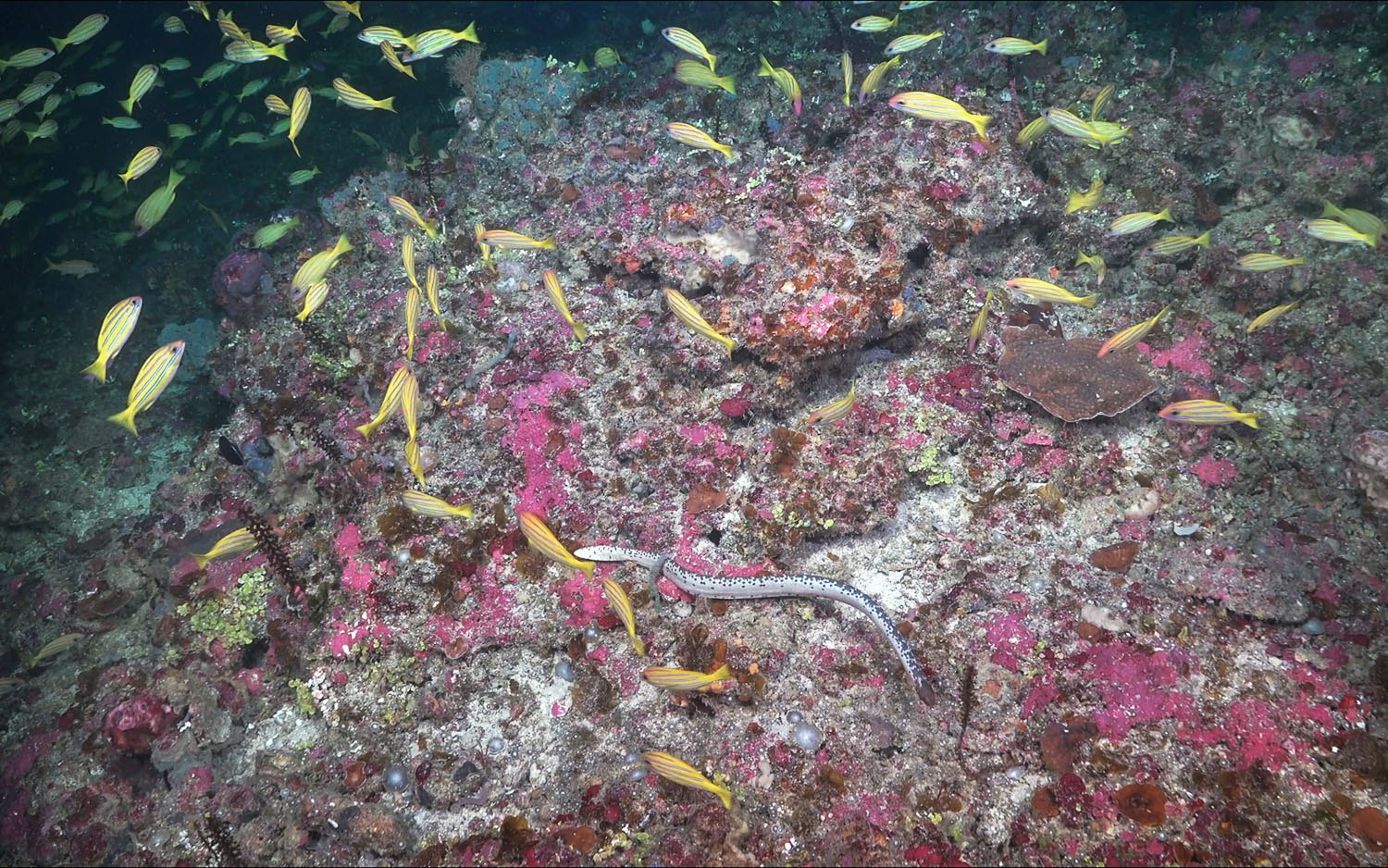
Ashmore Reef was once the most biodiverse global hotspot for sea snakes – but over the last 40 years, the 17 sea snake species mysteriously disappeared.
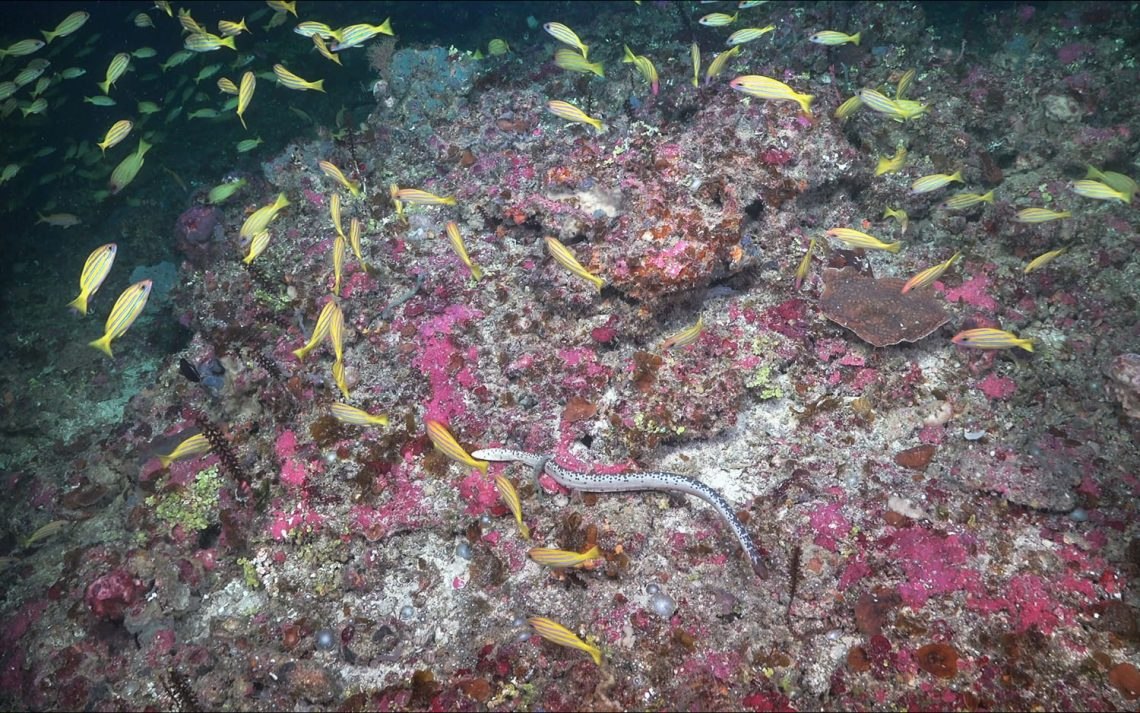
Remarkably, during this twilight coral expedition, four sea snake species have been re-discovered – leaving 13 species still lost from Ashmore Reef’s once thriving sea snake assemblage.
The re-discovery of the sea snakes raises big questions – are they part of a breeding population that remained undetected, or are these sea snakes all that remain from the shallow waters?
It is suspected that mesophotic coral ecosystem could have significant ecological importance and very well serve as a refuge for species lost from shallow waters, such as sea snakes.
What Next?
It has been exciting watching the live dives with an online community – and over the coming weeks, we will find out more about what discoveries have been made and what this means in the bigger picture of understanding and protecting Western Australia’s coral reefs. I for one am looking forward to Dr Karen Miller’s final wrap up of the expedition!