




Barnacles are well known for clinging to rocks and boats in harbours around the world, and on this expedition they are a key group of crustaceans being targeted for collection. So far, we have encountered a variety of species attached to rocks and other animals as we hunt for new species within the canyon. Two potential new species that we have collected are of exceptional interest as they belong to the most bizarre group of barnacles.
Not for the Faint of Heart
These belong to a parasitic group called the Rhizocephala
Unlike the common hermaphroditic shore barnacles,
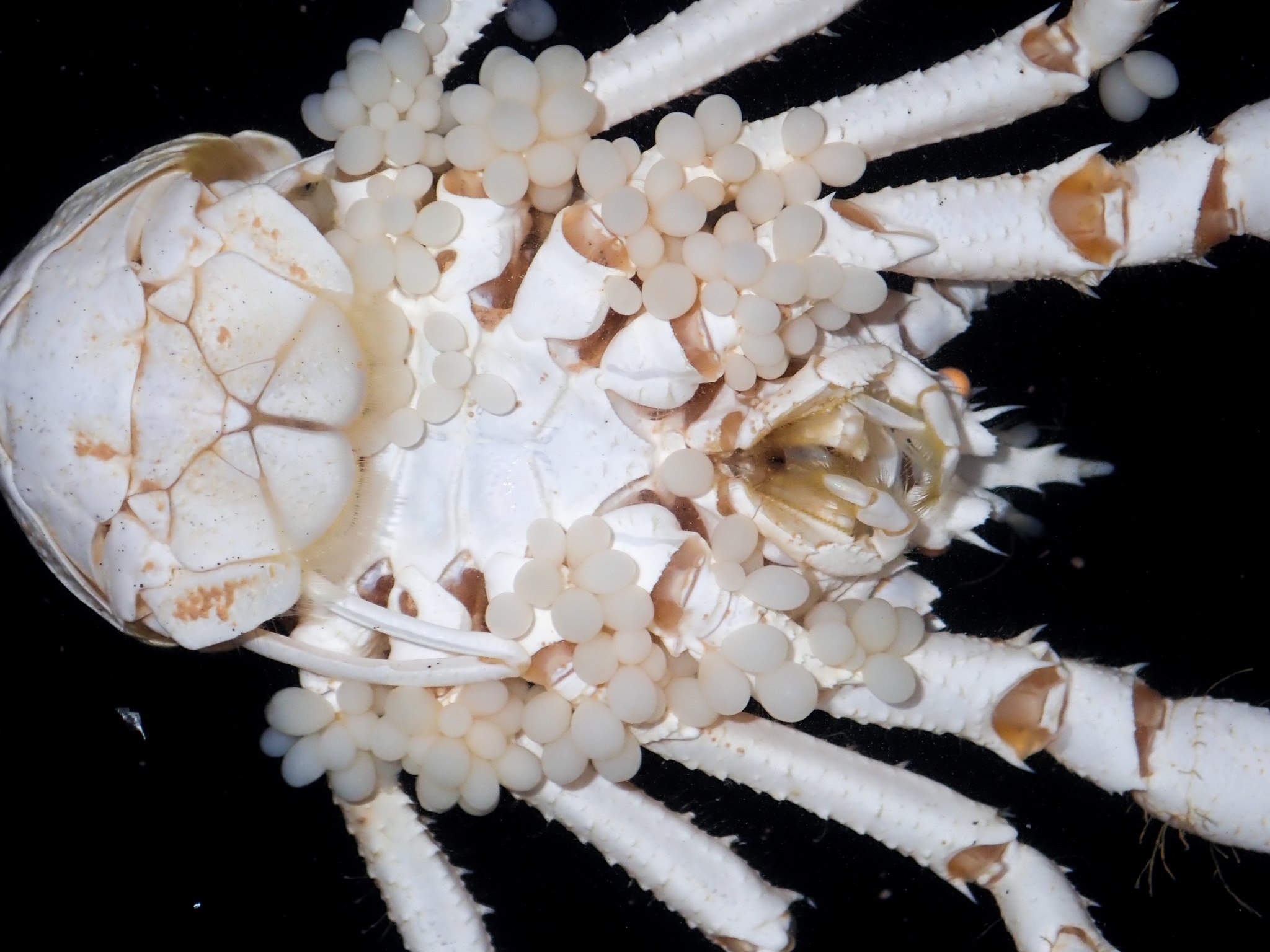
The second species attached to a different genus of squat lobster, Galacantha sp, belongs to the family Peltogastridae and bears only a single externa which is found under the abdomen of the host. Here it mimics an egg mass of the host. Although both parasites we have seen will make the host sterile, this second group of barnacles will also feminise male hosts in both physical and behavioural ways. The claws, which are often larger in male crustacea, will stay relatively small and the abdomen will broaden after each moult in order to better protect the externa. Both male and female hosts treat the parasite as if it is carrying its own brood of eggs, including grooming the externa to keep it free from fouling, beating the abdomen to disperse larvae as they hatch and following migration routes that uninfected females would normally undertake.
Further reading:
The biology and life cycle of the Rhizocephala CirripediaThis may be the ocean's most horrifying monster (and you've probably never heard of it)