




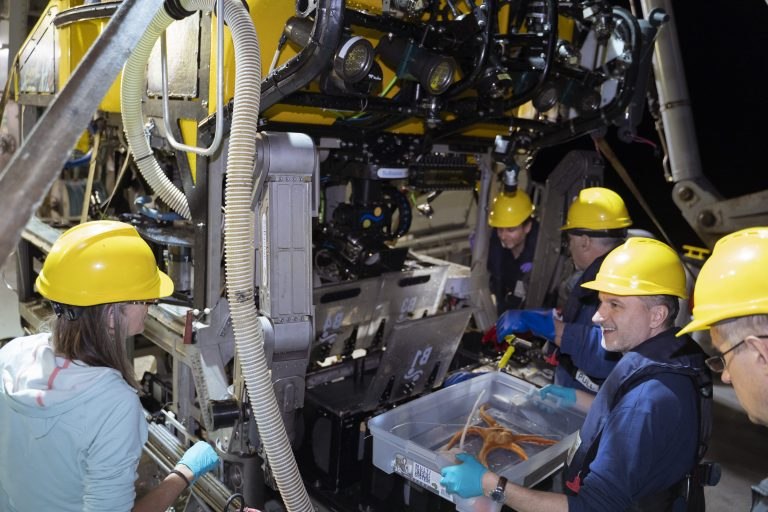
Remotely Operated Vehicle (ROV) SuBastian has returned after a journey of more than 3000m below the sea surface, searching through one of the previously unexplored and deepest parts of Bremer Canyon. So what do we hope to find and why has this expedition already generated much public interest?
The Bremer Canyon
But no one has yet explored the deep ocean here, so we have to ask: What is happening under the surface? Aims of this research include understanding why this is such a biodiversity hotspot, and how the nutrients that are driven upwards (upwelled) by the deep-sea canyon system influence the animal life gathering here. We also have large-scale, globally significant questions to answer. The canyon waters mostly originate in the Southern Ocean
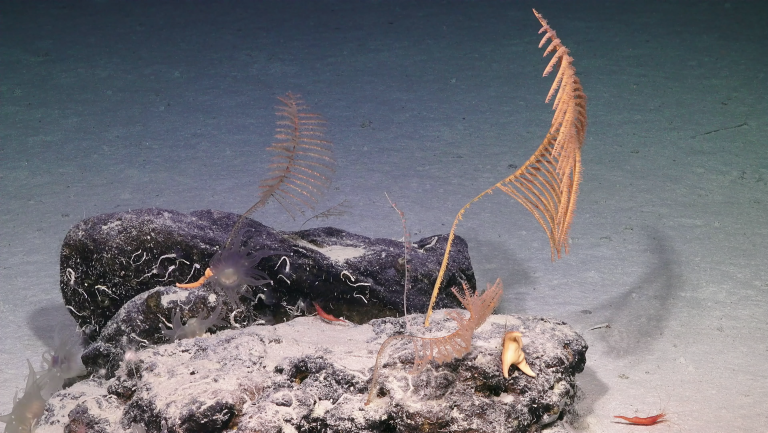
The southern ocean facing Bremer Canyon is in the direct pathway of this globally important ocean current system. Because of this position, the canyon’s deep-sea corals and sediments have potentially been recording both recent anthropogenic, as well as longer term, changes in this global system. The skeletons of living corals and coral fossils act as historical archives of the conditions within the ocean they have lived. These records can span decades, centuries, and even millennia, providing a means to assess the vulnerability of corals and other calcifiers in extreme conditions. Corals can tell us about important environmental changes, including fluctuations in the temperature of these deeper waters, pH, nutrients, and dissolved calcium carbonate concentrations, that enable these animals to build their skeletons.
Yesterday evening we launched the CTD, sampling the deepest (4200m) and coldest (~1 degree C) waters of the canyon. The key carbonate chemical properties are being measured in the Falkor wet lab, while other parameters will be measured in laboratories back on land, to trace the origin and (in the case of radiocarbon) depth to which anthropogenic CO2 has penetrated into these waters. We are just getting started, and we are excited that our research will help to better understand the major changes both regionally and worldwide that our oceans are now undergoing, the effects on deep-sea calcifiers and marine ecosystems, as well as their broader impacts on society in general. You can join us live on this voyage by following our livestream on YouTube