




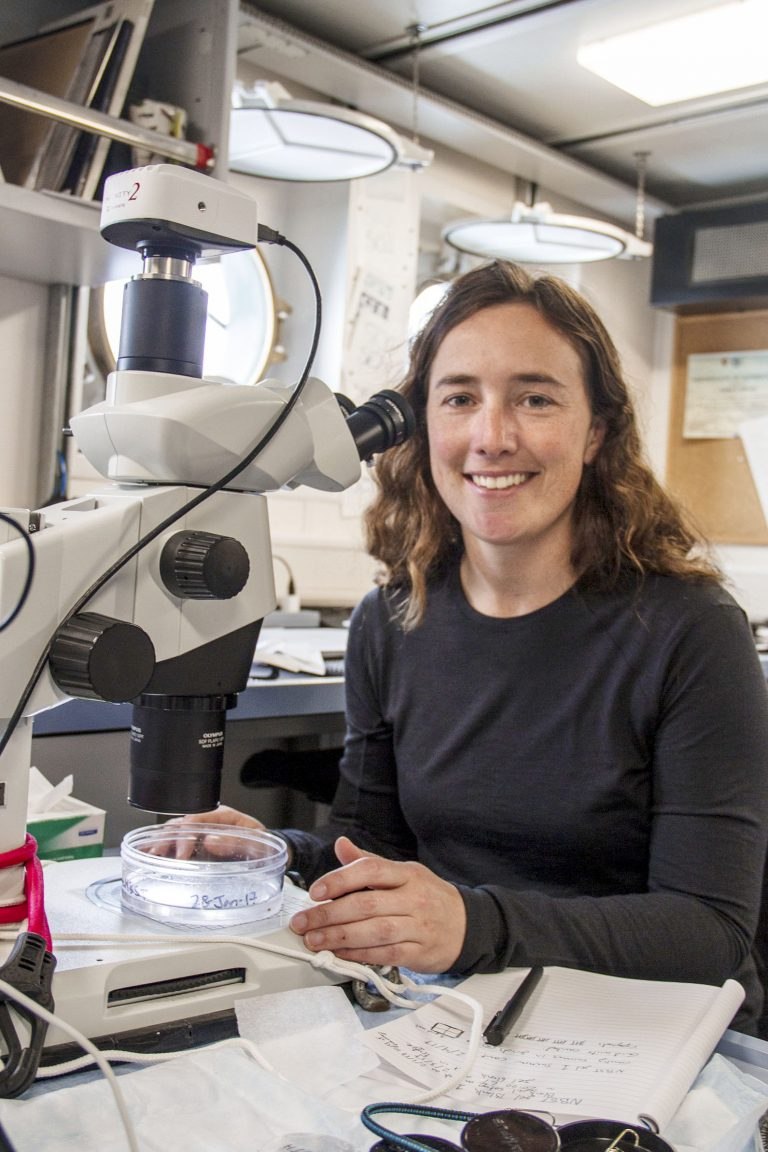
As an undergraduate student, Colleen Durkin
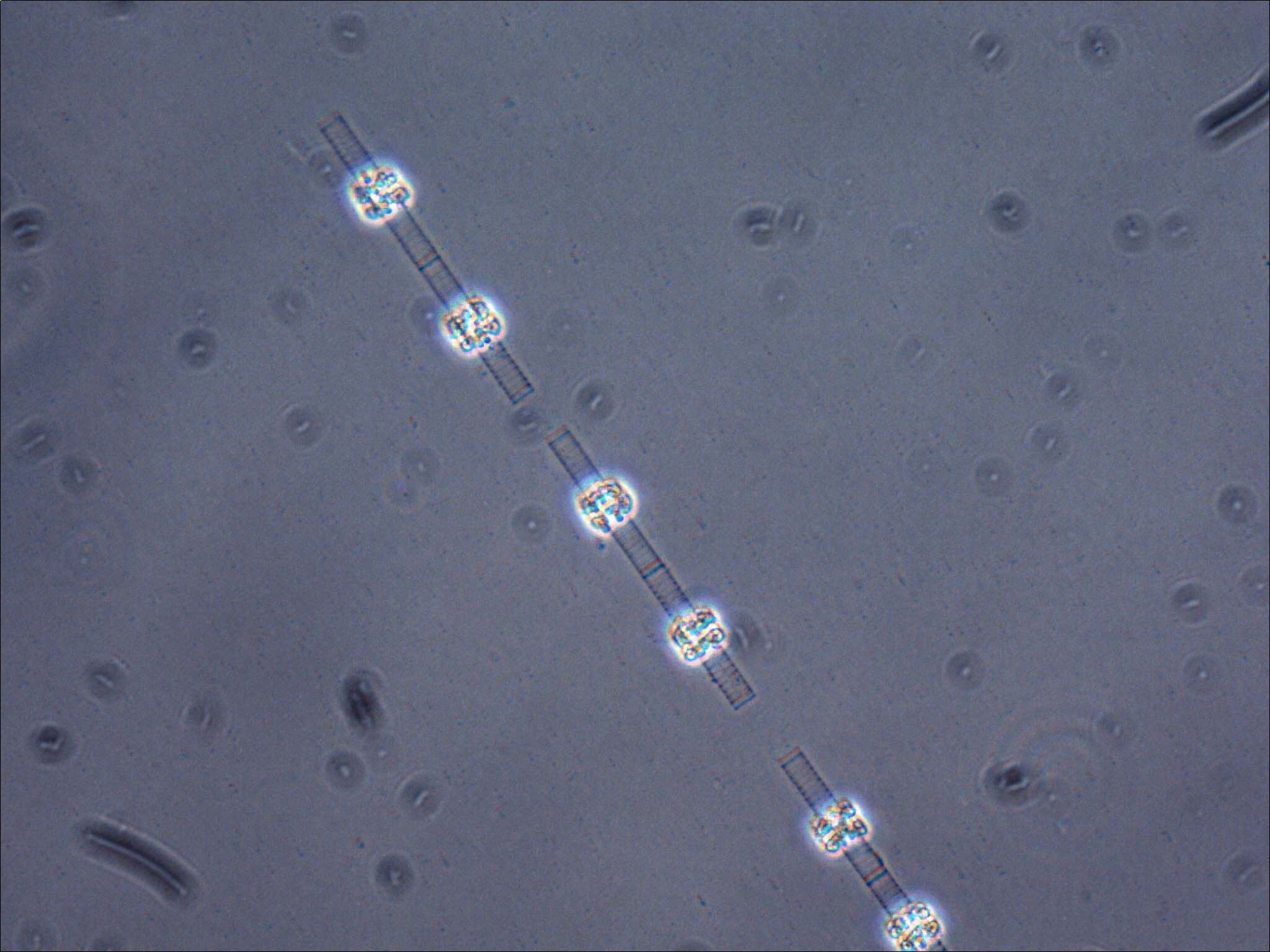
Diatoms
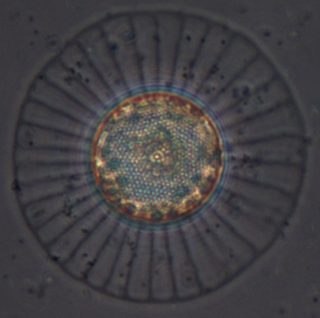
Diatoms form silica shells. The reason behind this is still to be determined. One theory relates to protection from predators.[/caption]
Sea to Space
This Sea to Space Particle Investigation will allow an unprecedented view of ocean processes by using tools both in the ocean and satellites in the sky. Looking at the ocean from specialized satellites it is possible to detect colors, which help inform the presence of certain types of particles drifting in the water. This expedition will provide key information connecting the satellites' data capturing with real time in-situ measurements. As a result, experts will improve algorithms for these satellites, allowing for better global estimates of oceanic biochemical processes.
Phytoplankton is a major foundation to nearly all known forms of life. It produces oxygen, regulates the climate and sustains the marine food chain - a fundamental source of protein for humans. At the same time, when these organisms sink, they drag carbon down to the depths of the oceans with them, counteracting the accumulation of carbon dioxide in the atmosphere. This is Colleen's primary interest: carbon export from the air to the ocean. She knows she will never grow tired of studying phytoplankton, immersing herself in the fascinating chemical labyrinth that these creatures build - often out of sight.