
Haz click aquí para blog en españolFamiliar Spots
The researchers onboard will certainly get a first look at uncharted territory, but at the same time, they are very interested in some of the sites they are quite familiar with. This expedition is part of a continuing time series that will enable them to compare the data collected with that of previous cruises, which will contribute to our understanding of the progression of climate and ocean change in the region. "One of the most important things I think we’re doing is to set a baseline that will help us understand how these communities are now, so as they change in the future we can see it and we can demonstrate if it is related to humans or not," explains Dr. Cordes. "We’ve been here year after year, and have gotten to know some of these sites pretty well. That will let us look for more long-term changes as the temperature in the ocean rises, as the oxygen continues to go down, and as the pH decreases. Without that baseline knowledge, without characterizing the deep ocean now, we would never be able to recognize those changes years from now."

Convenient Laboratory
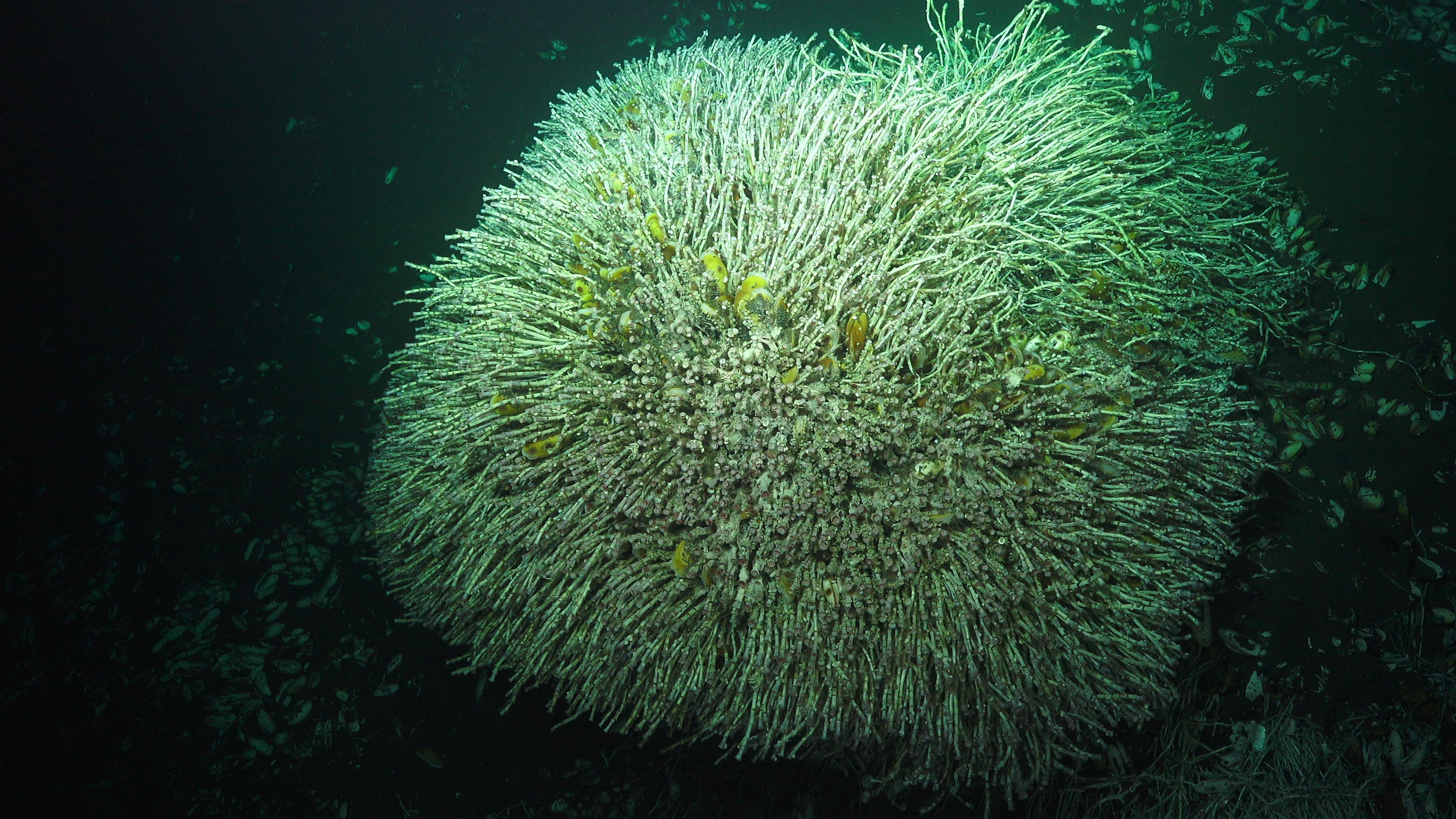
For Dr. Cordes and all of the resident scientists, this part of the world offers a very rare opportunity. This area has extremely active methane release and naturally low oxygen levels in the water. The seamounts themselves are unique and each one hosts slightly different communities - they form a sort of island chain underneath the ocean which produces interesting dynamics. Offshore Costa Rica is one of the few places in the world where all of these things happen at the same place. "There are a lot of questions that we can ask that are particular to this area, but we can apply our results to lots of different places around the world. It is just that it is convenient that they are all packed into one natural laboratory," says Dr. Cordes.
Chemosynthetic ecosystems such as these play significant roles in the functions and health of our oceans, and therefore our planet. Understanding the connections between these productive habitats and the ocean as a whole is key to determine the best ways to manage and protect these natural resources as we move forward. To Dr. Cordes, it is very clear: "The deep sea is the largest habitat on Earth. Understanding how that habitat functions will help us understand how the planet as a whole works."