
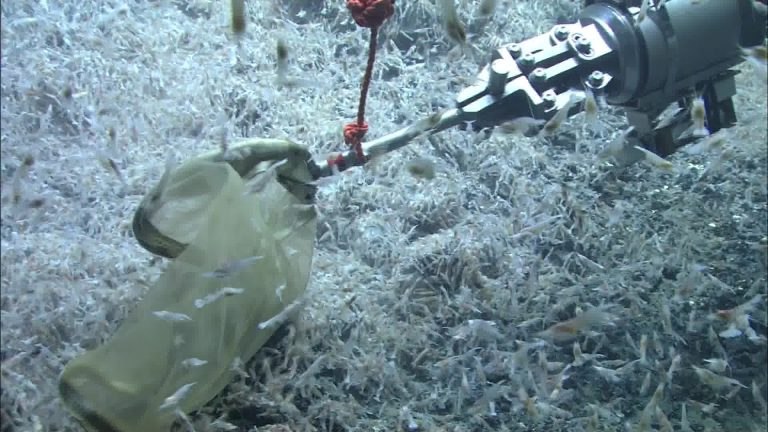
Like a domino effect, several things happen to seawater when it comes in contact with a volcano. When a volcano is not erupting and there is hydrothermal activity, hot water with very different chemistry from seawater rises up, just like steam would over a boiling pot. It spreads out and begins to create particles, or precipitates. Some chemicals in these particles change the water’s composition and some feed certain organisms, which are two important reasons to understand how underwater volcanoes work.
During major events, like eruptions or big earthquakes, it is possible to get a larger release of water which will create a bigger, shorter-lived plume. This nevertheless changes the chemistry of the seawater, and has impacts on biological communities. Some of the larger expulsions of water will bring with them microorganisms that live down in the crust of the Earth, known as the subsurface biosphere. Furthermore, when these kinds of changes happen, the surrounding seawater will heat up, which causes it to rise and affects regional circulation patterns.
Invisible Giants
Most underwater volcanoes are covered by thousands of meters of water, so when experts look for them, they cannot simply spot a volcanic dome from the surface. Dr. Joseph Resing
Zooming In
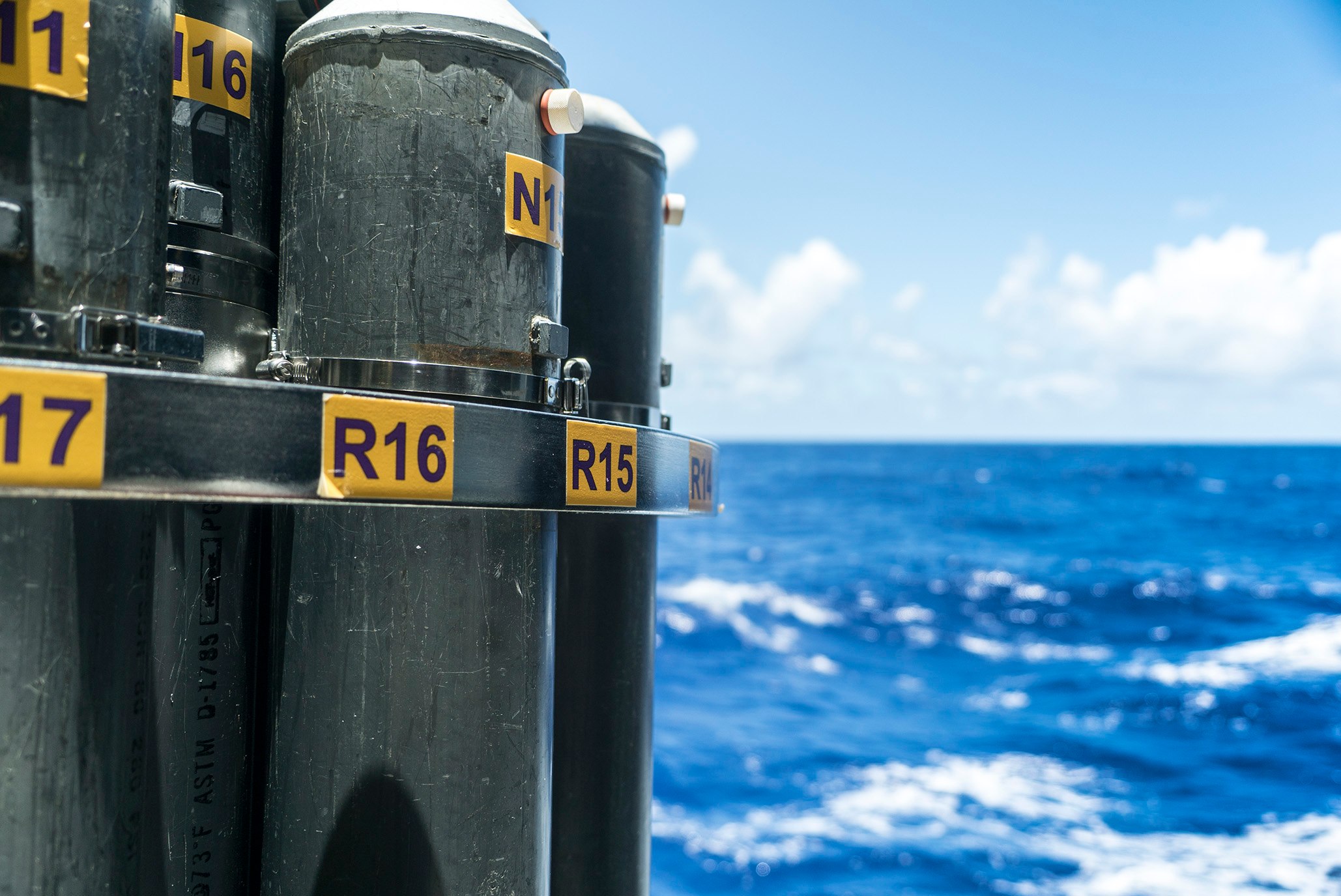
“One of the exciting things in this expedition is the ability to use different kinds of technology, and we decided not to try to use all of the technology at once, but to do the cruise in two parts” explains Dr. Ken Rubin, Chief Scientist. “In the first part of the cruise we are combining CTD casts with the use of an autonomous robot, an AUV. We are using it to map the seafloor in very high resolution - to be able to see things that are the size of a cantaloupe on the seafloor. At the same time we will be making chemical maps of the water above the volcanoes to look for volcanic plumes. Then we’ll go back again with ROV SuBastian, using it to make video observations, collect samples, and drive around the volcanos and see what is there.”
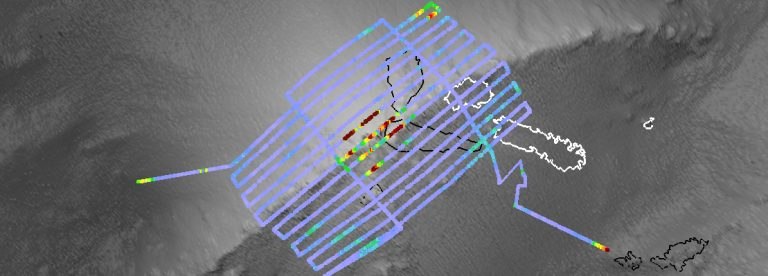
The AUV Sentry allows the team to connect the data from the CTD to features on the seafloor. In addition to the bathymetric and sidescan maps of the seafloor that Sentry is producing on this cruise, Dr. Walker has installed a Miniature Autonomous Plume Recorder on it. The instrument is self-contained and it samples every 5 seconds, during the entire time Sentry is diving around the volcanoes.
Two Dimensions Merge Into Three
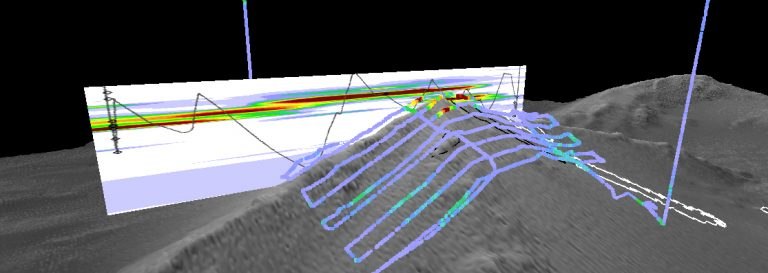
The CTD casts provide a two-dimensional vertical picture of the water column’s chemistry and properties. Sentry’s dives produce two-dimensional horizontal scans along its path. When the twoare combined, the scientists gain understanding of how all of the recorded signals intersect, making the picture much more complete.
Eighty percent of the eruptions on Earth take place in the oceans, yet underwater active volcanoes are not easy to spot. Technology is already allowing the team to detect interesting characteristics of the area, and the trail of clues begins to paint the path that ROV SuBastian will follow over the next leg of the Underwater Fire expedition.