



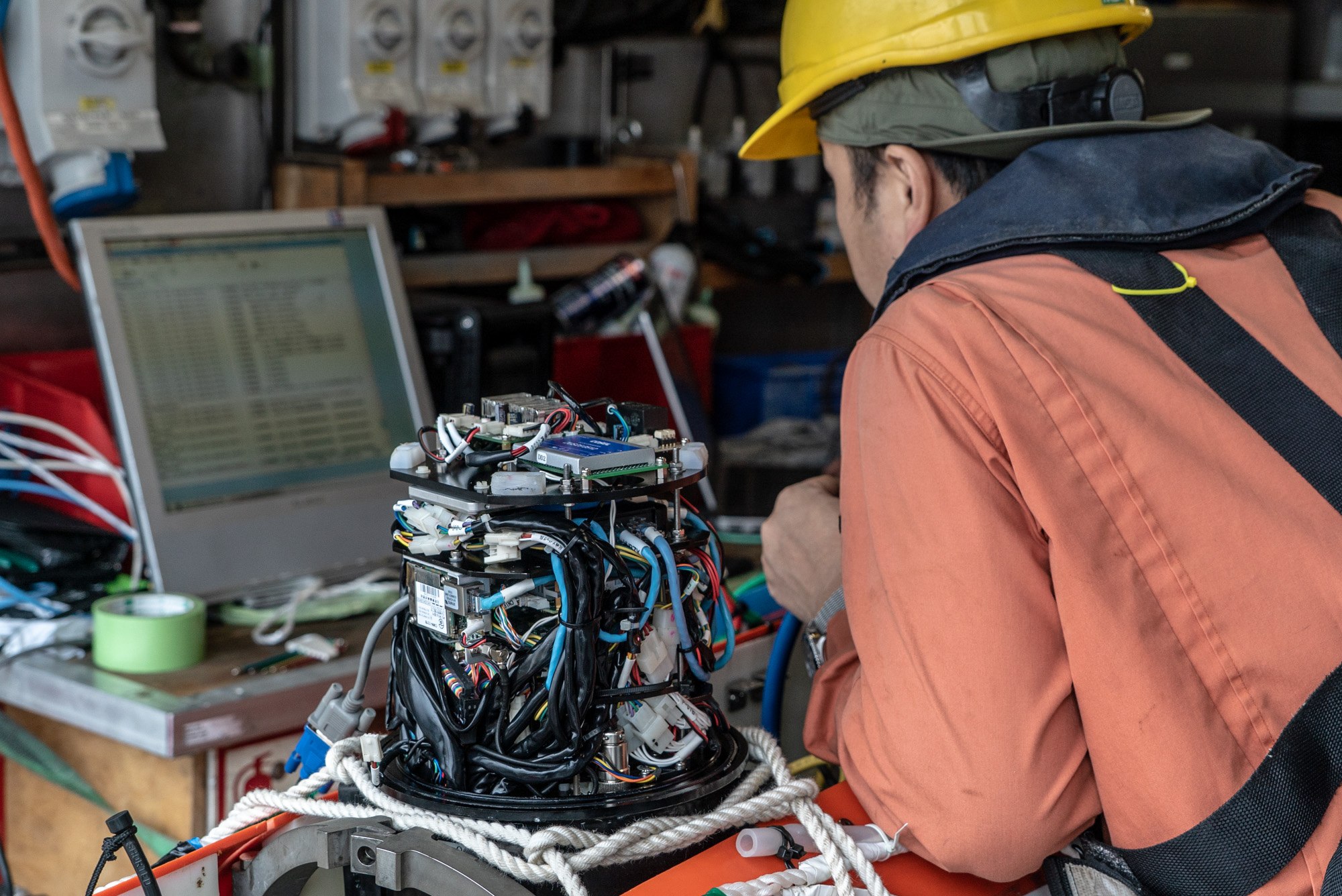

Marcel Proust's quote “Not in seeking new landscapes, but in having new eyes
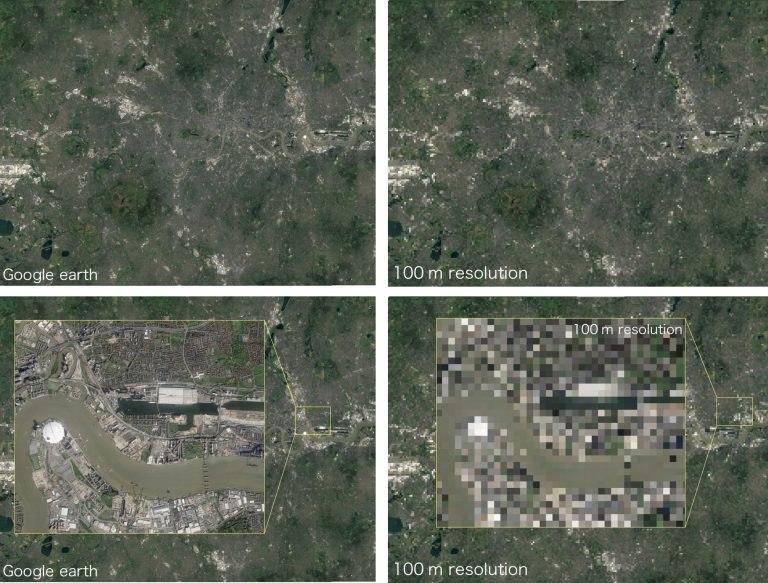
Clarity improves when acquired with a hundred meter resolution, but zooming in is still very difficult.[/caption]
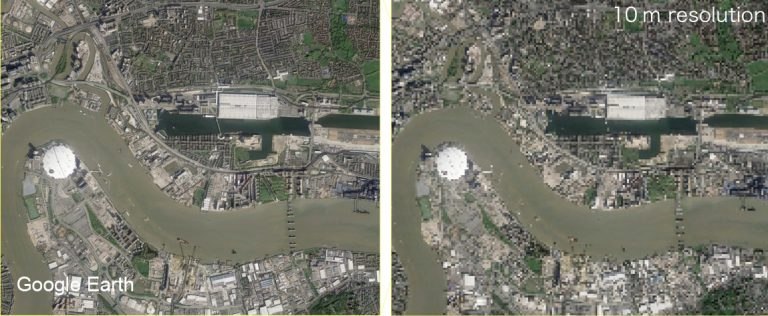
Images are much clearer when a ten meter resolution is used, yet we have only mapped 0.05% of our oceans with such level of detail.[/caption]
Sight is a very important tool to explore underwater environments, but through the use of different sensors, the team on board is taking advantage of all five senses.[/caption]
Clarity improves when the image is increased to a hundred meter resolution, which is the level of detail with which we have mapped 10% of our oceans. But if there is a need to zoom in, features get blurry again.
They are much clearer when a ten meter resolution is used. Currently, only 0.05% of our oceans are mapped with such level of detail.
Kilometers of seawater lie between even the most powerful of lenses and the underwater objects experts need to observe. Technology has not evolved to a point where it can circumvent physics, which is why currently the only way to get sharper images is to get closer. The engineers on Falkor are working hard in an effort to give new eyes to researchers, or at least improve their eyesight underwater.
Full Immersion
But they have no intention to stop there. By resorting to specific sensors - which are the true interface between the robots and the environment - the team is effectively taking advantage of the five senses.
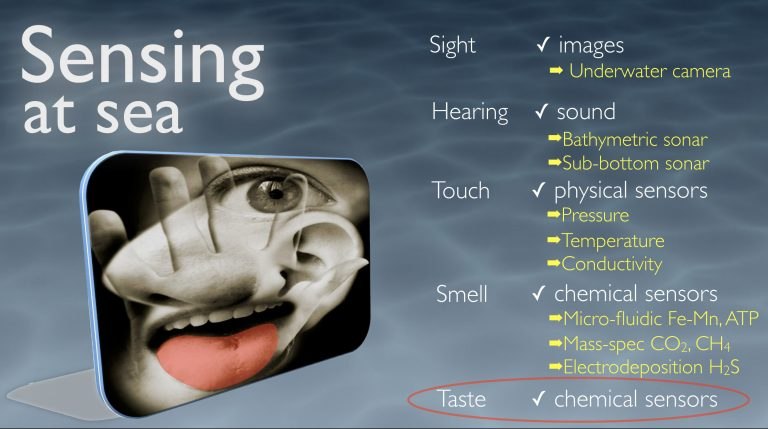
The sense of touch is measured by temperature and pressure sensors. The robots generate signals as functions of the pressure and temperatures they experience while diving down, helping the experts to paint a more exact picture of the surveyed environments.
Using sound: Sonars are fundamental to the operations of the vehicles. By emitting and receiving sound waves, they are able to detect objects around them and navigate at the desired depth and distance from the seafloor, while avoiding collisions.
"Taste" and "smell" input are received by from chemical sensors. The chemistry of hydrate fields sustains some of the richest known ecosystems on the seafloor, which is why sensors on every platform will "smell" the water in search for different chemical signatures. ROV SuBastian will carry an advanced laser spectrometer to test pore water