



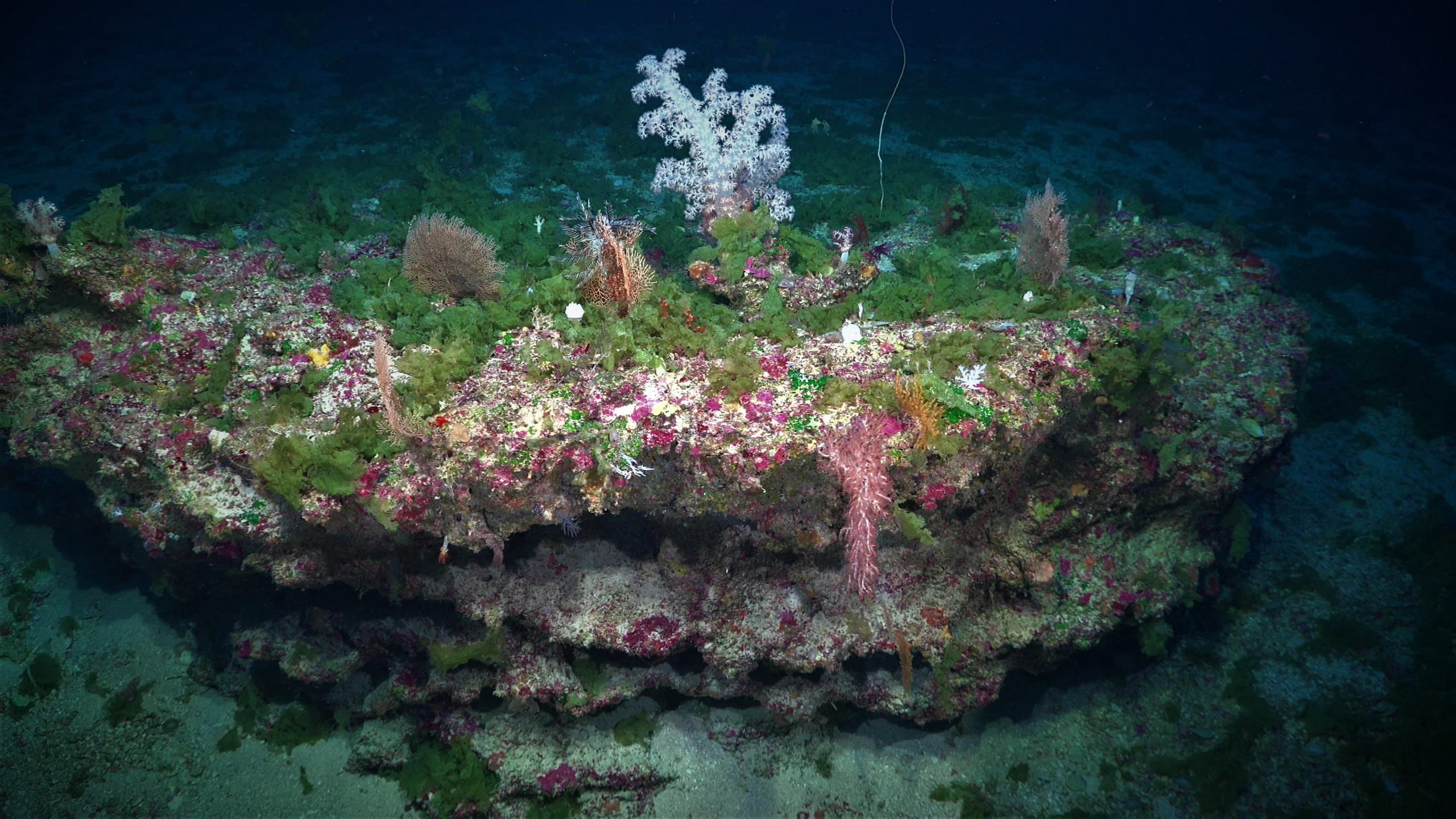

What a year 2020 has been. We have all had our lives disrupted in so many ways, and for many the impacts have been far-reaching. Some of us have been very fortunate to be able to continue working - albeit in very different modes and capacities to what we are used to. For most scientists, fieldwork has definitely been off the agenda, with travel restrictions and border closures making it difficult, if not impossible, to plan and conduct fieldwork.
Most scientific research vessels have been confined to port, and cruise schedules that were years in the planning have been scrapped. My own research group and colleagues had a voyage cancelled that we had been planning since 2016. R/V Falkor is one of the few research vessels that has continued to operate and collect scientific data during the Covid-19 global pandemic—because she has been in Australian waters since December 2019, with much of that time-based in my home state of Queensland.
My name is Mardi McNeil, and I am a marine environmental geoscientist from Queensland University of Technology in Brisbane, Australia. I study limestone rocks and sediments from reef environments to understand past and present geological processes, depositional environments, and their response to climatic change. We are particularly interested in how these environments and processes have formed and changed over geological timescales, especially in response to the climatic changes that were experienced at the end of the last Ice Age when oceans warmed and sea levels rose rapidly.
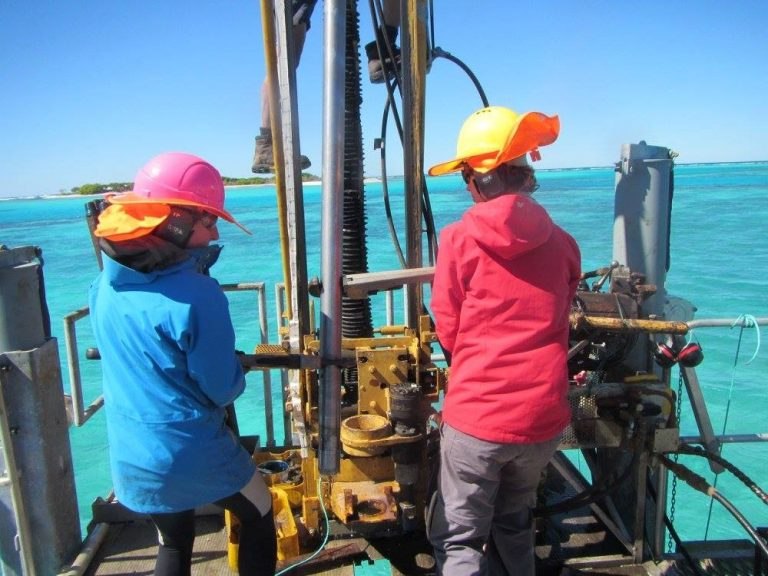
I first sailed on R/V Falkor as an SOI Student Opportunities Participant
The Ice Age Geology of the Great Barrier Reef
I am joined onboard R/VFalkor by a small team of scientists and students, with a larger team of collaborators who could not sail, participating remotely from onshore. We are also thrilled to have Artist-at-Sea Taloi Havini join us for Leg 1 of this expedition. Taloi’s work from this expedition will feature in her first international solo exhibit at the Ocean Space, Venice, Italy, in 2021.