




When you hear the word ‘coral’ or the phrase ‘coral reefs,’ what image comes to mind?
For most people, it is a light-soaked shallow-water coral reef teeming with life. This is a scene that many of us have become familiar with, either through a first-hand experience of scuba diving or snorkeling in tropical waters or in our own living rooms through the cinematography of programs like Blue Planet
Shallow-water corals thrive in warm waters (~26-29C) and have evolved to optimize their exposure to sunlight. Sunlight is important because it drives photosynthesis, performed by the algal symbionts (zooxanthellae) that live within the coral tissue and provide nutrients to the coral. This symbiosis is the main way the coral acquires nutrients and results in many shallow-water corals covering a larger horizontal area to catch as much sunlight as possible. The consistent sunlight allows these coral colonies to grow relatively quickly, with some corals growing ~10 cm per year. While all corals are closely related, there are notable differences in the environment and characteristics between shallow-water and cold-water corals
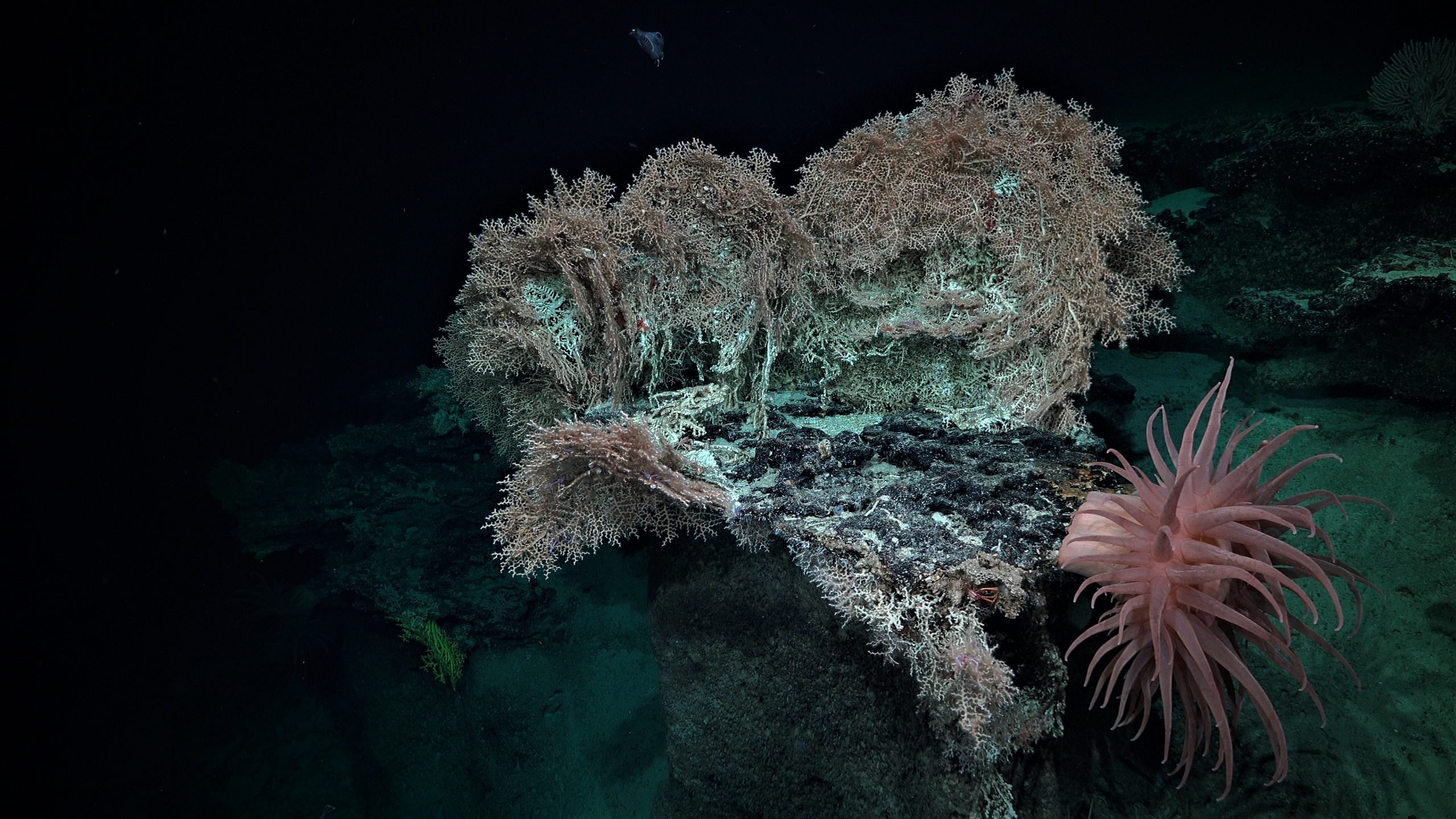
As the name suggests, cold-water corals are found in cold (~2-10C) and often deep ( > 200m) waters. Since these corals are found below 200 meters, they live in a habit that is absent of light, and unlike their shallow-water relatives, they do not have a symbiotic relationship with algae. Instead, they feed on particles in the water known as ‘marine snow
While both shallow and deep-water corals have evolved to thrive in their respective habitats, all corals are vulnerable to human impact. Climate change and warming sea surface temperatures have detrimental effects on shallow-water coral reef ecosystems worldwide. Many climate/ocean circulation models predict that cold-water coral habitats could soon be impacted by changes in ocean temperature and pH under the current rate of greenhouse gas emissions. Exploring both shallow and deep-water coral ecosystems allows us to better understand how complex and amazing these communities are and emphasize that it is all of our responsibility to protect these amazing biodiversity hotspots.