Now that the departing science team is all home safely, our thoughts turn toward the next stages of our work. You might remember in an earlier blogSupport Teams and Remote Collaboration
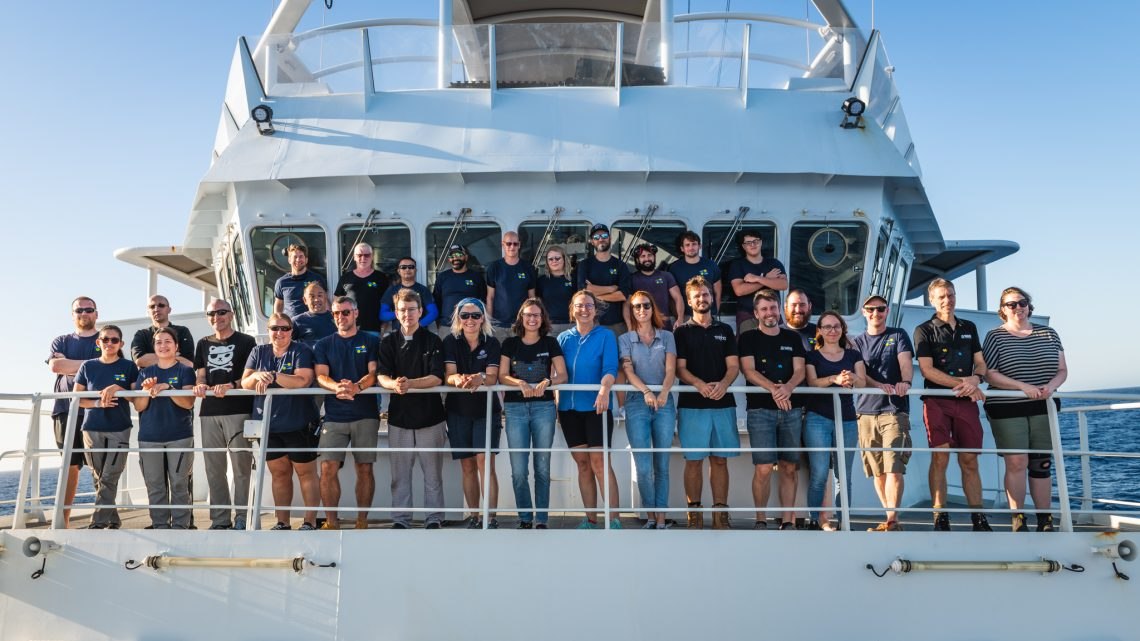
The planning phase is probably the most minimalist in terms of number of people involved, but still with many behind-the-scenes folks hard at work. But once we hit the expedition time, things can get crazy. Schmidt Ocean Institute and the R/V Falkor team provide an incredible array of staff to help get the job done. From the ship’s crew to the ROV team; from logistics to outreach; from the chefs to the stewards; from the engineers to the marine technicians - every person plays a unique role in supporting the science. Keeping the ship running smoothly, and people fed and organised, ensures that we can focus on our job: science.
But we are also not alone here. For each scientist or technician on board, there is usually a shoreside team of collaborators and friends that help us along the way. Sometimes these people are far away in other countries and connect via imagery and specimens, during or after the cruise. Sometimes they are closer shoreside and might be using WhatsApp to ask us questions during a live-streamed dive. This connectivity allows us to better sample, image, and collect for specific science questions. In our case, since many of the science team could no longer join us at the mid cruise port call, this allowed them to still remain intimately involved with the expedition.
Delving into Centuries Past
And now, the painstaking process of identifying the collected animals begins (verification and synthesis phase). As taxonomists and systematists, we need to compare our newly found animals with all others found before us. That is a big job. We follow the International Code of Zoological Nomenclature (ICZN)
So spare us a thought when you wonder why we have not yet published our new species yet! We head off in our separate ways to sequence DNA, count scales, interpret curves, illustrate chaetae, and consult with other experts. And read, read, read. Sometimes being a taxonomist is like being a cold-case historical detective; it takes time, thoroughness, and a sharp mind to pull the puzzle together. We rely heavily on the museum collections to make these comparisons. And sometimes the result is just to say - this specimen is Psychropotes longicauda. After checking the Atlas of Living Australia, which brings together all Australian state museum records, we can see if these identifications represent new records for the state or country, or provide new distributional records. Whatever eventuates, the accumulated knowledge is beautiful and pulls each individual thread together, into a story of the deep-sea canyons off Ningaloo.