



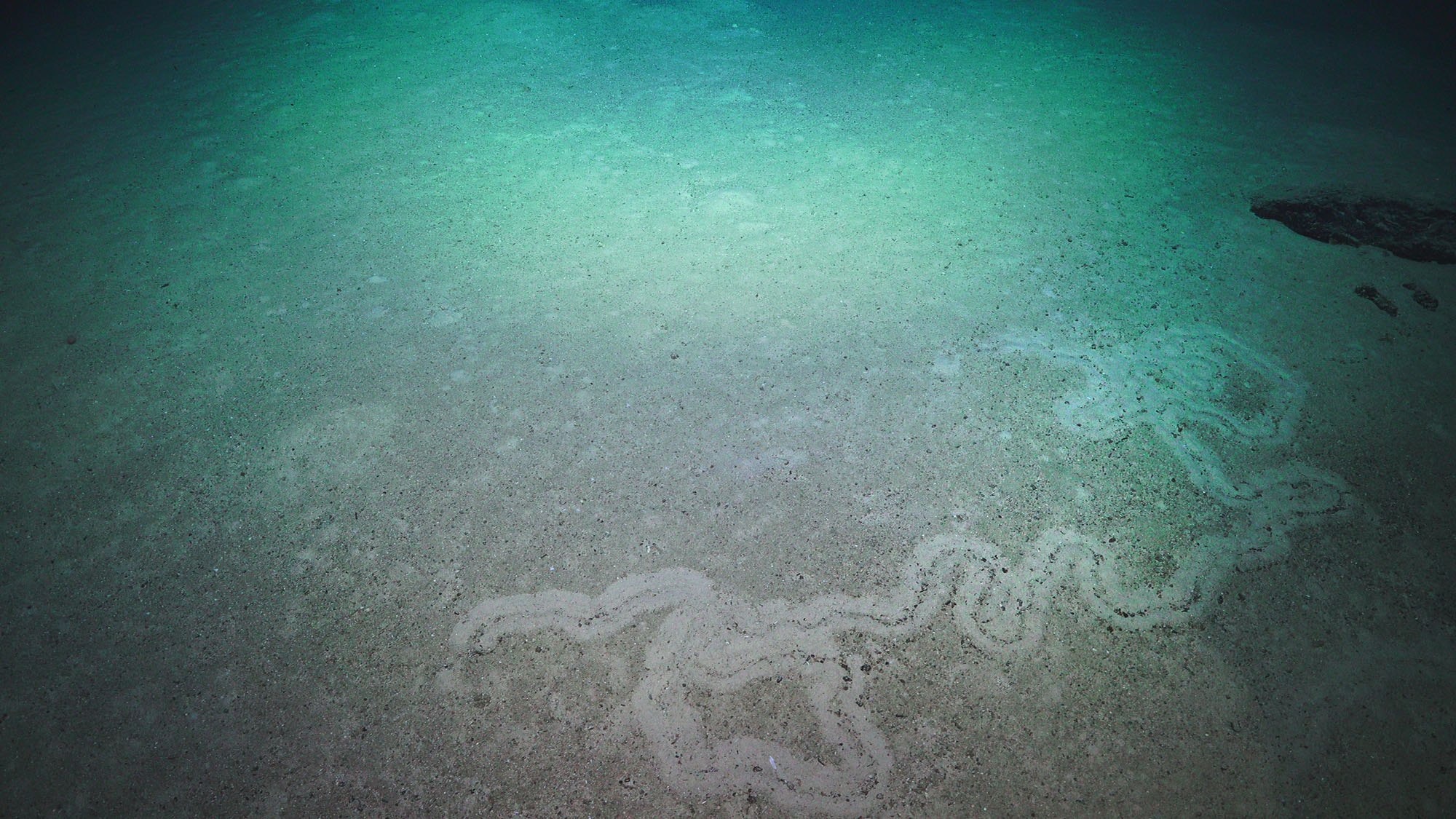

While the ROV SuBastian glides above the seafloor, scientists and observers eagerly wait for the next fish, coral, or (particularly in the case of this survey) interesting rock to appear. In between there are often large expanses of seemingly barren sediment. Looking closely, however, we can often see a variety of markings in the sediment.
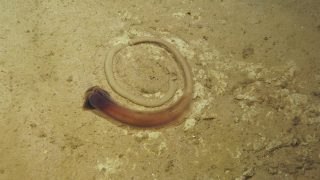
These are called Lebensspuren, German for ‘life traces’, and they give us an indication of organisms that may be nearby but not visible to our cameras. The appearance of Lebesspuren
If we are really lucky, sometimes we get to see the animals creating a previously mysterious Lebensspuren type. During a Visioning the Coral Sea
In much of the deep-sea, there is very little disturbance so these tracks and trails can persist for weeks and even months after their creation. So even though we may not be able to see the animals themselves, we can use the traces they leave behind to estimate biodiversity, compare regions, and characterise behaviour.