



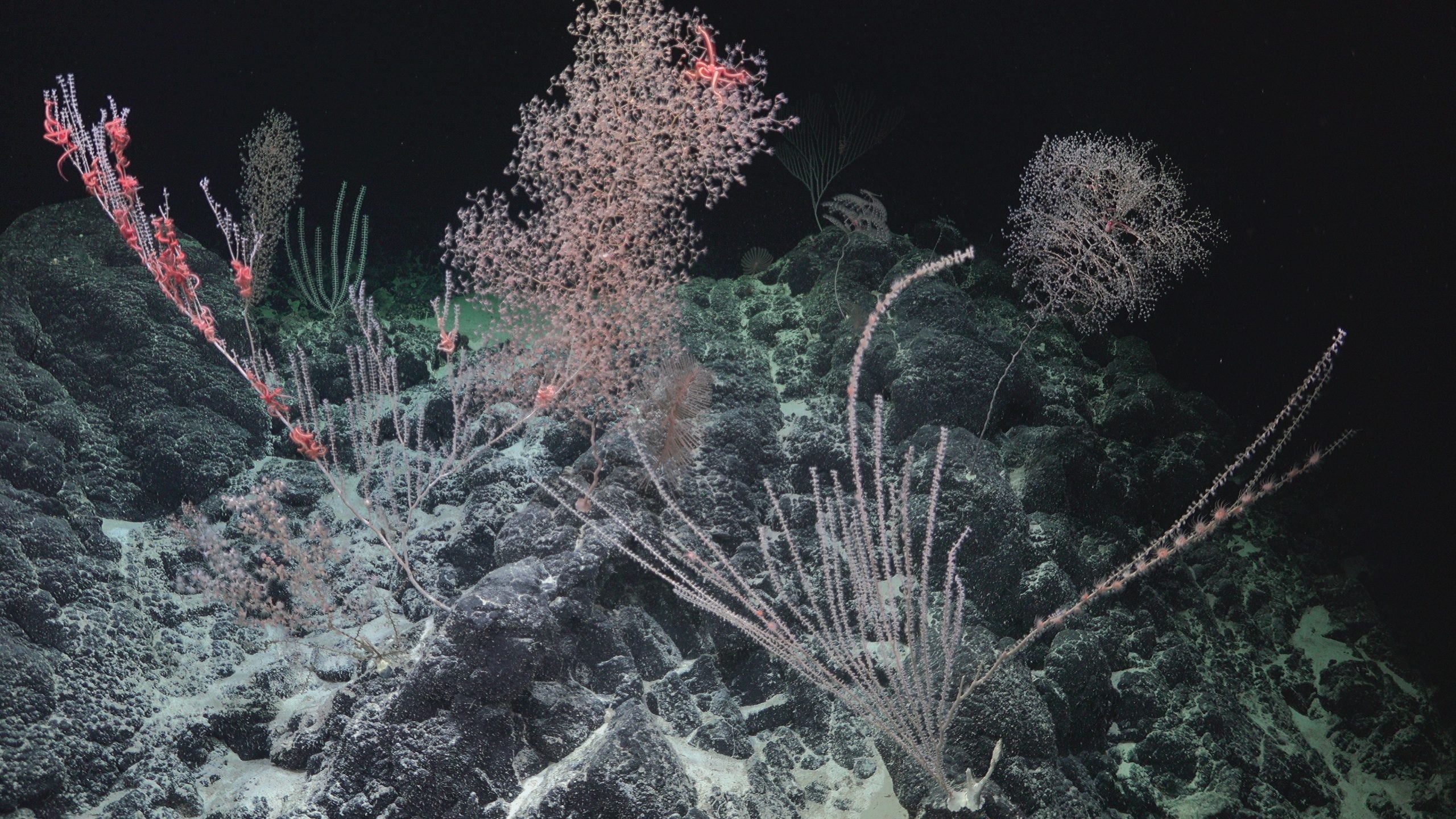

The ocean houses vast amounts of biodiversity from the surface waters down to the deepest depths (>10,000 m). The shallow waters of the equatorial central and western Pacific are among the most diverse coral hotspots in the world. On this expedition, one of our objectives is to identify and characterize biodiversity between shallower deep ocean waters, from around 100m down to abyssal depths of +3000m in a relatively small island and seamount group in the central Pacific, the Phoenix Archipelago.
Building on the Past
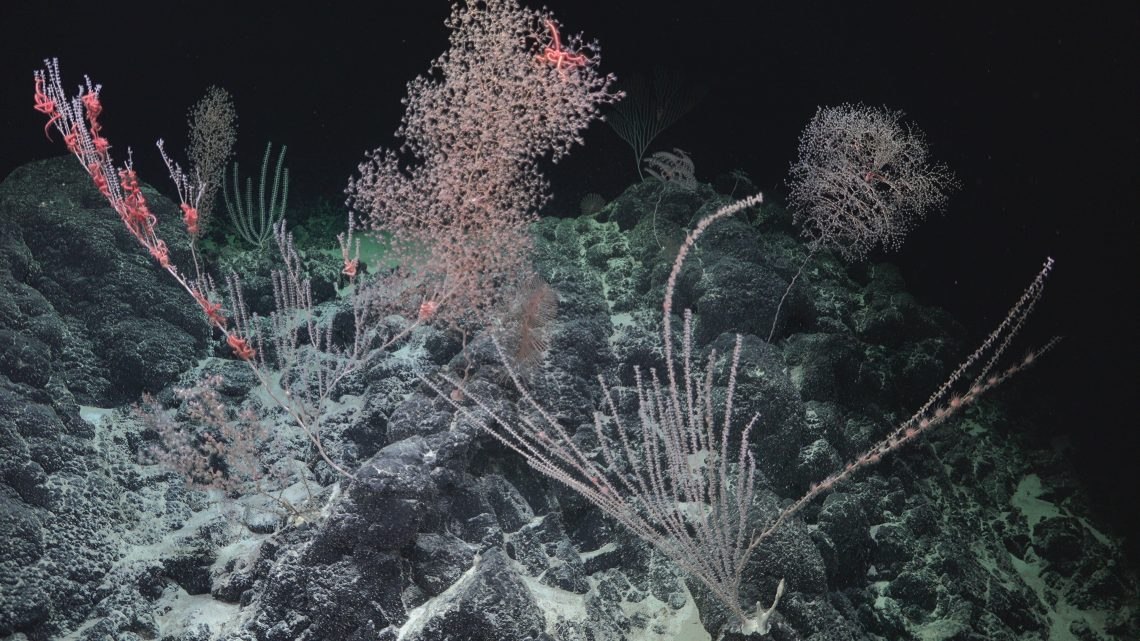
From our previous expedition in 2017, we identified some 167 morphospecies of deep-sea corals in the Phoenix Islands Protected AreaWater Under Water
Since our first deep corals of the Phoenix Islands cruise, one major recent finding our team has uncovered is the strong influence of local oceanographic conditions on deep-sea coral biodiversity in the equatorial central Pacific. Specifically, we identified the strong effects that three central Pacific deep ocean water masses have in structuring deep-water coral communities between 200-2600 m. These water masses (layers of the ocean with similar temperature, salinity, or dissolved oxygen concentrations) act to constrain the distributions of some species resulting in a filtering effect on some species with increasing depth. Furthermore, shallower species (less than 600 m) were more likely to occupy more narrow depth ranges than those found deeper (greater than about 600 m). Of course, many other variables are also responsible for observed patterns of biodiversity, including variations in food supply distribution, biological processes like predation, reproduction, or dispersal, and even hydrodynamics of the seamount environment itself.
Searching via eDNA
As we have seen so far in this expedition from our first two dive sites, ABNJ (Areas Beyond National Jurisdiction