



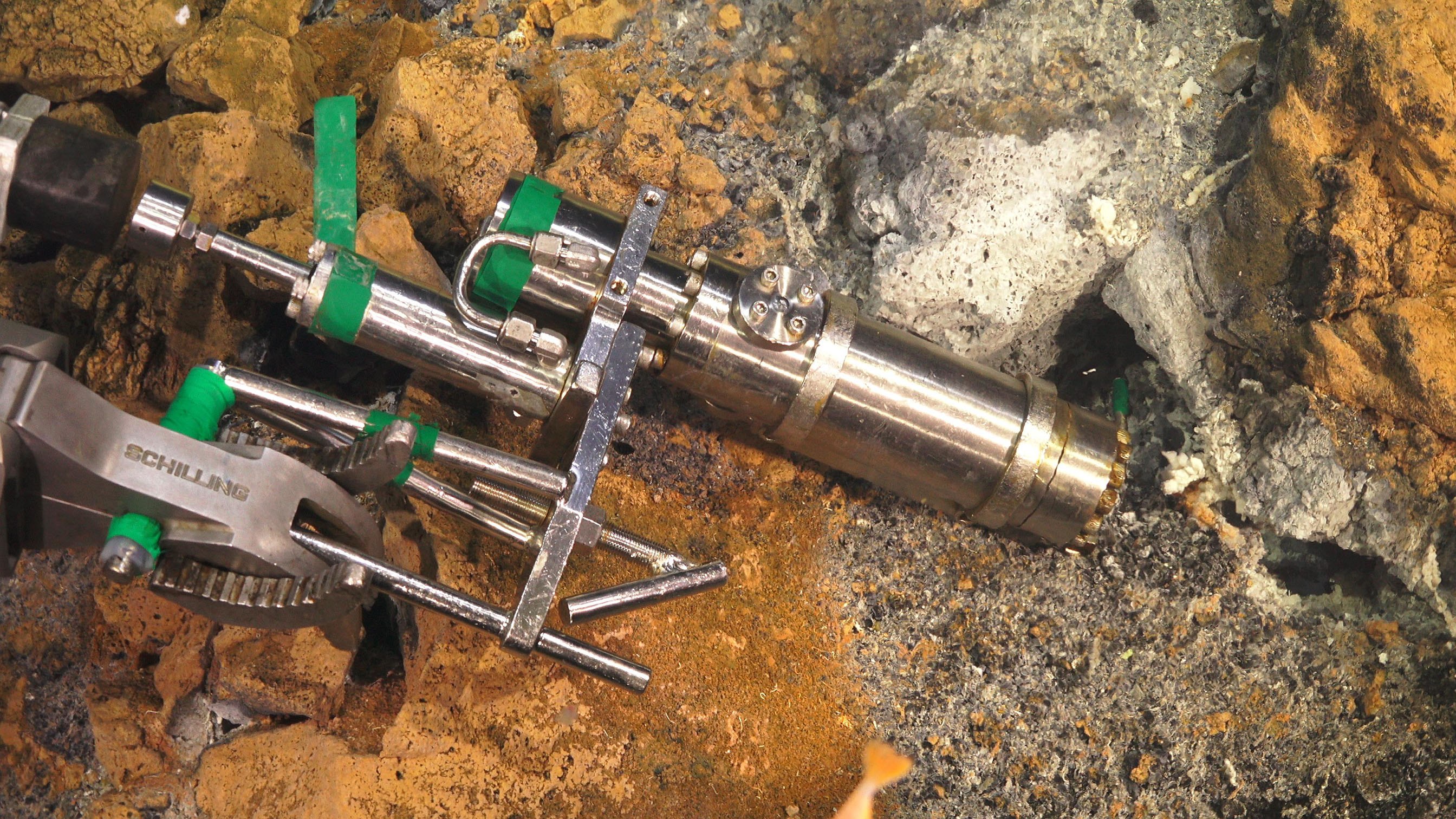

The West Mata Volcanic Group is unique. The tectonics of the place are like no other, and so is the opportunity that theses volcanoes offer to scientific research. Each of the volcanoes may be similar in composition, but each is at a different stage of evolution, which presents the scientists onboard R/V Falkor an invaluable chance to observe several phases of volcanic and hydrothermalprocesses during a single expedition. This is why assembling an interdisciplinary team - each with its own set of skills and complementary objectives - is so important. Geology, biology, and chemistry experts are making sure that every angle is considered when it comes to reconstructing the volcanic idiosyncrasies of the Matas.
Sulphur
One of the main differences between arc volcanoes and mid ocean ridge volcanoes is the form of sulphur that comes out of them. Here, in the Northern waters of the Kingdom of Tonga, ROV SuBastian
Acid
Once ROV SuBastian is back on deck after its twelve-hour long dive of the day, the scientists move quickly to retrieve all the samples before they start to degrade in their new, out-of-water environment. Drs. Butterfield, Kevin Roe
Carpe Diem
Back in 2009, when the team was able to witness the active eruption of West Mata Volcano, there was a lot of magmatic gas coming out, forming bubble streams that would pour out of the seafloor right around where the lava was coming out. Back then, the hydrothermal activity was very intense, but by 2012 - when the experts revisited the site - the system was quiet. This time, hydrothermal vents are showing more activity again, which is testament to the ever-changing volcanic cycle of West Mata.
Dr. Butterfield was excited about the possibility of witnessing another underwater eruption during the current Underwater Fire expedition, but that no longer seems to be in the cards. That is OK, he says, because the team still gets an opportunity to see the volcano in a different stage of its evolution. This is his third visit to the area: one he expects will help him fill in some of the blanks of his on-going research, enabling him and the determined scientific team he belongs to, to paint a more complete picture of one of the most volcanically active places of Earth.