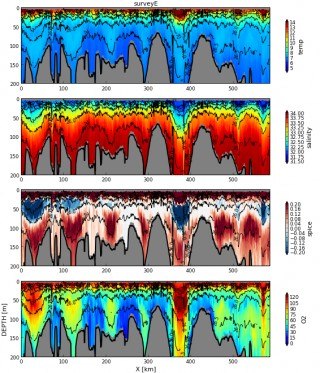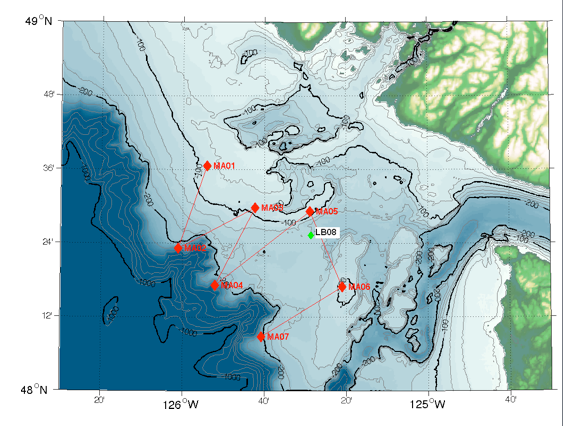

The science team continues to pore over the fire hose of data they’ve collected from CTD casts
In other words, the more data they gather, the more they see that they need to explore. And of course, there will be months if not years of further data analyzing back on shore. The hope is that they can amass everything that will be needed to answer the most important questions about water pathways, even if they can’t get everything figured out in two short weeks at sea.
The work continues to support the notion that--despite an earlier hypothesis that the Tully Canyon might be the main path for deeper “spicier” water
Having now passed the halfway mark, there is still much work to be done. The team will be running some more long MVP surveys through the lower reaches of the Tully Canyon because, even if it’s not the main path it’s still an interesting component in the overall shelf system.
There will also be additional CTD casts that, among other benefits, will grab water samples the team can analyze for carbon and nutrient levels. These data will further help decipher water pathways because the values tend to be different between offshore and inshore waters.
“We’re doing well,” says Richard Dewey of the cruise so far, “I give full credit to the great team of people I work with, both the science team and the ship’s crew, and the effort and patience they are demonstrating in getting our objectives accomplished.”